Lagos | October 27, 2025
A coalition of Igbo town unions operating in Lagos State has petitioned the United Nations (UN) and the ECOWAS Court of Justice, alleging systematic and ethnically targeted demolitions of properties owned by their members across various parts of the state.
Operating under the umbrella of the Association of Igbo Town Unions (AITU), the group submitted its formal petition on October 25, 2025, to the UN Human Rights Council and the ECOWAS Court in Abuja. The unions claim that Lagos State’s ongoing demolition campaigns have disproportionately affected Igbo-owned properties, describing the exercise as “economic persecution and human rights abuse.”
Demolitions Trigger International Appeal
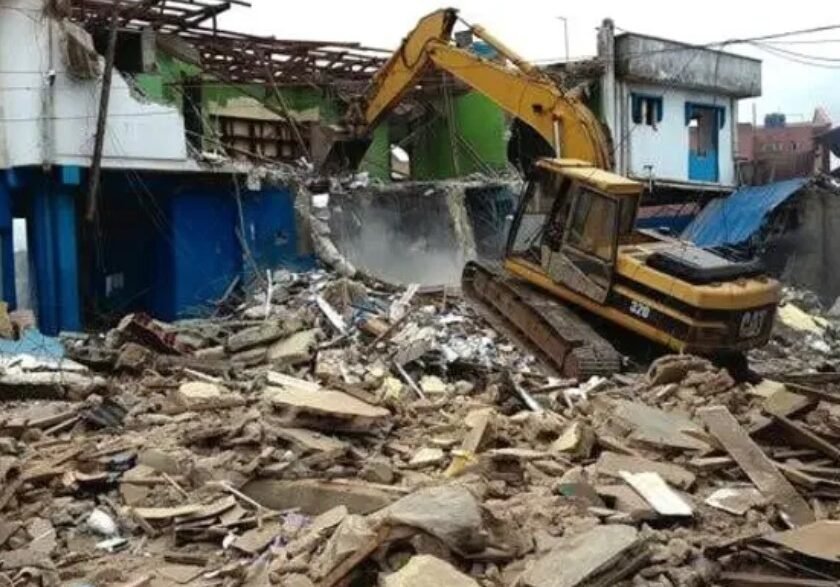
According to AITU’s petition, hundreds of residential and commercial properties owned by Igbo traders, professionals, and families in Abule-Ado, Ojo, Amuwo Odofin, Okota, and Festac Town have been demolished by Lagos State authorities in recent months.
The document, signed by Chief Nnamdi Okeke, AITU President, and Mrs. Ngozi Ezeanya, Secretary-General, alleges that most of the affected buildings were “legally acquired, duly approved, and occupied for decades.”
“We view these demolitions as deliberate acts of economic sabotage and ethnic profiling against our people who have contributed immensely to the growth and development of Lagos State,” the petition reads.
The unions insist that affected property owners received little or no prior notice and were denied opportunities to present documentation before bulldozers moved in.
Calls for UN and ECOWAS Intervention
AITU’s petition calls for urgent international intervention, urging the UN Human Rights Council, ECOWAS Court of Justice, and African Commission on Human and Peoples’ Rights to launch an independent investigation into what they described as state-sponsored violations of property and human rights.
The group outlined a series of demands, including:
- Immediate suspension of ongoing demolitions in Igbo-dominated communities of Lagos.
- Adequate compensation for all affected individuals and families.
- Institution of legal reforms to ensure transparent and non-discriminatory urban planning in the state.
- Public apology from the Lagos State Government for the trauma and economic losses suffered by victims.
AITU emphasized that its members’ right to acquire and own property anywhere in Nigeria is enshrined in Section 43 of the 1999 Constitution (as amended) and Article 14 of the African Charter on Human and Peoples’ Rights, both of which guarantee equal treatment and protection under the law.
“No citizen should be deprived of property rights on the basis of ethnicity, faith, or origin,” the petition added.
Background: Lagos’ Controversial Demolition Drive
The Lagos State Government, led by Governor Babajide Sanwo-Olu, has recently embarked on a large-scale demolition campaign across several districts. Officials have justified the operation as part of efforts to remove illegal structures, reclaim drainage channels, and enforce the state’s urban master plan.
However, the exercise has sparked outrage among residents and ethnic groups who claim that enforcement is selective and politically motivated.
In September 2025, viral videos showed bulldozers flattening homes and shops in Abule-Ado and Ojo, prompting widespread condemnation from civic groups such as the Civil Liberties Organisation (CLO) and the Human Rights Writers Association of Nigeria (HURIWA).
“We are not against urban renewal,” said Mrs. Ezeanya in a press conference. “But the law must be applied fairly. Thousands of our members invested their life savings into properties now reduced to rubble without due process.”
Government Defends Its Actions
Governor Sanwo-Olu, in previous public statements, has repeatedly defended the demolitions, insisting that the exercise “is not targeted at any ethnic group” but part of a broader effort to restore environmental order in the megacity.
“Lagos belongs to everyone, but no one is above the law,” the governor said. “We are removing illegal structures built on waterways and drainage channels that threaten public safety.”
State officials also argued that most affected structures lacked proper building approvals or violated safety codes.
However, community leaders argue that many of the demolished properties were not only approved but also taxed over several years, making the government’s justification untenable.
Economic and Human Toll
Experts estimate that the financial impact of the demolition campaign across Lagos exceeds ₦100 billion, with small businesses, churches, schools, and residential complexes among the worst hit.
Many victims — mostly artisans, traders, and small business owners — have since relocated to neighboring Ogun, Anambra, and Enugu states, citing fear of further victimization and loss of livelihood.
AITU noted that several of the destroyed buildings were part of cooperative housing schemes financed through community savings, further deepening the sense of injustice among affected families.
“These demolitions have pushed many into poverty. Our people are stranded and homeless,” said Chief Okeke. “We are not asking for special treatment — only fairness and justice.”
Legal Experts Weigh In
Human rights lawyer Barrister Chidi Nwafor described the petition to the ECOWAS Court as a “significant legal move” that could set new precedents in property rights protection across West Africa.
“If AITU can prove ethnic bias or lack of due process, the ECOWAS Court has jurisdiction to compel restitution and policy reform,” he said.
Nwafor cited previous ECOWAS rulings — including those against member states for human rights violations — as evidence that regional mechanisms can effectively address cross-border justice issues.
“Nigeria, as a signatory to the African Charter, is bound to uphold these obligations,” he added.
Awaiting International Response
The UN Office in Abuja and the ECOWAS Court Secretariat are expected to acknowledge receipt of the AITU petition within days. The town unions say they will wait for two weeks before staging a peaceful protest at the UN House in Abuja, should the petition receive no formal response.
Attempts to reach the Lagos State Commissioner for Information and Strategy, Mr. Gbenga Omotoso, for comment were unsuccessful at the time of filing this report. Calls and messages to his office went unanswered.
Meanwhile, several Igbo socio-cultural groups, including Ohanaeze Ndigbo Worldwide and the South-East Council of Elders, have expressed support for AITU’s petition, calling it “a courageous step toward justice.”
Ethnic Tensions and National Implications
Lagos — Nigeria’s economic nerve center and Africa’s largest city — is home to millions of Igbo residents who dominate trade, logistics, real estate, and manufacturing sectors. The city has long been seen as a melting pot of Nigeria’s ethnic diversity, but recurring disputes over property rights, markets, and urban planning have strained intergroup relations.
Political observers warn that the ongoing demolitions could deepen ethnic mistrust and influence electoral alignments ahead of the 2027 general elections.
“This is more than a property issue — it’s a test of Nigeria’s unity and equal citizenship,” said Dr. Anthony Nnaji, a political sociologist at the University of Lagos. “How government responds will determine whether Lagos continues to be a city for all Nigerians.”
AITU’s Final Plea
In its concluding remarks, the AITU petition urged the UN and ECOWAS to treat the matter as a violation of fundamental human rights and an assault on Nigeria’s constitutional framework.
“We are law-abiding citizens contributing to the economy of Lagos and Nigeria at large,” AITU stated. “We seek protection, not persecution.”
The group reaffirmed its readiness to cooperate with international investigators and Nigerian authorities to verify ownership documents, titles, and tax records related to the affected properties.
“Our people will continue to believe in justice, equality, and the rule of law,” Chief Okeke said. “We will not be silenced.”