Abuja, Nigeria — The Federal Government has announced the cancellation of the recently approved National Language Policy, which sought to promote the use of indigenous Nigerian languages as the medium of instruction in early childhood and primary education.
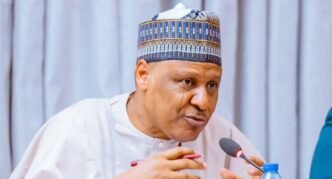
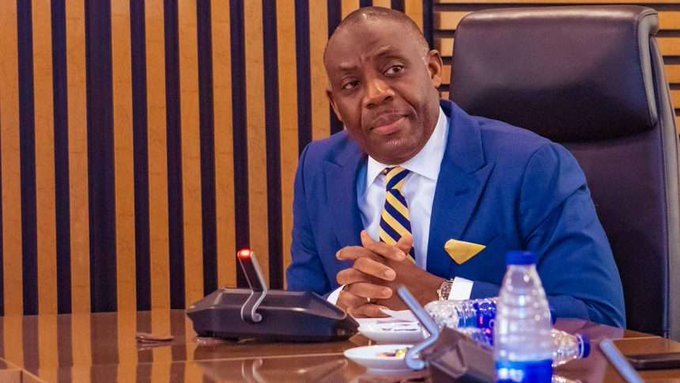
The announcement was made by the Minister of Education, Dr. Tunji Alausa, during a press briefing in Abuja on Wednesday. According to the Minister, the government has decided to retain English Language as the primary medium of instruction from early childhood education through tertiary levels, irrespective of community or locality.
Government Reverses Indigenous Language Policy
The National Language Policy, approved in 2022, had directed that pupils in the first six years of basic education — from pre-primary to Primary Six — be taught in their mother tongue or the language of their immediate environment, before switching to English in later years.
That policy was celebrated by language advocates, cultural groups, and education reformists as a bold step toward preserving Nigeria’s diverse linguistic heritage.
However, Dr. Alausa said the Federal Government, after reviewing the challenges of implementation, determined that the policy was “not practicable at this time.”
“The Federal Government has decided to suspend the implementation of the national language policy. Henceforth, English will remain the sole language of instruction from early childhood to tertiary education,”
the Minister said.
He explained that the reversal followed consultations with state ministries of education, stakeholders, and curriculum experts, who cited lack of teachers, training materials, and standardization as major obstacles to using indigenous languages nationwide.
Reasons for the Policy Reversal
Dr. Alausa outlined several reasons behind the decision to revert to English as the uniform language of instruction.
First, he noted that Nigeria’s linguistic diversity — with over 500 languages and dialects — makes it difficult to standardize instructional materials or train qualified teachers for each local language.
“While the intent of the language policy was noble, the reality on the ground is that most communities are linguistically mixed. Implementing mother-tongue instruction nationwide would create inconsistencies and inequalities in the learning environment,” he stated.
Second, he said many parents and educators had expressed concerns that exclusive use of indigenous languages at early stages could hinder students’ competitiveness in standardized examinations such as WAEC, NECO, and JAMB, all of which are conducted in English.
Third, the Minister emphasized that the federal government’s decision aims to strengthen literacy outcomes and global competitiveness, ensuring that Nigerian students can access international academic and professional opportunities without language barriers.
A Focus on English Proficiency and Global Competitiveness
Under the new directive, the Ministry of Education will prioritize improving English proficiency and communication skills across all educational levels.
Dr. Alausa said new reforms will be introduced to enhance teaching standards in reading, writing, and comprehension, particularly in public schools where literacy levels remain low.
“We are refocusing our curriculum to improve learners’ proficiency in English while maintaining cultural awareness through the study of Nigerian languages as subjects,” he said.
He added that indigenous languages will remain compulsory subjects in basic education, but not the medium of instruction. Schools will continue to teach languages such as Yoruba, Igbo, Hausa, and others as part of Nigeria’s cultural and moral education framework.
Stakeholder Reactions
The decision has sparked mixed reactions among education experts, cultural advocates, and parents across the country.
While some have praised the government’s “pragmatism,” others view the reversal as a setback for linguistic and cultural preservation.
Dr. Olufemi Oyelade, a linguist at the University of Ibadan, said the suspension of the national language policy was “disappointing but unsurprising.”
“The infrastructure to support mother-tongue education simply doesn’t exist. Many teachers aren’t fluent in local languages, and textbooks in indigenous languages are scarce. But abandoning the policy entirely may further alienate our cultural roots,” he said.
However, a senior education consultant, Mrs. Hauwa Mohammed, commended the decision, noting that English remains the language of instruction, business, and global communication.
“Nigeria must be realistic. Our education system should prepare children for global opportunities. English proficiency is essential, and forcing mother-tongue instruction on a multilingual population could have been chaotic,” she argued.
Challenges of Implementing the National Language Policy
Experts have long warned that implementing a nationwide mother-tongue policy would be logistically complex and financially demanding.
Some of the major challenges cited include:
- Shortage of trained teachers proficient in both local languages and modern teaching methods;
- Inadequate instructional materials and textbooks in indigenous languages;
- Multilingual classrooms, especially in urban centers, where pupils come from diverse linguistic backgrounds;
- Lack of a unified orthography for several Nigerian languages, making it difficult to standardize spelling and grammar;
- Budgetary constraints in developing translation and publishing infrastructure.
The 2022 National Language Policy had proposed a phased rollout beginning in rural and homogeneous communities, but progress stalled as many states reported logistical difficulties and lack of funding.
Language and Education in Nigeria: A Historical Context
Nigeria’s educational language policy has undergone several transformations since independence.
- In the 1977 National Policy on Education, the government emphasized the importance of mother-tongue instruction at the early stages, stating that “the medium of instruction in the primary school shall be the language of the environment.”
- This provision was reaffirmed in subsequent revisions, but implementation remained inconsistent due to linguistic diversity and administrative challenges.
- In 2022, the Federal Executive Council approved a new National Language Policy to reinforce early-childhood instruction in indigenous languages, citing research that children learn faster in their first language.
However, the latest decision by Dr. Alausa’s ministry effectively returns Nigeria to a full English-language instruction model, a policy framework that has dominated the education system since the colonial era.
Looking Ahead: Reform and Curriculum Review
The Education Minister revealed that the government is working on a comprehensive curriculum review aimed at modernizing Nigeria’s education system to meet global standards.
He said the review would prioritize STEM education, digital literacy, and teacher training, while maintaining the cultural relevance of subjects like civic education and Nigerian languages.
“We are not abolishing the teaching of our indigenous languages. What we are doing is ensuring that our children have a solid foundation in English while still learning to appreciate their cultural identity,” he said.
He also announced plans for a National Reading Initiative, to promote literacy and comprehension skills among primary and secondary school pupils.
Conclusion
The Federal Government’s decision to cancel the National Language Policy and adopt English as the sole language of instruction represents a significant shift in Nigeria’s education strategy.
While the move aims to enhance literacy, uniformity, and international competitiveness, it also reignites long-standing debates about cultural preservation, language rights, and the future of Nigeria’s multilingual identity.
As implementation begins, education stakeholders are calling for a balanced approach that improves English proficiency while still promoting the study and preservation of Nigeria’s rich linguistic heritage.