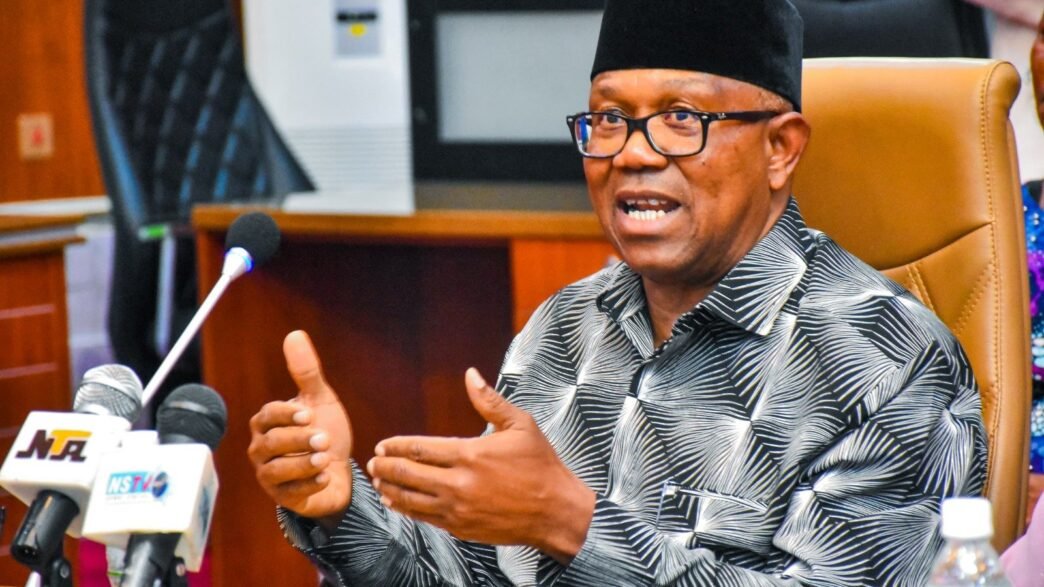
Presidential candidate of the Labour Party in the 2023 general elections, Peter Obi, has raised deep concern over the rising wave of negative developments across Nigeria, warning that the country is sliding into what he described as an “avoidable disorder.” Obi stated that the worsening insecurity, institutional failures, and lawlessness being recorded across the country in recent days were not coincidental or natural, but the direct product of prolonged leadership failures at different levels of governance.
Obi issued the warning in a statement on Monday, where he lamented that the past ten days in Nigeria had produced a disturbing series of tragic and destabilising news that should bother every well-meaning citizen. In his view, the string of events proves that Nigeria is approaching a dangerous point where citizens are losing confidence in the state’s ability to protect lives, enforce the rule of law, and provide functional institutions capable of delivering services.
‘Nigeria Has Witnessed Unprecedented Negative News in 10 Days’
Obi did not mince words in his assessment of the situation. According to him, the country had seen an unusual concentration of crises within a short period — including violent crimes, governance breakdowns, insecurity, administrative failures, and acts of lawlessness — all of which he said painted a picture of a nation rapidly drifting off course.
“The past 10 days in Nigeria have witnessed unprecedented negative news,” he said. “A level of chaos, insecurity, and institutional decay that should trouble the conscience of all the leaders.”
Obi noted that the internal situation in the country had become so concerning that even citizens who had previously remained hopeful were now expressing fear that the country might be losing its grip on basic governance requirements. He stressed that the pattern of events was not accidental, but rather the predictable outcome of leadership gaps that had been left unaddressed for years.
‘Not by Fate, But by Leadership Failure’
The former Anambra State governor emphasised that Nigeria’s current challenges did not arise from fate, destiny, or uncontrollable global conditions. Instead, he traced the national deterioration to deliberate mismanagement, lack of accountability, weak leadership, and the systemic breakdown of institutions designed to keep national stability intact.
“Our country is now going through troubling times, not by fate, but by our collective leadership failures that allow insecurity, lawlessness, and institutional decay to thrive,” Obi stated.
He explained that for years, leaders at various layers of government had failed to make the necessary reforms, invest in public systems, and uphold national values. This, he argued, had created an environment where criminals operated with boldness, institutions weakened under political and administrative pressure, and ordinary citizens began to lose trust in governance.
Leadership Must Accept Responsibility
Obi asserted that leaders must not pass blame, offer excuses, or pretend that the situation is normal. According to him, leadership requires accepting responsibility for outcomes — whether positive or negative — and working decisively to correct dangerous trends.
He stressed that the time had come for Nigeria’s political class, public servants, and policymakers to look inward and acknowledge that the nation had arrived at this point because of systemic governance failures. Without such recognition, he said, there could be no meaningful progress.
Political watchers note that Obi has consistently maintained this position since the 2023 elections, where he campaigned heavily on accountability, good governance, and national restructuring. His latest comments, analysts say, are a continuation of his warnings that Nigeria cannot continue with business-as-usual politics without risking national collapse.
Citizens Losing Confidence in Institutions
One of the biggest concerns raised by Obi is the growing loss of faith among citizens in the ability of the state to protect them. For many Nigerians, everyday life has become a struggle against insecurity, unpredictable governance, failing public services, and an economic environment that is increasingly hostile.
Nigeria has been battling rising violent crime in multiple regions, including bandit attacks, kidnapping, communal violence, militancy, and terrorist activities. Reports of schoolchildren abducted, security personnel killed, communities attacked, or government officials harmed continue to dominate headlines. Coupled with unemployment, inflation, power shortages, and eroding purchasing power, many Nigerians feel trapped in a cycle of hardship.
Obi warned that when citizens begin to lose trust in government, the result is predictable: people turn to self-help, illegal alternatives, or disengagement from national processes — all of which fuel further instability.
A Nation at Risk of Normalizing Disorder
According to the Labour Party standard-bearer, one of the most dangerous developments is that the country is at risk of normalizing chaos. He said that tragic events that should shock the nation into action have begun to feel routine — a sign of national desensitization.
Political analysts argue that this normalization is itself a sign of institutional collapse. In a functioning society, serious security breaches would trigger accountability, policy reforms, high-level resignations, and systems overhaul. However, in Nigeria, such crises are often absorbed into the news cycle with little structural response.
Obi noted that it was the duty of leaders not just to govern, but to ensure that the country remained anchored to the rule of law, justice, security, and national purpose. Without leadership intervention, he warned that the nation could continue slipping into deeper instability.
A Call for Urgent National Redirection
Obi insisted that Nigeria still had a chance to turn the situation around if leaders committed to rebuilding institutions and governing responsibly. He urged national stakeholders to:
- Strengthen security agencies
- Restore public trust in government
- Reinforce the rule of law
- Ensure that institutions deliver services effectively
- Prioritize the welfare and safety of citizens
- Eradicate corruption and impunity
- Invest in sustainable economic growth
Only through decisive and responsible leadership, he said, could Nigeria return to a stable and functional path.
He reminded leaders that history had proven that no country could develop when insecurity and lawlessness were left unchecked. For meaningful progress to occur, the government must guarantee public safety and institutional reliability, as these form the foundation upon which development rests.
Opposition Voices Amplify Governance Concerns
Observers note that Obi’s warning comes at a time when several opposition figures, civil society organizations, and policy experts have been raising alarms about the state of the nation. The recurring economic strain, currency instability, rising cost of living, increase in migration, and continued insecurity have triggered serious national conversations on whether Nigeria is approaching a tipping point.
Some groups have demanded policy redirection, while others call for immediate reforms in security, economic planning, judicial independence, and social protection. Across social and political circles, many analysts argue that the government must take Obi’s warning seriously, as it reflects the concerns of millions of Nigerians who feel increasingly anxious about the country’s direction.
Nigeria Still Has Hope — But Action Is Needed Now
Despite his strong criticism, Obi’s message was not a note of despair, but a call to action. He reiterated that Nigeria is still rich in potential, talent, natural resources, and human capital. However, potential alone is not enough without leadership, discipline, accountability, and the political will to harness national assets for the public good.
The former governor cautioned that time was running out for the country to make meaningful corrections. With the signs of instability becoming more visible, he urged leaders to put aside partisan interest and prioritize national survival.
As he concluded, the ongoing challenges are not irreversible, but they will not resolve themselves. Nigeria, he emphasized, is at a crossroads — and only responsible, accountable, and visionary leadership can prevent the country from drifting into deeper disorder.