
The United States government has issued a strong condemnation of the recent mass abductions of schoolchildren and teachers in Niger and Kebbi states, calling on Nigerian authorities to rescue the victims, prosecute the perpetrators, and strengthen security around schools nationwide. The high-profile reaction from Washington adds international pressure on Nigeria as the country confronts one of the most tragic waves of school kidnappings in its history.
Two States, Two Attacks, One National Tragedy
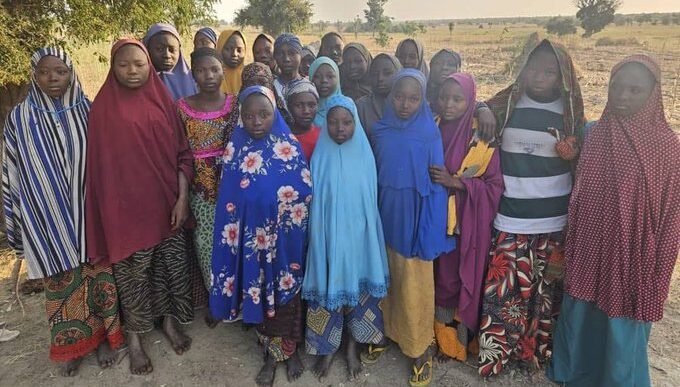
The first of the latest attacks unfolded on November 17 in Kebbi State, when heavily armed bandits invaded the Government Girls Comprehensive Secondary School in Maga. According to eyewitness accounts, the gunmen stormed the school in the early morning, firing rapidly and causing chaos as panicked students fled in the dark. During the assault, the school’s vice principal, Hassan Yakubu Makuku, was killed, while 25 female students were forcibly taken away.
Less than a week later, the country was shaken again — this time by an even larger attack. In the Papiri community of Niger State, more than 300 students and 12 teachers were abducted from St. Mary’s Catholic School. Reports indicate that around 50 children later managed to escape, but hundreds of others remain in captivity.
The twin tragedies are part of a growing pattern of attacks on educational institutions in northern Nigeria, with schools increasingly targeted as symbols of government authority, vulnerable soft targets, and sources of hostages valuable for ransom negotiations.
Washington Responds With Outrage
Following the Niger and Kebbi kidnappings, the United States reacted swiftly and sharply.
A senior U.S. State Department official issued a public statement condemning the mass abductions, demanding the immediate and unconditional release of the children and school staff. The official emphasized that Nigeria must treat these attacks not only as criminal acts but as violations of fundamental human rights and international law.
American lawmakers issued even stronger statements. Senator Jim Risch, a leading voice on African foreign policy matters, criticized Nigerian authorities for what he described as a continued failure to protect schoolchildren. He stated that the U.S. would “hold Nigeria accountable” for ensuring the safety of students and preventing repeated mass kidnappings.
Congressman Riley Moore also spoke out, urging international solidarity and calling the abductions heartbreaking. He lamented that Nigerian families had once again been forced to endure fear, trauma, and uncertainty because schools — places of learning and growth — have become dangerous battlegrounds.
These U.S. reactions underscore a deepening diplomatic concern in Washington, as officials question whether Nigeria’s security strategy is capable of halting the wave of school kidnappings that has plagued the country over the last decade.
A Global Chorus of Condemnation
The United States is not alone in demanding action. Leaders and institutions across Africa and the world have also expressed outrage.
The African Union Commission denounced the attacks as “despicable,” calling for urgent efforts to not only rescue the abducted children but to hold the perpetrators accountable through national and international legal mechanisms. The Commission described the repeated assault on schools as “a threat to Africa’s collective future.”
The African Commission on Human and Peoples’ Rights echoed these sentiments, stressing that the attacks highlight systemic security lapses that need immediate correction. The Commission demanded transparent investigations into both abductions and urged the Nigerian government to overhaul its approach to protecting students and teachers.
United Nations officials also expressed alarm. A spokesperson for the UN stated that schools must remain safe spaces for learning and development, and that no child should live in fear of violence when pursuing their education. UNICEF called for stronger structural and physical protection for schools in rural and vulnerable areas, warning that frequent student abductions destroy families, communities, and confidence in education.
Non-governmental organizations, including Amnesty International and international education advocacy groups, also criticized Nigeria’s security systems, stating that repeated school attacks reveal deep-rooted governance failures. According to these groups, Nigeria’s response must shift from reactive rescue operations to proactive protection and prevention strategies.
Domestic Fallout and Mounting Political Pressure
Back home, the tragedy has sparked tension, outrage, and intense political scrutiny.
The Nigerian Senate has launched a formal probe into the nation’s Safe School Fund, asking why large sums allocated to protecting educational institutions have not translated into better on-the-ground security. Lawmakers argued that if millions have been spent over the years, there must be clear evidence of how the money was used — especially given that attacks on schools continue unabated.
Some senators called for the recruitment of thousands of additional security personnel, noting that the Nigerian military and police are overstretched across multiple internal conflicts. Several lawmakers described the repeated school kidnappings as an “existential crisis” for the nation’s education system.
President Bola Tinubu dispatched Vice President Kashim Shettima to Kebbi State to console families and assure citizens that the government would pursue every available avenue to rescue the students. Shettima also pledged reforms to ensure that school attacks do not continue.
National student groups, including the National Association of Nigerian Students (NANS), demanded more than promises. Leaders argued that Nigerian security agencies need new strategies, better funding oversight, and improved intelligence capabilities. According to the students’ union, parents and communities should not have to live with the constant fear of sending their children to school.
Traditional, religious, and community groups have also spoken out. Many warn that if schools remain unsafe, rural parents may withdraw children from formal education, potentially reversing years of progress on literacy, girls’ education, and youth development.
Why the U.S. Reaction Matters
The United States plays a significant role in African security, including through training, intelligence cooperation, counterterrorism programs, and foreign aid. When Washington condemns school kidnappings with unusual urgency, several possibilities emerge:
Diplomatic Pressure
Public statements from the U.S. government increase Nigeria’s accountability on the international stage and could lead to more countries joining the call for reform.
Reevaluation of Security Partnerships
If the U.S. feels Nigeria is not doing enough to protect children, it could tie future assistance to measurable progress in security outcomes.
Moral and Symbolic Power
The U.S. statement shifts the framing of these abductions beyond national tragedy — presenting them as global violations of fundamental human rights.
The Human Toll Behind the Headlines
Behind every statement, press release, and political debate are the children — frightened, separated from their families, and uncertain about their futures.
Many of the abducted students are under 15 years old. They are enduring loneliness, trauma, and harsh conditions. Their parents, meanwhile, live in ongoing anguish, unable to sleep, eat, or regain peace while their children remain missing.
Teachers across the region are traumatized as well. Many now wonder if their profession has become too dangerous. Schools, universally regarded as places of safety, creativity, and progress, have in some areas become high-risk zones.
What Must Happen Next
For the condemnations to result in lasting progress, several key actions are essential:
- Immediate Rescue Operations
Security agencies must work around the clock to locate and recover the abducted students and staff safely. - Transparent Investigations
Independent inquiries must determine how the attacks happened, who is responsible, and where failures occurred. - Justice and Prosecutions
Nigeria must show that such attacks will not go unpunished. Arrests and trials — not just military responses — are critical. - Security Reform in Schools
Safe School funding must result in real security: fencing, surveillance, nearby military presence, community watch networks, and improved intelligence-gathering. - Trauma Support for Victims
Recovered students will need psychological, emotional, and developmental support to reintegrate into school and normal life. - Community Participation
Villagers, religious leaders, teachers, and youth can play key roles in early-warning systems and local defense networks.
Conclusion: A Turning Point for Nigeria
The United States has drawn a line in the sand, indicating that continued large-scale kidnappings of schoolchildren are no longer just a domestic concern. What happens next could define Nigeria’s global reputation, regional leadership, and its commitment to the future of its youth.
Will the country seize this painful moment to overhaul its school security framework? Or will these tragedies join a long list of unresolved injustices?
For the hundreds of children still in captivity, and for millions of others attending school across conflict-prone regions, the urgency could not be greater. Families, communities, and the world are watching — and waiting — for real change.