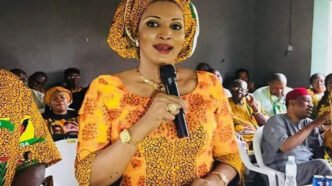
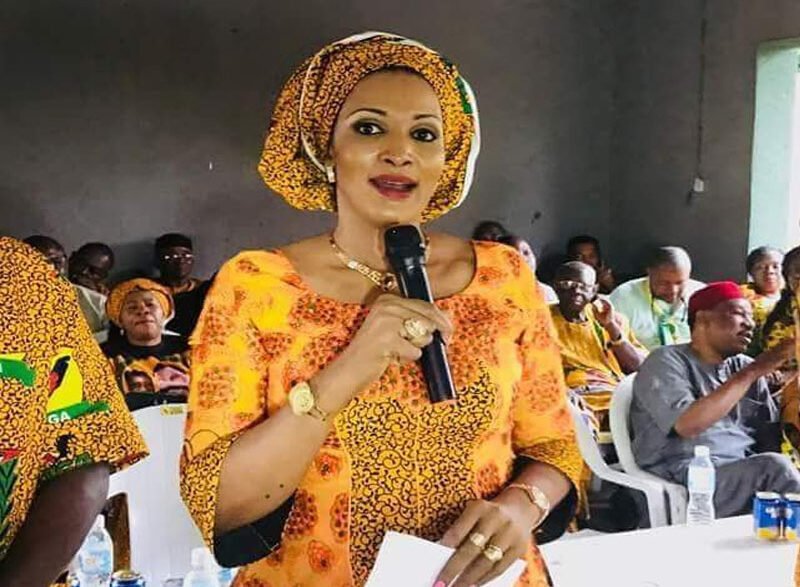
In a stirring address delivered at the 14th edition of the Dim Chukwuemeka Odumegwu Ojukwu Memorial Day — held at the Ojukwu Memorial Library in Owerri, Imo State — Bianca Odumegwu Ojukwu, the Minister of State for Foreign Affairs, appealed to the people of the South-East to reject violence and instead embrace dialogue and peaceful engagement in responding to the recent imprisonment of Nnamdi Kanu.
Her message, delivered against a backdrop of deep regional tension and national concern, underscores a call for unity, restraint, and strategic collective action rather than inflammatory responses.
📜 What Ojukwu Said — Key Highlights from the Memorial Address
- She acknowledged the court’s verdict against Kanu but urged the South-East community not to despair, stating that peaceful engagement and dialogue might still open paths for reconsideration of his imprisonment.
- She warned sharply against violence, declaring that resorting to knives, guns or fighting among themselves would not solve the crisis.
- With the festive season approaching, Ojukwu called on Igbo individuals and communities to take concrete steps: to meet with their National Assembly members and governors, and to strategize on how to engage with the federal government or presidency to peacefully resolve the matter.
- She urged traditional rulers, clergy, political actors, business leaders, and other influential stakeholders from across the South-East to mobilise collectively — emphasising that “constructive dialogue involving all Igbo stakeholders” remains the most effective path toward resolving the crisis.
- Beyond the immediate issue of Kanu’s detention, Ojukwu used the platform to highlight broader social concerns. She decried the declining use of the Igbo language among younger generations, urging parents to teach their children their mother tongue as a matter of cultural preservation and identity.
- She also lamented the rise of insecurity in the region — pointing to kidnapping, ransom, and internal violence — noting that such ills were alien to Igbo values even during the civil war. She argued that this wave of insecurity has scared away investors and stifled economic activity in the South-East.
⚖️ Background: What Led to This Appeal
A federal High Court in Abuja recently convicted Nnamdi Kanu on several terrorism-related charges and sentenced him to life imprisonment. The charges reportedly included incitement, membership of a proscribed organisation, destruction of public property, and other offences tied to his leadership of the banned Indigenous People of Biafra (IPOB).
In reaction to his sentencing, the South-East has been gripped by apprehension. Some fear possible violent protests or unrest by his supporters, while others — including victims of past unrest — believe the verdict brings justice and relief. The region is now sharply divided in opinion.
Added to this is economic fallout: recurring sit-at-home orders, disruption of commerce, insecurity, and dwindling investor confidence. Many in the South-East worry that renewed agitation or violence could worsen the region’s fragile socioeconomic situation.
🌍 Why Ojukwu’s Message Resonates — Broader Implications
1. Defusing Tension and Preventing Violence
Given the volatile mood in parts of the South-East, a call from a high-ranking federal official and a respected figure in Igbo history for calm and dialogue could help prevent violence, potential bloodshed, and further destabilisation.
2. Reframing the Path to Justice — Political and Diplomatic Engagement
By urging collective, organised, and peaceful engagement with government institutions — rather than street protests or unrest — Ojukwu reframes the path toward possible redress as political and diplomatic. This approach may encourage more moderate voices to coalesce around legal and institutional channels.
3. Reclaiming Igbo Identity and Promoting Unity
Her appeal for cultural preservation, unity among Igbo stakeholders (traditional rulers, youth, clergy, politicians), and strategic cooperation envisions a South-East that moves beyond agitation to rebuilding — socially, culturally, and economically.
4. Economic Stability and Investor Confidence
Highlighting how insecurity and disruptive directives have eroded business activity and chased away investors, Ojukwu is making a case for peace not just as a moral imperative, but as an economic necessity for the region’s revival.
5. A Message with National and Diaspora Relevance
Given that the events surrounding Kanu have resonance beyond the South-East — affecting national cohesion and diaspora communities — a message advocating calm, dialogue, and political engagement sends a signal that the region seeks constructive solutions, not chaos.
🧭 What Might Happen Next — Possible Scenarios and Strategic Moves
- Mobilisation of Igbo Stakeholders: Traditional rulers, community leaders, business figures, religious leaders, and politicians from across the South-East may convene to chart a unified approach toward negotiating with the federal government. That could involve petitions, delegations to Abuja, or appeals to the presidency.
- Calls for Clemency or Reconsideration: Groups such as trade associations and civil society may push the federal executive to consider clemency or other remedial measures, citing social stability and economic revival as reasons.
- Shift to Non-violent Advocacy: Rather than sit-at-home orders or protests, advocacy may take the form of peaceful lobbying, legal reviews, media campaigns, or engagement with international partners interested in Nigeria’s stability.
- Cultural and Social Renewal: Ojukwu’s call for renewed emphasis on Igbo language and identity may spur community efforts to revive cultural education, language instruction, and greater social cohesion among youths — potentially reducing vulnerability to violent agitation.
- Economic Recovery Initiatives: Stakeholders might begin lobbying for incentives to bring back investors, or start grassroots business revival efforts — especially if peace and stability start to return to the region.
📣 Reactions and Contemporary Views — Divided Opinions
As expected, reactions across the South-East remain mixed. Some see the sentence as a long-overdue justice. To them — given years of insecurity, enforcement of sit-at-home orders, and alleged violence associated with agitation — the verdict brings relief and closure.
Others view the verdict as selective justice or political persecution — arguing that other parts of the country have seen similar unrest without comparable crackdowns. They believe the imprisonment deepens the sense of injustice and alienation felt by many Igbos.
Amid these sentiments, many nonetheless welcome Ojukwu’s appeal for calm and engagement — seeing it as a realistic, mature path that avoids bloodshed and opens room for political negotiation.
Meanwhile, commentators and analysts across Nigeria infer that this moment could determine whether the South-East heads towards a renewed cycle of unrest or a peaceful push for justice and structural reforms.
📰 Conclusion: A Call for Peace and Purposeful Engagement
The imprisonment of Nnamdi Kanu has stirred deep emotion, fear, and tension across the South-East. It threatens to reignite old wounds, stoke unrest, and deepen divisions. But in that fragile moment, Bianca Odumegwu Ojukwu’s voice emerges as a call to reason — urging her people to resist anger and embrace peaceful dialogue, collective advocacy, and strategic engagement.
Her message offers more than immediate calm: it points toward a broader vision — one where Igbo identity, unity, cultural pride, and enduring peace become the foundations for rebuilding and progress. As the region grapples with uncertainty, her appeal reminds all stakeholders that the path forward may lie not in conflict, but in conversation — not in chaos, but in cooperation.