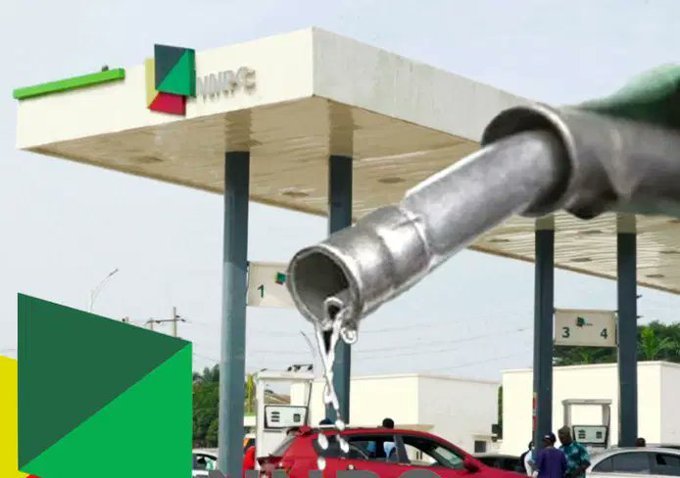
In a move that offers significant relief to motorists and households across Nigeria, the Nigerian National Petroleum Company (NNPC) Limited has reduced the pump price of Premium Motor Spirit (PMS), commonly known as petrol, at its retail stations. The new pricing regime places petrol at ₦900 per litre in Lagos and ₦940 per litre in Abuja, marking one of the most notable price reductions since the deregulation of the downstream sector.
This adjustment follows weeks of intense market activity, shifts in depot pricing, and ongoing conversations about the role of domestic refining in stabilising Nigeria’s volatile fuel market. The price drop, although modest, has been widely welcomed by consumers grappling with months of rising fuel and transportation costs.
A Needed Relief for Motorists and Commuters
For commuters and private car owners in Lagos, the new price of ₦900 represents a ₦10 reduction from the previous ₦910 per litre. In Abuja, the price adjustment to ₦940 reflects a downward movement from roughly ₦945. While the reduction appears small on paper, many Nigerians stress that even slight changes in fuel pricing often cascade into broader economic impacts, especially in transport-dependent urban centres.
Public transport operators, ride-hailing drivers, logistics firms, and small business owners who rely on petrol generators for daily operations are among those most immediately affected. With transportation costs being one of the key drivers of inflation in Nigeria, the reduction—if sustained—could help contain some of the pressure on food prices and essential goods.
Motorists across Lagos expressed mild optimism on Thursday morning as queues were shorter at several NNPC mega stations and independent marketer outlets. However, some filling stations had yet to adjust their pumps to reflect the new pricing, a common challenge that often delays the full benefit of any official price change.
Why the Price Dropped: Competition, Refining Capacity, and Policy Shifts
Several factors contributed to the latest adjustment, the most prominent being increased competition from domestic refining sources. In recent weeks, Dangote Petroleum Refinery reduced its ex-depot price for petrol, creating downward pressure on retail pump prices across the country. Dangote’s pricing structure, which has been shifting steadily downward, has placed NNPC and independent marketers under competitive pressure to remain attractive to consumers.
NNPC’s latest reduction therefore reflects both market forces and the company’s renewed commitment to supporting price stability for consumers in a deregulated environment.
In addition to competitive pricing, the Nigerian Midstream and Downstream Petroleum Regulatory Authority (NMDPRA) recently announced the withdrawal of a proposed 15 percent ad valorem duty on imported PMS and diesel. The reversal eliminated concerns over a potential increase in landing costs for fuel importation, helping maintain price levels and offering room for reductions.
Analysts also note that the gradual improvement in domestic supply — even if not yet at full capacity — plays a significant role in moderating costs. With Nigeria’s reliance on fuel imports historically contributing to price volatility, the expansion of local refining is widely viewed as a game-changer that could strengthen energy security and protect consumers from external shocks.
A Turbulent Year of Fuel Price Fluctuations
The new reduction is the latest in what has been a rollercoaster of fuel price changes in 2024 and 2025. Earlier in the year, petrol prices soared across major cities, hitting around ₦992 per litre in some parts of Lagos and over ₦950 in Abuja. These increases were largely attributed to fluctuations in global crude oil prices, supply chain disruptions, foreign exchange volatility, and the residual effects of subsidy removal.
Many Nigerians still vividly recall the days when fuel scarcity compounded the sharp rise in prices, with long queues at filling stations and transport fares doubling in some states. The economic impact of these fluctuations has remained a central talking point among policymakers and business leaders, especially as inflation continues to challenge household incomes.
The latest drop offers temporary relief, but the bigger question remains whether Nigeria can sustain stable fuel prices in the long term without revisiting subsidy mechanisms — a politically sensitive debate that has dominated national discourse since 2023.
Consumers Respond with Cautious Optimism
Across social media platforms and public transport hubs, Nigerians have reacted with cautious optimism. Some described the price reduction as “a breath of fresh air,” while others urged NNPC to ensure consistent supply to prevent queues from returning. Many consumers emphasized that reductions mean little unless independent marketers align with the new rates across the country.
A commercial bus driver at Oshodi, Lagos, expressed hope that transport fares might ease slightly, but noted that fare reductions are often slow to materialize. According to him, “Any time fuel price goes up, we adjust our fares immediately because we don’t want to run at a loss. But when price comes down, passengers expect us to cut fares straight away. It doesn’t always work like that unless the lower price stays for some time.”
The sentiment reflects a broader trust deficit among consumers who have witnessed repeated cycles of price hikes, short-lived reductions, and supply inconsistencies.
How Long Will the Price Drop Last?
One of the most pressing concerns among economists and citizens is whether the current pricing can be sustained. Several variables could influence future adjustments:
1. Global Crude Oil Prices
Nigeria is still heavily influenced by trends in the international oil market. A surge in crude prices could quickly erode current gains.
2. Exchange Rate Stability
Petrol pricing remains sensitive to forex fluctuations. Any major depreciation of the naira could push pump prices upward again.
3. Domestic Refining Output
Sustained operations and increased output from local refineries — particularly Dangote, modular refineries, and the rehabilitated government-owned refineries — could gradually stabilize prices.
4. Market Competition
The more competitive the downstream market becomes, the greater the pressure on marketers to keep prices reasonable.
5. Regulatory Environment
Government policy on duties, taxes, and deregulation remains central to price movements.
Impact on Transport, Goods, and Cost of Living
Lower petrol prices typically lead to reduced transport fares, although the effect is not always immediate. With logistics costs often cited as a major contributor to food inflation in Nigeria, the new price adjustment could slow down inflationary pressures if sustained long enough.
Small and medium-sized enterprises that rely heavily on fuel generators may also enjoy short-term cost savings. However, many business owners insist that the uncertainty surrounding fuel prices complicates long-term planning.
What to Expect in the Coming Weeks
Industry experts predict that other cities across Nigeria may soon witness similar price reductions as NNPC gradually adjusts pricing based on supply conditions and competition. Independent marketers are expected to follow suit once their depot costs align with the new realities.
Analysts advise consumers to monitor pricing trends cautiously, given fuel market volatility and Nigeria’s ongoing energy transition efforts.
Conclusion
The NNPC’s decision to reduce petrol prices to ₦900 per litre in Lagos and ₦940 in Abuja is a welcome development for millions of Nigerians struggling with high living costs. While the reduction provides short-term relief, the sustainability of this downward trend will depend on a combination of market forces, domestic refining capacity, regulatory decisions, and global economic factors.
For now, the price cut represents a positive shift in a year marked by fuel price turbulence. Whether this relief becomes a long-term trend or a temporary pause remains to be seen, but Nigerians — especially motorists — are hopeful that this development signals the beginning of more stable and consumer-friendly fuel pricing in the months ahead.