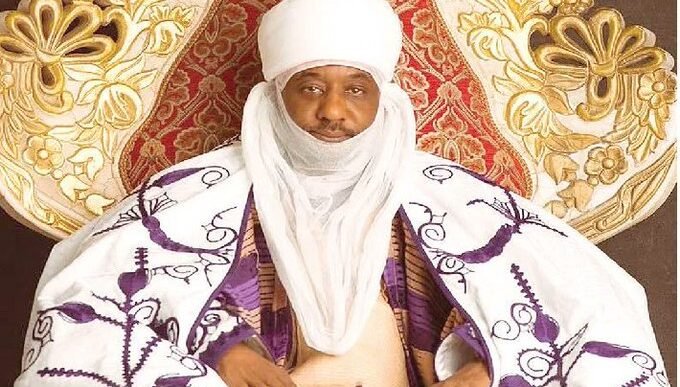

A major twist has emerged in the ongoing succession process for the revered Awujale of Ijebu-Ode throne, as the Fusengbuwa Ruling House, one of the key royal lineages in Ijebuland, has formally rejected the lineage claim of renowned Fuji icon, Wasiu Ayinde Marshall, popularly known as KWAM 1.
In a strongly worded statement issued on Monday, representatives of the ruling house dismissed the musician’s recently submitted linkage form — a document required for individuals indicating interest or eligibility for the royal stool — describing it as “null, void, and of no consequence.”
The announcement has stirred intense public interest within Ijebuland and across the Yoruba socio-cultural space, especially given the prominence of the Fuji musician, who has long been associated with the Ijebu palace and is widely regarded as a close associate of the late Awujale, Oba Sikiru Adetona.
A Sudden Twist in a Sensitive Succession Process
The death of the late Awujale marked the beginning of a careful and tradition-heavy succession exercise involving ruling houses, kingmakers, chiefs, and various cultural institutions. The throne of the Awujale of Ijebu-Ode is one of the most esteemed traditional seats in Yorubaland, with a selection process guided by history, genealogical records, and established customs.
Against this backdrop, KWAM 1’s submission of a lineage linkage form — the formal document used to assert hereditary ties to the ruling house — generated widespread conversation. While some observers viewed it as a symbolic or cultural gesture, others saw it as a bold claim of royal eligibility.
However, the Fusengbuwa Ruling House moved swiftly to clarify its stance, insisting that the musician does not descend from their lineage and therefore cannot legitimately identify with the royal family for the purpose of participating in the succession process.
Ruling House Position: “He Is Not From Us”
In their rejection, the ruling house stated that extensive genealogical checks had been conducted, and nowhere in their lineage records does the name or ancestry of Wasiu Ayinde Marshall appear. According to them, the musician’s claim contradicts established family history and is inconsistent with documented ancestral ties recognized by the Ijebu traditional council.
Representatives of the Fusengbuwa family emphasized that the Awujale succession is not a title anyone can claim through affinity, honorary association, or personal relationship with the palace. Instead, the process is strictly based on bloodline, genealogical validation, and ancestral heritage.
They further asserted that KWAM 1’s submission was not only invalid but also misleading, cautioning that such claims could distort historical accuracy and undermine the integrity of the succession process.
Public Reaction: Shock, Debate, and Cultural Reflection
News of the rejection has sparked widespread conversations among Ijebu indigenes, cultural scholars, and fans of the Fuji maestro.
For many, the development is surprising, given KWAM 1’s long-standing presence in traditional circles, his deep cultural expressions through music, and his close relationship with the late monarch. The musician has often performed at palace events, supported cultural festivals in Ijebuland, and aligned himself with the socio-cultural identity of the Ijebu people.
However, analysts are quick to note that personal affiliation with the palace does not automatically translate into eligibility for a hereditary title. The Awujale throne, like many Yoruba royal stools, is governed by strict lineage traditions designed to protect ancestral rights and prevent disputes.
Understanding the Awujale Succession Framework
To appreciate the significance of the ruling house’s statement, it is necessary to understand the process behind selecting a new Awujale.
The succession system:
- Rotates among recognized ruling houses
- Requires genealogical verification of applicants
- Involves kingmakers, chiefs, and traditional custodians
- Follows established customs documented across generations
- Prioritizes lineage purity and historical accuracy
The Fusengbuwa Ruling House is one of the prominent royal families with legitimate claims to the throne. Any individual interested in being considered must demonstrate direct descent from one of the rightful royal lineages and present genealogical evidence to back their claim.
The house insists that KWAM 1’s claim fails these criteria.
KWAM 1’s Position: Silence So Far
As of the time of reporting, Wasiu Ayinde Marshall has not issued a public statement responding to the ruling house’s declaration. The musician, celebrated globally as the “King of Fuji,” remains a highly influential cultural figure with strong ties to political, social, and traditional structures.
Some of his supporters argue that the debate could be rooted in misunderstandings about extended family heritage or distant ancestral connections. Others believe the musician may have acted based on information passed down orally within his family.
Nevertheless, without concrete genealogical evidence recognized by the ruling house, the claim remains rejected.
Implications for the Awujale Selection Process
The rejection of KWAM 1’s lineage claim removes any ambiguity about his eligibility for the throne and reinforces the ruling house’s commitment to a transparent, historically grounded succession.
The episode also highlights the sensitivity surrounding royal claims in Nigeria, where traditional titles remain powerful cultural symbols associated with prestige, influence, and community leadership.
Analysts note that the swift public clarification may have been aimed at preventing confusion, avoiding unnecessary controversy, and protecting the integrity of the Awujale stool during this delicate transition period.
Ijebu Stakeholders Call for Respect for Tradition
In the wake of the ruling house’s statement, several cultural leaders within Ijebuland have called on the public to respect the traditions guiding royal matters. They urged calm, emphasizing that succession issues are sacred and must not be trivialized or politicized.
They also noted that the late Awujale was strict about preserving the dignity and authenticity of the Ijebu royal lineage — a principle the custodians of his legacy appear determined to uphold.
Community representatives added that the involvement of prominent figures such as KWAM 1 underscores the need for clarity, unity, and adherence to due process.
Broader Cultural Significance
The situation offers a moment of reflection on the intersection between celebrity influence and traditional institutions in modern Nigeria. While entertainers and public figures often play significant roles in cultural promotion, traditional authority systems remain rooted in ancestry and historical legitimacy.
Across Yoruba land, royalty is not determined by popularity, wealth, or cultural contributions, but by verifiable descent from designated ancestral families.
The Fusengbuwa Ruling House’s statement reaffirms that heritage remains the uncompromising foundation of kingship.
What Comes Next?
With the rejection now formally stated, attention turns back to the broader Awujale selection process. The ruling houses, kingmakers, and traditional council will continue deliberations to identify a candidate whose lineage, character, and cultural alignment meet the stringent requirements for the throne.
Meanwhile, the public awaits KWAM 1’s response, which may help clarify his understanding of his familial history or address the controversy surrounding his submitted form.
The ruling house maintains that its position on the matter is final as far as genealogy is concerned.
Conclusion
The Fusengbuwa Ruling House’s decisive rejection of Wasiu Ayinde Marshall’s lineage claim marks a significant moment in the ongoing Awujale succession discourse. Their declaration that his linkage form is “null, void, and of no consequence” reinforces the weight of tradition, genealogy, and ancestral authenticity in royal matters.
While the development has generated debate due to KWAM 1’s cultural prominence, the ruling house’s stance underscores the enduring principle that royal succession is rooted in bloodline — not influence, popularity, or personal affiliation.
As the selection process moves forward, the Ijebu community continues to watch closely, hoping for a smooth and culturally grounded transition to the next Awujale of Ijebu-Ode.