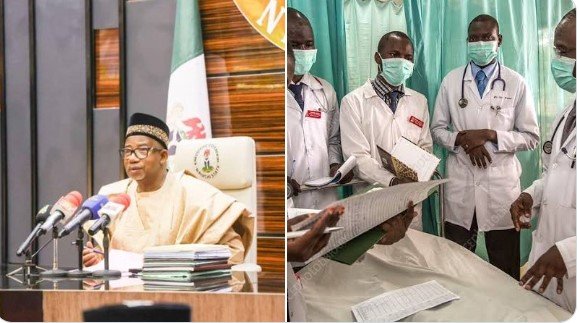
The Bauchi State Government has approved a 100 per cent salary increase for doctors and other health workers in the state, a major policy decision aimed at boosting morale, curbing brain drain, and encouraging medical professionals to remain in public service within the state.
The announcement marks one of the most significant pay reviews in the state’s health sector in recent years and comes amid nationwide concerns over the migration of doctors, nurses, and allied health professionals in search of better remuneration and working conditions.
Government’s Rationale
According to state officials, the decision was taken after extensive consultations with health sector stakeholders and labour unions. The government said the salary adjustment is designed to recognise the critical role of healthcare workers, improve service delivery, and strengthen the state’s health system.
Healthcare workers in Bauchi have long complained of poor pay compared to counterparts in other states and at the federal level, a situation that has contributed to frequent resignations and industrial actions.
“This is about valuing those who save lives,” a senior government source said. “We cannot build a functional health system if our doctors and nurses are constantly leaving.”
Scope of the Salary Increase
The approved 100 per cent salary increase reportedly covers medical doctors, nurses, pharmacists, laboratory scientists, and other allied health workers employed by the Bauchi State Government.
While detailed implementation guidelines are expected to be released by the Ministry of Health and the Ministry of Finance, the increase is believed to apply to basic salaries and selected allowances, effectively doubling workers’ monthly earnings.
The government assured beneficiaries that the adjustment would be reflected promptly and sustainably in the state’s payroll.
Addressing Brain Drain in the Health Sector
Nigeria’s health sector has been severely affected by the mass migration of professionals to countries offering better pay and working conditions. States like Bauchi, with fewer resources and rural-heavy populations, have been particularly vulnerable.
By approving a 100 per cent salary increase, Bauchi State aims to stem the tide of resignations, attract skilled professionals, and retain experienced personnel in its hospitals and primary healthcare centres.
Health policy experts say competitive remuneration is a key factor in retaining healthcare workers, alongside infrastructure, training opportunities, and workplace safety.
Reactions from Health Workers
Initial reactions from doctors and health workers in the state have been largely positive. Many described the move as a bold and timely intervention, especially in the face of rising living costs and increasing workloads.
“This gives us hope,” said a senior nurse at a state-owned hospital. “It shows that the government is listening and values our contribution.”
Medical associations are expected to engage the state government to ensure transparent implementation and address other outstanding issues, including equipment shortages and staff welfare.
Economic and Budgetary Considerations
The salary increase will significantly raise the state’s recurrent expenditure, prompting questions about sustainability. However, the Bauchi State Government maintained that the decision was carefully evaluated and factored into its fiscal planning.
Officials said improved healthcare outcomes, reduced turnover, and better service delivery would ultimately justify the increased spending.
Economists note that while higher wages can strain state finances, strategic investment in health has long-term economic benefits, including improved productivity and reduced healthcare costs.
Broader Implications for Other States
The Bauchi decision may put pressure on other state governments to review health workers’ salaries, particularly as competition for skilled medical professionals intensifies across Nigeria.
Labour unions and professional bodies are likely to use the development as a benchmark in negotiations with other states and at the federal level.
What Comes Next
The state government is expected to issue a formal circular detailing the effective date, beneficiary categories, and payment structure of the salary increase.
Health sector unions have called for continuous dialogue to ensure that the pay rise is complemented by improvements in facilities, staffing levels, and working conditions.
Conclusion
The approval of a 100 per cent salary increase for doctors and health workers in Bauchi State represents a decisive step toward strengthening the state’s healthcare system. By prioritising the welfare of medical professionals, the government aims to retain talent, improve service delivery, and reassure residents of its commitment to public health.
As implementation begins, attention will focus on sustainability and whether the move can translate into measurable improvements in healthcare access and outcomes for the people of Bauchi State.