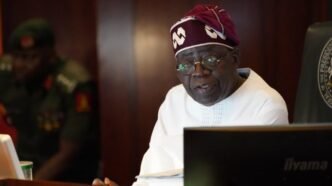

President Bola Ahmed Tinubu has approved the cancellation of a substantial portion of debts owed by the Nigerian National Petroleum Company Limited (NNPC Ltd) to the Federation Account, wiping off obligations amounting to $1.42 billion and ₦5.57 trillion following an extensive reconciliation exercise between relevant government institutions.
The debt relief decision is contained in an official document prepared by the Nigerian Upstream Petroleum Regulatory Commission (NUPRC) and presented at the November 2025 meeting of the Federation Account Allocation Committee (FAAC).
The report, titled “Report of October 2025 Revenue Collection Presented at the Federation Account Allocation Committee Meeting Held on 18th November 2025,” was obtained by The PUNCH on Sunday and provides fresh insight into the fiscal relationship between the national oil company and the federation.
Outcome of Revenue Reconciliation Exercise
According to the document, the debts were written off after a comprehensive reconciliation of records between NNPC Ltd and the Federation Account, resolving long-standing discrepancies over crude oil revenue remittances, cost recoveries, and subsidy-related deductions.
The reconciliation exercise reviewed historical financial obligations arising from crude oil sales, joint venture cash calls, production losses, pipeline maintenance costs, and legacy subsidy claims, some of which had accumulated over several years.
Officials familiar with the process said the exercise aimed to clean up inherited accounting issues, align records with post-Petroleum Industry Act (PIA) reforms, and establish a clearer financial baseline for future revenue remittances.
Breakdown of the Cancelled Debt
The report presented to FAAC shows that the approved cancellation covered:
- $1.42 billion in foreign currency obligations linked largely to crude oil sales and international settlement balances.
- ₦5.57 trillion in naira-denominated debts related to domestic crude allocation, under-recovery claims, and operational cost adjustments.
While the document did not publicly itemise each debt component, it confirmed that the write-off followed presidential approval after submissions by the relevant regulatory and fiscal authorities.
Tinubu’s Fiscal Reset Strategy
The debt cancellation aligns with President Tinubu’s broader economic reform agenda, which seeks to stabilise public finances, improve transparency in the oil and gas sector, and restore confidence in government revenue management.
Since assuming office, the President has prioritised the restructuring of fiscal obligations inherited from previous administrations, including fuel subsidy arrears, foreign exchange liabilities, and inter-agency debts that have weighed down federal revenues and strained relations between revenue-generating agencies and subnational governments.
Economic analysts say the decision reflects a pragmatic approach to resolving disputes that have repeatedly delayed FAAC distributions and created uncertainty for state and local government finances.
Implications for FAAC Allocations
The Federation Account is the pool from which revenues are shared monthly among the federal, state, and local governments. Persistent disagreements over NNPC remittances have historically affected the size and predictability of FAAC allocations.
By cancelling the reconciled debt portion, the Federal Government is expected to reduce future deductions from oil revenue remittances, potentially improving cash flow clarity for all tiers of government.
However, experts caution that the immediate impact on FAAC distributions may be limited, depending on prevailing crude oil prices, production levels, and ongoing operational costs in the oil sector.
Transparency and Accountability Concerns
The debt cancellation has also reignited discussions about transparency and accountability in Nigeria’s oil revenue management.
Civil society groups and fiscal transparency advocates have long criticised the opaque nature of NNPC’s financial dealings with the Federation Account, arguing that unclear deductions and reconciliations undermine public trust.
With NNPC now operating as a limited liability company under the Petroleum Industry Act, stakeholders expect stricter financial discipline, clearer reporting standards, and timely remittance of revenues.
The reconciliation exercise, officials say, represents part of the ongoing effort to align NNPC’s operations with commercial principles while maintaining its obligations to the federation.
Role of the Nigerian Upstream Petroleum Regulatory Commission
The NUPRC, which prepared the report presented at FAAC, plays a central role in regulating upstream petroleum operations and ensuring accurate measurement and reporting of crude oil production and revenues.
By leading the reconciliation process, the commission helped resolve discrepancies between production figures, sales records, and revenue remittances, which had previously resulted in contested debt figures.
Industry observers note that the involvement of the regulator adds credibility to the reconciliation outcome, although they stress the need for sustained oversight going forward.
Historical Context of NNPC Debt Disputes
Disagreements over NNPC’s remittances to the Federation Account are not new. Over the years, FAAC meetings have frequently been delayed or concluded amid disputes over under-recovery claims, pipeline losses, and operational deductions.
In some instances, states have accused the national oil company of withholding revenues, while NNPC has maintained that deductions were legitimate and approved by relevant authorities.
The current write-off suggests an attempt to draw a line under these disputes, at least with respect to the reconciled amounts.
What Comes Next
Going forward, government officials say the focus will shift to preventing the re-accumulation of similar debts by strengthening real-time reconciliation, improving metering infrastructure, and enforcing compliance with post-PIA fiscal rules.
There are also expectations that future FAAC reports will reflect clearer separation between NNPC’s commercial operations and its obligations to the federation.
For President Tinubu’s administration, the cancellation represents both a fiscal clean-up exercise and a test of its commitment to reforming Nigeria’s most critical revenue-generating sector.
As Nigeria continues to grapple with budget deficits, rising debt service costs, and pressure on public finances, the handling of oil revenues remains central to the country’s economic stability and intergovernmental relations.