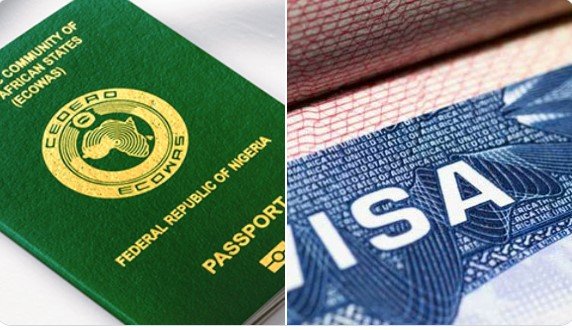
The United States government has introduced a new and far-reaching travel restriction affecting Nigerian citizens applying for B1/B2 non-immigrant visas, a category commonly issued for business and tourism purposes. Under the new policy, eligible applicants may be required to post a visa bond of up to $15,000 as a condition for visa consideration, a move that has sparked widespread debate, concern, and uncertainty across Nigeria.
According to official information accompanying the announcement, the bond payment does not guarantee visa issuance, nor does it override existing eligibility requirements. U.S. authorities further clarified that any fees paid without the explicit direction of a U.S. consular officer will not be refunded, reinforcing that the bond is not a standard application fee but a discretionary requirement applied on a case-by-case basis.
What the New Policy Means
The B1/B2 visa category covers short-term travel to the United States for business meetings, conferences, medical visits, tourism, and family visits. For decades, it has been one of the most commonly sought U.S. visas by Nigerians.
Under the new measure, some Nigerian applicants deemed higher-risk by U.S. immigration authorities may be asked to deposit a refundable bond ranging from several thousand dollars up to $15,000. The bond is intended to serve as a financial guarantee that the visa holder will comply with the terms of the visa, including departing the United States before the authorized period of stay expires.
If the visa holder complies fully with U.S. immigration rules, the bond is expected to be refunded after departure. However, if the individual overstays, violates visa terms, or fails to depart as required, the bond may be forfeited.
No Automatic Application, No Guarantee
U.S. officials emphasized that the bond requirement is not automatic and does not apply to all Nigerian applicants. Instead, it is at the discretion of consular officers during the visa adjudication process. Applicants are not expected to pay or attempt to pay any bond unless specifically instructed by a consular officer.
Crucially, the U.S. government stressed that posting a bond does not guarantee that a visa will be approved. Visa decisions will continue to be made based on existing U.S. immigration law, including assessments of ties to Nigeria, travel history, purpose of visit, and likelihood of return.
Rationale Behind the Decision
While U.S. authorities have not singled out Nigeria alone in broader policy statements, immigration analysts note that the decision aligns with Washington’s long-standing concerns about visa overstays and immigration compliance.
Data from previous years have shown relatively high overstay rates among certain non-immigrant visa holders from various countries, including Nigeria. U.S. officials argue that the bond requirement is a compliance tool rather than a punitive measure, designed to encourage lawful travel behavior and protect the integrity of the U.S. immigration system.
The policy is also consistent with existing provisions under U.S. immigration law, which allow for visa bonds to be imposed on applicants deemed at risk of overstaying, even though such measures have rarely been enforced on this scale in recent years.
Reaction in Nigeria
The announcement has triggered intense reactions across Nigeria, particularly among frequent travelers, business executives, students’ families, medical tourists, and middle-class citizens who rely on short-term U.S. travel.
Many Nigerians have expressed concern that the bond requirement effectively places U.S. travel beyond the reach of ordinary citizens, given the current exchange rate and economic conditions. At $15,000, the bond translates into tens of millions of naira, a sum widely considered prohibitive for most applicants.
On social media platforms and public forums, critics argue that the policy amounts to economic discrimination, while others view it as a diplomatic signal reflecting strained perceptions of migration compliance.
Business and Economic Implications
The development is expected to have significant implications for business travel between Nigeria and the United States. Nigerian entrepreneurs, corporate executives, and professionals who regularly attend meetings, trade fairs, and investment forums in the U.S. may face new financial and logistical barriers.
Tourism and hospitality sectors on both sides may also feel the impact, as fewer Nigerians may be willing or able to pursue short-term visits under such stringent financial conditions.
Medical travel is another area of concern. Nigerians frequently travel to the U.S. for specialized medical care. For families already burdened by healthcare costs, the additional requirement of a large refundable bond could deter or delay urgent medical trips.
Diplomatic and Policy Context
The new visa bond requirement comes amid evolving U.S. immigration policies aimed at tightening enforcement while maintaining lawful travel channels. It also reflects a broader global trend among destination countries toward stricter border controls and risk-based visa assessments.
Diplomatic observers note that while the policy does not constitute a visa ban or blanket restriction, it may affect bilateral perceptions and people-to-people relations between Nigeria and the United States.
As of now, Nigerian authorities have not issued a formal response, though diplomatic engagement is expected as stakeholders seek clarification on the scope, implementation, and duration of the policy.
Legal and Procedural Considerations
Immigration lawyers caution Nigerian applicants to avoid misinformation and unauthorized payment channels. The U.S. government’s warning that fees paid without consular instruction will not be refunded underscores the risk of fraud, especially from visa agents or middlemen claiming to facilitate bond payments.
Applicants are advised to rely solely on official embassy communication and follow consular instructions strictly. Any bond, if required, is expected to follow a formal, documented process through authorized U.S. government channels.
What Applicants Should Know
Despite the growing anxiety, experts stress that the majority of Nigerian B1/B2 applicants may never be asked to post a bond. The requirement is expected to apply selectively, based on individual risk assessments rather than nationality alone.
Applicants with strong travel histories, clear purpose of visit, stable employment, and compelling ties to Nigeria may be less likely to face the bond condition.
Conclusion
The introduction of a potential $15,000 visa bond requirement for Nigerians applying for U.S. B1/B2 visas marks a significant shift in the travel landscape. While U.S. authorities frame the policy as a compliance mechanism rather than a restriction, its financial implications are substantial and far-reaching.
As Nigerians grapple with the realities of the new requirement, the development raises broader questions about global mobility, fairness in visa regimes, and the future of international travel for citizens of developing economies. For now, the message from U.S. authorities is clear: no bond should be paid without direct consular instruction, and no payment guarantees a visa—a reminder that access to global travel is increasingly shaped by both policy and perception.