The global football governing body, FIFA, has firmly confirmed that Iran will participate in the 2026 FIFA World Cup and play its scheduled matches in the United States, despite escalating geopolitical tensions and ongoing conflict in the Middle East.
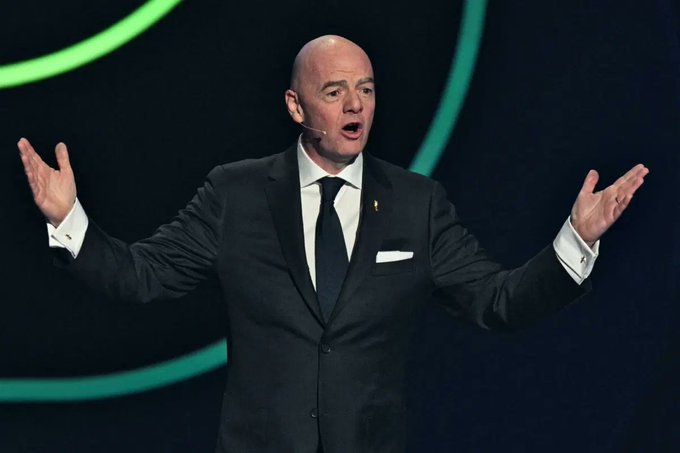
FIFA President Gianni Infantino made the declaration on Tuesday, putting to rest weeks of uncertainty and speculation surrounding Iran’s involvement in the tournament.
FIFA’s Clear Position: No Changes to Schedule
Infantino was unequivocal in his remarks, stating that Iran will not only take part in the World Cup but will also play its matches in the United States as originally planned.
“Iran will be at the World Cup,” he said, emphasizing that matches “will be played where they are supposed to be, according to the draw.”
The statement effectively rules out any possibility of relocating Iran’s fixtures to alternative host countries such as Mexico, an option that had been widely discussed in recent weeks due to security concerns.
FIFA has maintained that there is no contingency plan, reinforcing its commitment to the original tournament structure.
Background: Conflict Raises Doubts Over Participation
The confirmation comes against the backdrop of a major geopolitical crisis involving Iran, the United States, and Israel. The conflict has triggered global concern, with direct implications for international sports events, particularly the 2026 World Cup.
Iran had initially expressed concerns about playing matches in the United States, citing safety risks for players, officials, and supporters. Some Iranian officials even floated the idea of boycotting U.S.-based matches or relocating them to Mexico.
At one point, conflicting signals emerged from Tehran, with statements suggesting both possible withdrawal and conditional participation.
Despite these uncertainties, FIFA has consistently emphasized its goal of ensuring full participation from all qualified teams.
Iran’s Qualification and Group Fixtures
Iran secured qualification for the 2026 FIFA World Cup early, underlining its status as one of Asia’s strongest football nations.
The team has been drawn into a competitive group and is scheduled to play matches in major U.S. cities, including Los Angeles and Seattle.
According to tournament projections:
- Iran will face New Zealand in their opening match
- Additional group-stage opponents include Belgium and Egypt
These fixtures place Iran at the center of global attention, both for sporting and political reasons.
FIFA’s “Football First” Approach
FIFA’s stance reflects its long-standing principle of separating sports from politics. Gianni Infantino reiterated that football should serve as a unifying force, even in times of global conflict.
By insisting on Iran’s participation, FIFA aims to:
- Preserve the integrity of the tournament
- Avoid politicization of sporting events
- Promote global unity through football
Infantino also met with Iran’s national team during a recent engagement, expressing satisfaction with their preparations and confirming that “everything is fine.”
Security Concerns and Global Attention
Despite FIFA’s assurances, concerns remain about security during the tournament, especially given the evolving nature of modern conflicts.
Authorities in the United States have indicated that the 2026 World Cup will involve heightened security measures, including:
- Advanced surveillance and counter-drone systems
- Strict visa and entry protocols
- Increased coordination between international security agencies
These measures are seen as essential to ensuring the safety of players, officials, and fans.
The presence of Iran at the tournament is expected to draw significant global attention, both from football fans and political observers.
Mixed Signals from Political Leaders
The situation has been further complicated by differing political messages.
At various points, officials in the United States signaled that Iran would be allowed to participate, while also raising concerns about safety. Similarly, authorities in Iran have alternated between defiance and cautious engagement.
These conflicting positions added to the uncertainty, making FIFA’s latest statement a decisive intervention in the matter.
Symbolism Beyond Football
Iran’s participation in the World Cup is not just a sporting issue—it carries deep symbolic significance.
For many observers, the tournament represents:
- A rare platform for international engagement amid conflict
- An opportunity to ease tensions through cultural exchange
- A test of whether global sports can remain neutral in a polarized world
Iranian players have already drawn attention in recent months by honoring victims of ongoing conflicts, highlighting the human dimension behind geopolitical tensions.
Implications for the 2026 World Cup
The decision to proceed with Iran’s participation as scheduled has far-reaching implications:
1. Tournament Integrity
FIFA avoids disruption to the competition format and scheduling, ensuring fairness for all teams.
2. Political Neutrality
The move reinforces FIFA’s stance that football should remain independent of political disputes.
3. Global Spotlight
Iran’s matches are likely to attract heightened media coverage and international scrutiny.
4. Security Readiness
Host nations must now prepare for complex security scenarios involving geopolitical sensitivities.
A Defining Moment for Global Football
The 2026 FIFA World Cup, co-hosted by the United States, Canada, and Mexico, is already historic as the first edition to feature 48 teams.
However, Iran’s confirmed participation adds another layer of significance, turning the tournament into a potential test case for how global sports navigate geopolitical crises.
FIFA’s firm stance sends a clear message: the World Cup will proceed as planned, with all qualified teams participating, regardless of political tensions.
Conclusion
FIFA’s confirmation that Iran will compete and play its matches in the United States marks a decisive moment ahead of the 2026 World Cup.
While challenges remain—particularly around security and diplomacy—the governing body, FIFA, has made it clear that the tournament’s integrity and inclusivity will not be compromised.
As the world counts down to kickoff, all eyes will be on how football’s biggest stage manages the delicate balance between sport and global politics.