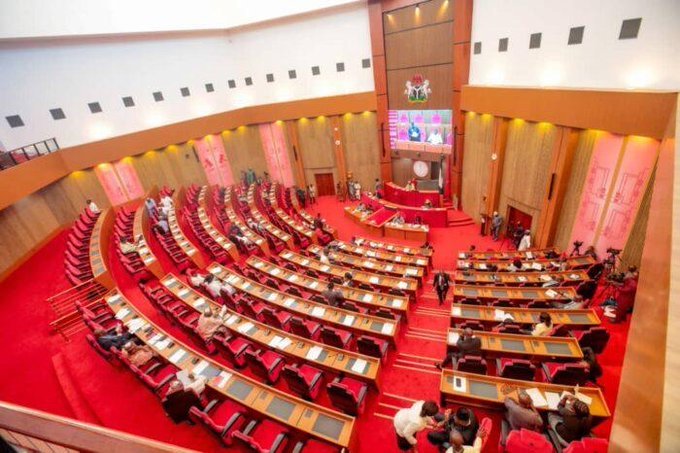
Abuja, Nigeria — The Nigerian Senate has approved President Bola Ahmed Tinubu’s request to obtain a ₦1.15 trillion domestic loan as part of the funding strategy for the 2025 Appropriation Bill, aimed at bridging the country’s fiscal deficit and sustaining key government projects.
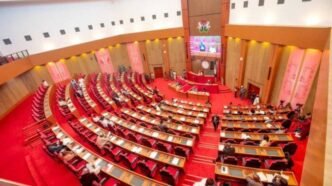
The approval followed the adoption of the report of the Senate Committee on Local and Foreign Debt, which was presented during Thursday’s plenary session at the National Assembly, Abuja.
Lawmakers Endorse Loan to Support 2025 Budget Implementation
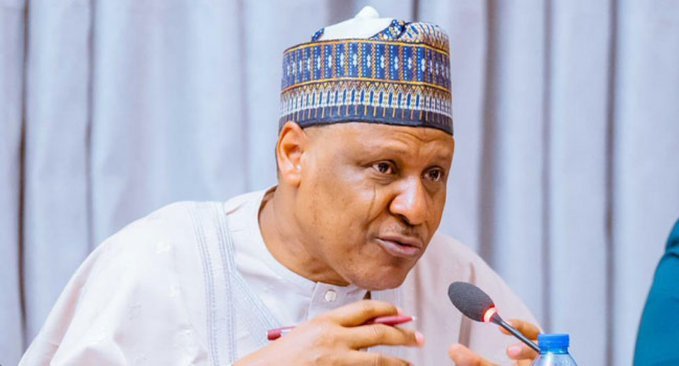
Presenting the report, Committee Chairman Senator Haruna Manu (Taraba Central) explained that the proposed domestic borrowing is necessary to finance critical sectors of the economy and address the shortfall in projected revenues for the 2025 fiscal year.
He noted that the borrowing plan forms part of the government’s medium-term debt strategy and is aligned with provisions in the 2025 budget, which prioritizes infrastructure, education, health, security, and agriculture.
“After thorough scrutiny, the committee recommends that the Senate approve the President’s request to raise ₦1.15 trillion from the domestic debt market. This will ensure adequate funding of key national projects and sustain economic growth,” Senator Manu said.
The Senate subsequently approved the recommendation through a voice vote presided over by Senate President Godswill Akpabio, effectively authorizing the Federal Government to proceed with the borrowing.
Loan to Be Raised from Domestic Capital Market
According to the report, the ₦1.15 trillion loan will be sourced from domestic financial institutions and capital markets, including government bonds, treasury bills, and other approved instruments.
Officials say the government opted for domestic borrowing to reduce exposure to foreign exchange volatility and limit the impact of external debt servicing obligations on Nigeria’s foreign reserves.
The Federal Ministry of Finance is expected to work closely with the Debt Management Office (DMO) to structure the borrowing plan and ensure compliance with existing debt sustainability frameworks.
“The domestic capital market remains a reliable and sustainable avenue for government borrowing. Funds raised will be used judiciously to complete ongoing projects and finance priority sectors,” the DMO noted in a brief submitted to the Senate committee.
Part of Broader Fiscal Strategy
The approval comes as part of President Tinubu’s broader fiscal plan to balance revenue generation and expenditure under the 2025 Appropriation Bill, estimated at over ₦27 trillion.
Of this figure, a significant portion is expected to be financed through a mix of domestic borrowing, external loans, oil revenues, and non-oil income.
Finance Minister Wale Edun had earlier stated that the government’s borrowing strategy is designed to ensure fiscal responsibility while maintaining macroeconomic stability.
“The 2025 budget is focused on growth, job creation, and fiscal consolidation. Borrowing will be used primarily for productive investments that will generate economic returns and not for recurrent expenditure,” Edun said.
Nigeria’s Public Debt Profile and Concerns
As of mid-2025, Nigeria’s total public debt stood at approximately ₦97 trillion, according to the Debt Management Office, combining both domestic and external obligations.
While economists have raised concerns about rising debt levels, the government insists that its debt-to-GDP ratio — currently around 38% — remains within acceptable international thresholds.
Nevertheless, fiscal analysts warn that increasing domestic borrowing could crowd out private investment, raise interest rates, and place pressure on inflation.
Dr. Ngozi Adeniran, a public finance expert at the University of Lagos, cautioned that while borrowing is sometimes necessary, the government must ensure the funds are deployed effectively.
“What matters is the efficiency of utilization. If the ₦1.15 trillion loan is used for infrastructure, power, and industrial support, it can stimulate growth. But if it funds consumption, it could worsen fiscal imbalance,” she said.
Senate Calls for Transparency and Oversight
During the debate preceding the approval, several senators emphasized the need for transparency and accountability in the management of the borrowed funds.
Senator Enyinnaya Abaribe (Abia South) urged the Federal Government to ensure that loan proceeds are strictly tied to productive projects with measurable economic impact.
“We cannot continue borrowing without visible results. Nigerians deserve to know how each loan improves their lives and contributes to national development,” he stated.
Similarly, Senator Ali Ndume (Borno South) called for regular updates from the Ministry of Finance and the DMO to the National Assembly to track implementation progress and repayment plans.
Senate President Akpabio assured Nigerians that the upper chamber would exercise its oversight powers to ensure prudent utilization of public funds.
“This Senate will not approve loans for frivolous spending. Every kobo borrowed must go into projects that directly benefit the people,” Akpabio said before putting the motion to a vote.
Projects Targeted for Funding
Although detailed disbursement plans are yet to be made public, sources in the Ministry of Budget and Economic Planning indicated that the loan will support key infrastructural and social investment programs, including:
- Completion of federal roads and bridges across six geopolitical zones;
- Upgrading of energy and power infrastructure;
- Expansion of agricultural value chains and rural development;
- Strengthening of educational and health facilities;
- Enhancement of national security and defense capabilities.
The government has repeatedly emphasized that its borrowing will prioritize projects with direct socioeconomic impact, particularly those that can generate employment and boost productivity.
Reactions from Civil Society and Economists
Reactions have been mixed following the Senate’s approval. Some civil society organizations welcomed the move as necessary to stabilize public finances, while others expressed concern over the growing debt burden.
The Centre for Fiscal Transparency and Accountability in Governance (CeFTAG) called for an open data portal where details of all loan disbursements and repayment schedules would be made accessible to citizens.
“Transparency is key to rebuilding public trust. Nigerians must see where borrowed funds are going and how they improve national productivity,” CeFTAG said in a statement.
However, the Civil Society Legislative Advocacy Centre (CISLAC) warned that Nigeria’s dependence on borrowing is unsustainable without a significant increase in revenue generation and expenditure control.
“The government must widen its tax base, curb corruption, and reduce wasteful spending to avoid mortgaging future generations,” CISLAC Executive Director Auwal Musa Rafsanjani said.
Next Steps
With the Senate’s approval secured, the Federal Government is expected to finalize arrangements with the Debt Management Office to issue the necessary instruments within the first quarter of 2025.
The proceeds will be integrated into the budget implementation framework to support capital expenditure and strategic interventions.
Analysts say timely disbursement and effective monitoring will be crucial to ensuring that the ₦1.15 trillion loan delivers tangible benefits to Nigeria’s economy.
Conclusion
The Senate’s endorsement of the ₦1.15 trillion domestic loan represents another critical step in financing the 2025 national budget and sustaining Nigeria’s economic recovery efforts.
While the government insists the borrowing is within safe limits, the development underscores the ongoing challenge of balancing fiscal discipline with the urgent need for infrastructure development and public service delivery.
As implementation begins, citizens and oversight institutions will be watching closely to see whether the new borrowing translates into visible improvements in living standards, job creation, and national development.