December 11, 2025
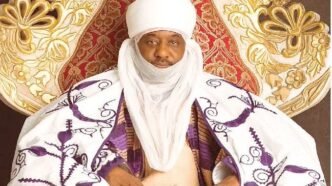
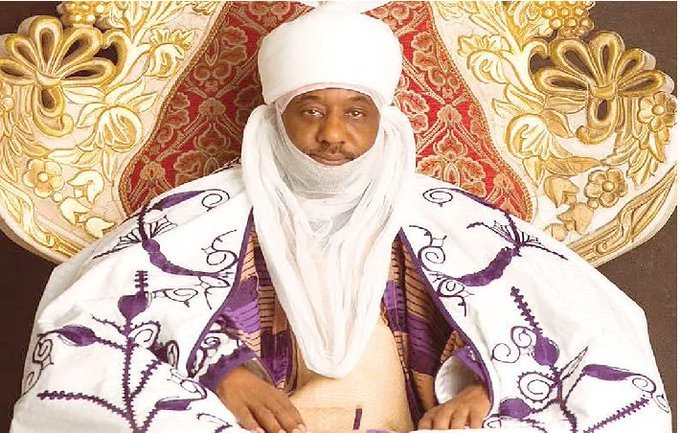
In a powerful and wide‑ranging address delivered in Lagos on Wednesday, the Emir of Kano, Muhammadu Sanusi II, issued one of his most forceful critiques to date of Nigeria’s political leadership, charging that the country’s political class is deliberately sabotaging national progress for self‑interest rather than serving the citizens. His remarks have reignited national debate over governance, accountability, and the future direction of the nation as Nigeria prepares for the next electoral cycle.
The speech — delivered at the 15th anniversary celebration of Enough is Enough (EiE) Nigeria, a civic advocacy group — addressed what Sanusi described as a pervasive problem in Nigeria’s public institutions: a political elite that treats public office not as a responsibility to the people but as a vehicle for personal enrichment and family advantage.
Accusations of Self‑Serving Leadership
Sanusi, a traditional ruler and former Governor of the Central Bank of Nigeria, did not mince words. In his address, he asserted that Nigeria’s political class has repeatedly squandered opportunities for development — and in some cases, deliberately missed them — because office holders prioritize personal and familial gains over national interest.
“Sometimes these are not just missed opportunities; they are deliberately missed opportunities,” Sanusi told the audience, underscoring his belief that systemic incentives within politics have warped the purpose of public office away from service to citizens toward self‑advancement.
According to his critique, those in positions of power think of public office as belonging to them, their families, and close associates, rather than belonging to the Nigerian people.
Sanusi’s Core Argument: Public Office is a Trust, Not a Family Business
Central to Sanusi’s remarks is the idea that those elected or appointed to lead Nigeria have failed to view leadership as a sacred trust. Instead, he said many see it as a family business — a way to expand influence, secure networks, and reward patronage.
“Public office is about themselves, it’s about their families, it’s about people close to them. It’s not about the country or the citizens; public office is about the citizens,” Sanusi said. The former central banker argued that this warped sense of purpose has eroded the foundational pillars necessary for progress.
The Call for Youth‑Led Transformation
Perhaps one of the most striking elements of Sanusi’s address is his appeal to young Nigerians — urging them to reject the “dysfunctional system manufactured for them” and instead articulate a shared vision for a new Nigeria built on equity, unity, and service.
Sanusi made it clear that transformation cannot be achieved through mere rhetoric; it must involve ideological clarity and concerted action across ethnic, religious, and regional lines. He challenged the youth to reclaim ownership of the nation, reminding them that Nigeria belongs to all its citizens, not just the political elite.
Historical Context: Sanusi’s Leadership and Commentary
Sanusi’s outspoken position on governance is informed by a varied career in both finance and traditional leadership. As a former Governor of the Central Bank of Nigeria, he grappled with macroeconomic challenges and attempted reforms before transitioning into traditional leadership as Emir of Kano. His perspectives stem from both his time managing national fiscal policy and his current role as a cultural voice in Nigerian affairs.
He has previously spoken against corruption, urged leaders to prioritize public service over profiteering, and encouraged structural reforms. His comments on Wednesday amplify these longstanding themes, focusing squarely on political accountability and national priorities.
Analysis: What Sanusi’s Message Means for Nigeria
Sanusi’s critique touches on several core issues that have dominated Nigeria’s public discourse for years:
- Governance Deficit: His remarks reflect a widespread perception that political leadership has not matched the nation’s potential, particularly in delivering basic services, job creation, and economic stability.
- Erosion of Institutional Trust: By framing public office as a private enterprise, Sanusi highlights the deep distrust many Nigerians feel toward political institutions and leaders.
- Youth Disillusionment: With a rapidly growing youth population, many young Nigerians have expressed frustration over unemployment, limited opportunities, and a political system they feel does not represent their interests.
- Need for National Reimagining: Sanusi’s call for an ideological reset suggests that the current political framework may not be sufficient to meet the aspirations of the next generation of Nigerians.
These themes reveal why his statements have resonated far beyond the event where they were delivered: they strike at the heart of Nigeria’s political culture and its long‑standing governance challenges.
Reactions from the Public and Civic Groups
While it will take time for broad public reactions to fully unfold, early responses show a mix of support and tension. Many Nigerians have praised Sanusi for speaking openly about issues others avoid, believing his commentary gives voice to shared frustrations about corruption and leadership failures.
Others argue that criticism without concrete solutions might deepen public disillusionment. Some commentators have pointed out that while Sanusi’s words resonate emotionally, transforming political culture requires targeted policy reforms, stronger institutions, and sustained civic engagement.
Implications for National Discourse and Future Leadership
Sanusi’s address arrives at a moment when Nigeria is navigating complex political terrain — with upcoming elections on the horizon and debates over leadership, governance, and national priorities intensifying.
His critique may spur:
- Renewed demands for accountability from public office holders
- Increased civic activism among young Nigerians
- Further scrutiny of political leadership and performance
- Broader public reflection on the purposes of governance
While the speech does not single out specific individuals or political parties, its broad critique is likely to fuel discussions about leadership quality and the role of citizens in shaping Nigeria’s future.
Conclusion: A Nation at a Crossroads
Emir Muhammadu Sanusi II’s assertion that Nigeria’s political class is sabotaging national progress resonates deeply with many Nigerians frustrated by decades of governance challenges. His declaration places the spotlight squarely on the motivations and responsibilities of political leaders, urging a new generation of citizens to rethink what public service should represent.
As Nigeria continues to grapple with economic, security, and social challenges, voices like Sanusi’s — which call for accountability, unity, and a reorientation of national priorities — will remain central to public debate, influencing how citizens and leaders alike envision the country’s next chapter.