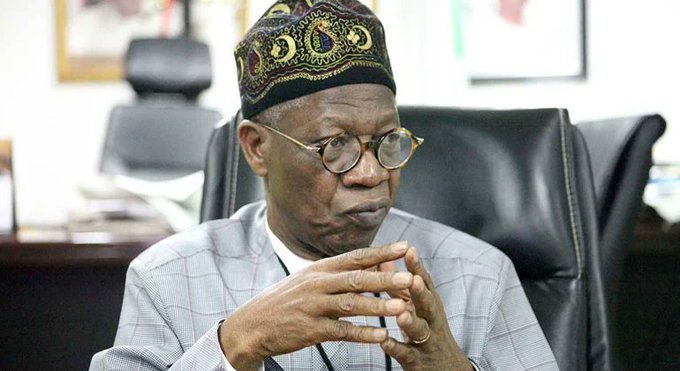
Lai Mohammed Reiterates Claim That Soldiers Fired Blank Bullets at Lekki Tollgate During #EndSARS Protests
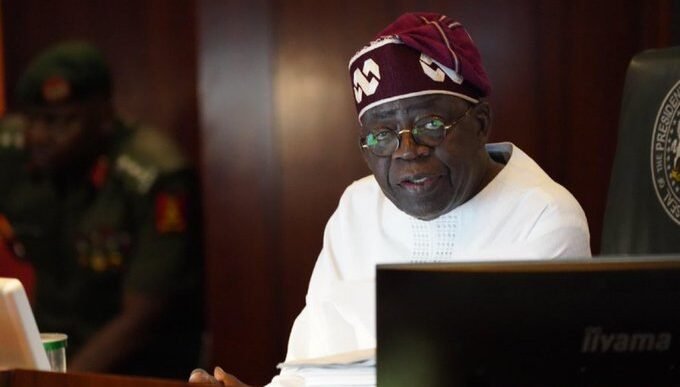
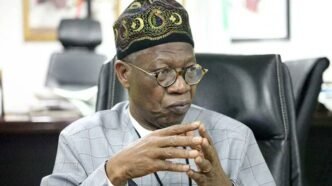
Former Minister of Information and Culture, Lai Mohammed, has again insisted that soldiers deployed to the Lekki Tollgate during the October 2020 #EndSARS protests were issued blank bullets, maintaining that no massacre took place at the tollgate despite widespread public belief and international reporting to the contrary.
Mohammed restated the Federal Government’s long-held position while speaking on Channels Television’s Sunrise Daily on Monday, nearly five years after the incident that has remained one of the most controversial episodes in Nigeria’s recent history.
“There Were Casualties, But No Massacre at Lekki” — Mohammed
According to the former minister, the Federal Government never denied that people lost their lives during the #EndSARS protests across Nigeria. However, he stressed that those deaths did not occur at the Lekki Tollgate, which became the symbolic epicentre of the protests.
“Our position on #EndSARS was very clear,” Mohammed said. “At no point did the Federal Government say there were no casualties during #EndSARS; there were casualties.”
He disclosed that 37 police officers and six soldiers lost their lives during the protests nationwide, adding that these figures were officially acknowledged by the government at the time.
“We reported them, we admitted them,” he said. “But what we said—and what we still insist on—is that there was no massacre at the Lekki Tollgate.”
Deaths Recorded Elsewhere, Not at the Tollgate
Mohammed explained that fatalities were recorded in several parts of the country during the unrest that followed the protests, including Kano, Abuja, and other locations, but not at the Lekki Tollgate.
“Nobody speaks about this, but we admitted it. We gave the numbers that lost their lives in Kano, in Abuja, everywhere,” he said. “But there were no massacres at the Lekki Tollgate.”
His comments reinforce the Buhari administration’s position during and after the protests, which consistently rejected claims that peaceful protesters were gunned down by soldiers at the tollgate.
Criticism of CNN and International Media
The former minister once again criticised international media coverage of the Lekki Tollgate incident, singling out CNN, whose 2020 investigative report drew global attention and intensified calls for accountability.
“And I think this is where I disagreed with CNN,” Mohammed said. “CNN was not at the Lekki Tollgate. CNN relied on poorly sourced stories to write its story.”
He accused foreign media outlets of amplifying misinformation and contributing to what he described as a false global narrative about Nigeria.
“A Massacre With No Bodies” — Mohammed’s Controversial Remark
Mohammed repeated one of his most controversial assertions, describing the Lekki Tollgate incident as “the only massacre in the world where there are no bodies.”
“This is the only massacre in the whole of the world where there are no bodies,” he said. “People died in Alimosho, people died everywhere, but there was no massacre at the tollgate.”
He challenged critics and activists to provide concrete evidence of deaths at the tollgate.
“I challenge anybody to come and tell me today that my son or my daughter was at the tollgate and didn’t come back home. It’s five years on,” he stated.
Claim: Soldiers Were Issued Blank Bullets
One of the most significant assertions made by Mohammed during the interview was that soldiers deployed to the Lekki Tollgate were issued blank ammunition.
“I know for a fact that soldiers were issued blank bullets when they went to the Lekki Toll Gate,” he said.
According to him, blank bullets are designed to disable or scare, not to kill, although he admitted he was not a ballistic expert.
“I’m not a ballistic forensic expert, but as of today, to the best of my knowledge, there was no massacre at the Lekki tollgate,” Mohammed stated.
He added that those involved in the operation were still alive, suggesting that none had been implicated in a fatal shooting.
Lagos State Panel Report and Government Response
Mohammed confirmed that he read and studied the report of the Lagos State Judicial Panel of Inquiry set up to investigate allegations of police brutality and the Lekki Tollgate incident.
“Of course, not only did I read it, I studied it,” he said, noting that he addressed the matter publicly shortly after returning from France at the time.
“I held a world press conference where I dissected it and explained what really transpired,” he added.
The Lagos panel’s report, which acknowledged that protesters were injured during the incident, remains a subject of intense debate, with conflicting interpretations from government officials, activists, and civil society groups.
Contact With Military Leadership
Mohammed said his confidence in his position was based on constant communication with top military officials, including the Chief of Army Staff and the Chief of Defence Staff, throughout the period of the protests.
“I was continually in touch with the Chief of Army Staff and the Chief of Defence Staff all through those operations,” he said. “We had meetings with them.”
According to him, officials at the highest level of government did not receive information indicating that soldiers fired live ammunition at protesters at the tollgate.
Claims of Fake News and Misinformation
The former minister blamed public perception of the incident on what he described as fake news and misinformation, insisting that Nigerians were emotionally inclined to believe the massacre narrative.
“There was a lot of fake news, a lot of misinformation,” he said. “Everybody wants to believe that people were massacred.”
He reiterated his challenge to anyone claiming to have lost a family member at the tollgate to come forward with verifiable evidence.
Twitter Suspension Linked to #EndSARS Fallout
While reflecting on the eight-year administration of former President Muhammadu Buhari, Mohammed also revisited the government’s decision to suspend Twitter (now X) in 2021.
According to him, the platform had become “a platform of choice for anybody who wanted to destabilise the country,” particularly in the aftermath of the #EndSARS protests.
The suspension, which lasted several months, drew widespread criticism locally and internationally and was seen by many as connected to the role social media played during the protests.
Background: The #EndSARS Protests
The #EndSARS movement began as a nationwide protest demanding the disbandment of the Special Anti-Robbery Squad (SARS) of the Nigeria Police Force over allegations of brutality, extortion, and extrajudicial killings.
What started as peaceful demonstrations later degenerated into violence in some parts of the country, with attacks on police stations, public buildings, and private property.
Although several activists and eyewitnesses have maintained that soldiers shot unarmed protesters at the Lekki Tollgate, the Buhari administration repeatedly denied the allegations.
Five Years On, the Debate Persists
Nearly five years after the incident, the Lekki Tollgate remains a powerful symbol of the #EndSARS movement. Annual remembrance rallies continue to be held, reflecting unresolved public anger, grief, and mistrust.
Mohammed’s latest comments have once again reopened old wounds, reinforcing the deep divide between official government narratives and the beliefs held by many Nigerians.
As the debate continues, the Lekki Tollgate incident remains one of the most defining and contentious moments in Nigeria’s democratic history, with calls for truth, justice, and reconciliation still echoing across the country.