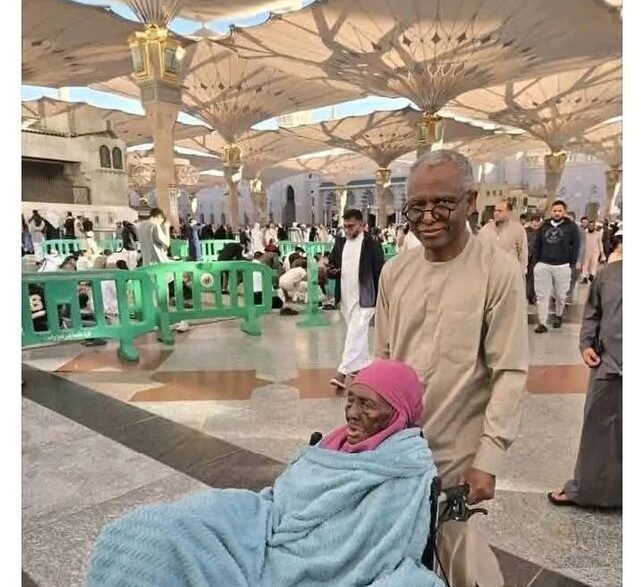
Nigeria’s anti-corruption agency, the Independent Corrupt Practices Commission (ICPC), has granted temporary bail to former Kaduna State governor, Nasir El-Rufai, following the death of his mother, Hajiya Umma El-Rufai.
The development, which occurred shortly after news of her passing on Friday, is intended to allow the former governor participate in the funeral rites and mourning activities in line with Islamic traditions. Hajiya Umma El-Rufai reportedly died in Cairo, Egypt, where she had been receiving care.
Compassionate Grounds for Release
Sources within the anti-corruption agency confirmed that El-Rufai’s temporary release was approved on humanitarian grounds, a practice not uncommon in Nigeria’s legal and law enforcement framework when individuals in custody experience bereavement.
Under Islamic customs, burial rites are typically conducted as soon as possible after death, often within 24 hours. As such, the presence of immediate family members—particularly male relatives—is considered important in overseeing funeral arrangements and prayers.
Granting temporary bail in such circumstances allows detainees to fulfill these obligations while still remaining subject to the authority of the law.
Although details of the conditions attached to the bail were not immediately disclosed, such arrangements are generally time-bound and may include restrictions designed to ensure compliance with ongoing investigations or legal proceedings.
Background to ICPC Custody
At the time of this report, the ICPC has not publicly outlined the full details of the circumstances that led to El-Rufai’s detention. However, the commission is constitutionally mandated to investigate and prosecute corruption-related offenses in Nigeria, particularly within the public sector.
Temporary bail does not imply exoneration or the conclusion of any investigation. Rather, it provides limited freedom under specific terms, after which the individual is expected to return to custody or continue cooperating with authorities as required.
Legal analysts note that such actions reflect a balance between the enforcement of anti-corruption laws and recognition of personal and cultural realities.
Profile of Nasir El-Rufai
Nasir El-Rufai is one of Nigeria’s most prominent political figures, with a career spanning several key positions in public service.
He served as governor of Kaduna State from 2015 to 2023, during which he implemented a range of reforms in sectors such as education, urban development, and public administration. His tenure was marked by both praise and criticism, particularly regarding policy decisions and governance style.
Before his governorship, El-Rufai held the position of Minister of the Federal Capital Territory (FCT) from 2003 to 2007, where he oversaw major urban reforms in Abuja, including efforts to enforce land use regulations and restructure city planning.
He has also been an influential voice in national politics, contributing to policy debates and political strategy at the federal level.
Reactions and Public Interest
News of the temporary bail has generated widespread reactions across Nigeria’s political and social landscape. Supporters of the former governor have expressed sympathy over his loss, offering condolences and prayers for the family.
At the same time, observers have emphasized the importance of ensuring that due legal process is maintained, noting that compassionate considerations should not interfere with the course of justice.
Public interest in the case remains high, given El-Rufai’s political stature and the broader implications of anti-corruption efforts in Nigeria.
The Role of the ICPC
The Independent Corrupt Practices Commission is one of Nigeria’s key institutions tasked with combating corruption. Established in 2000, the agency focuses on investigation, prosecution, and prevention of corrupt practices within government institutions.
Over the years, the ICPC has handled numerous high-profile cases involving public officials, contributing to ongoing efforts to strengthen accountability and transparency in governance.
The agency operates alongside other anti-corruption bodies, including the Economic and Financial Crimes Commission (EFCC), forming part of Nigeria’s broader institutional framework for tackling financial crimes.
Legal Context of Temporary Bail
Temporary bail or administrative release is a mechanism that allows detained individuals limited freedom under specific circumstances. In Nigeria, such decisions are typically made at the discretion of law enforcement agencies or through court orders.
Common grounds for temporary bail include:
- Medical emergencies
- Bereavement
- Humanitarian considerations
- Cooperation with ongoing investigations
Legal experts explain that granting temporary bail does not negate the authority of the agency involved, nor does it affect the substance of any allegations or investigations.
Instead, it reflects an acknowledgment of fundamental human considerations within the justice system.
Funeral Arrangements and Islamic Rites
The death of Hajiya Umma El-Rufai in Cairo has necessitated arrangements that may involve coordination between Nigerian and Egyptian authorities, particularly if the family decides to repatriate her remains.
Islamic funeral rites are guided by strict religious principles, including washing of the body (ghusl), shrouding (kafan), funeral prayers (janazah), and burial.
These rites are usually conducted swiftly, emphasizing dignity, simplicity, and community participation.
El-Rufai’s temporary release is therefore seen as enabling him to fulfill these responsibilities in accordance with his faith and cultural expectations.
What Happens After the Bail Period?
Following the conclusion of funeral rites and the expiration of the temporary bail period, El-Rufai is expected to comply fully with the terms set by the ICPC.
This may include:
- Returning to custody, if required
- Appearing before investigators
- Participating in any legal proceedings
Failure to adhere to the conditions of bail could result in additional legal consequences.
Authorities have not indicated any changes to the status of the investigation, suggesting that proceedings will continue as scheduled.
Broader Implications
The case highlights the intersection of law enforcement, politics, and societal values in Nigeria. It underscores the challenges faced by institutions in maintaining strict legal standards while also responding to humanitarian considerations.
For many Nigerians, the situation serves as a reminder of the importance of due process and the need for transparency in handling cases involving high-profile individuals.
It also raises broader questions about the consistency of legal practices and the perception of fairness in the justice system.
Conclusion
The granting of temporary bail to Nasir El-Rufai by the Independent Corrupt Practices Commission following the death of his mother reflects a blend of legal discretion and humanitarian consideration.
As the former governor mourns his loss and participates in funeral rites, attention will inevitably return to the circumstances surrounding his detention and the broader issues at stake.
With investigations ongoing and public interest high, the coming days are likely to bring further developments that will shape both the legal trajectory of the case and its political implications.
For now, the focus remains on mourning, family obligations, and the enduring cultural values that guide responses to loss in Nigerian society.