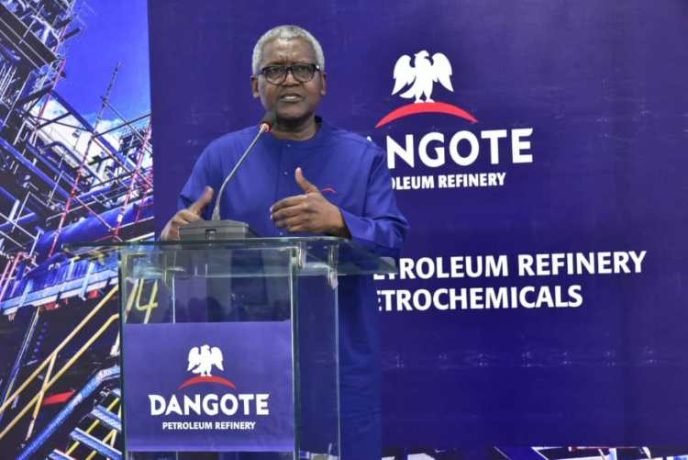
Africa’s leading industrialist and President of Dangote Industries Limited, Aliko Dangote, has revealed that he acquired his first private jet at the age of 22 and a half.
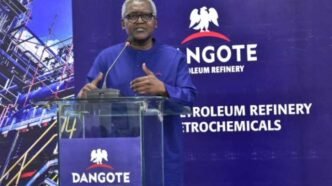
Dangote made the disclosure on Monday, September 14, 2026, while speaking at the Nigerian Exchange in Lagos during the formal launch of the Initial Public Offering of Dangote Petroleum Refinery and Petrochemicals.
Reflecting on his long career in business, the billionaire businessman said he had reached a point where private air travel no longer represented the attraction it once did, adding that he could comfortably travel on a commercial aircraft when necessary.
“My career as a businessman, I really had a great time. I was telling somebody that right now I don’t mind, I can take commercial, I can take anything. I had my first private jet at 22 and a half years old,” Dangote said.
His disclosure attracted attention because of how early in his business career he said he had acquired the aircraft.
Dangote urges wealthy Nigerians to invest in production
While recounting his experience, Dangote also used the occasion to urge wealthy Nigerians to direct more of their resources towards productive investments rather than spending heavily on luxury items such as private aircraft.
The industrialist specifically appealed to Nigerians who spend tens of millions of dollars on private jets to consider investing comparable amounts in factories and other productive ventures.
According to him, Nigeria cannot become a truly great economy without increasing its productive capacity.
Dangote said wealthy Nigerians with the financial capacity to acquire aircraft worth between $90 million and $100 million should consider putting such resources into businesses capable of creating economic value.
He argued that investment in production could contribute to employment creation, industrialisation and broader economic development.
‘We are not going to be a great nation without doing something productive’
Dangote’s comments reflected his long-standing emphasis on industrial production as a driver of economic growth.
He said he tries to encourage wealthy Nigerians to invest in productive sectors rather than concentrating their spending on luxury assets.
“We are not going to be a great nation without doing something productive,” he said.
The billionaire’s remarks came at an important moment for his business empire, with Dangote Petroleum Refinery and Petrochemicals beginning the process of offering shares to the Nigerian public.
The refinery IPO is expected to broaden ownership of the company by allowing investors to acquire shares in the business.
Dangote recalls Abuja parking experience
The businessman also recounted a recent experience in Abuja, where he said he spent about 30 minutes searching for a parking space.
He said the experience made him reflect on the scale of private consumption in the country and the need for greater emphasis on industrial development.
Dangote said he wished the area was filled with factories rather than private jets.
His comment was presented as an illustration of his broader argument that Nigeria needs more productive investments to strengthen its economy.
Dangote’s business journey
Dangote began building his business career at a relatively young age and subsequently expanded his interests from trading into manufacturing and large-scale industrial production.
His business empire now has interests spanning cement, sugar, flour, fertiliser, food processing, logistics and petroleum refining.
The Dangote Group has become one of Africa’s largest industrial conglomerates, while the Dangote Refinery has emerged as one of the continent’s most significant private-sector industrial projects.
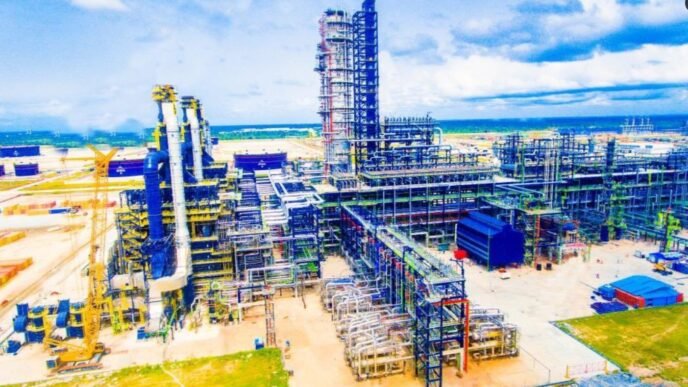
The refinery, located in Lagos, was built at an estimated cost of about $20 billion and has a design capacity of 650,000 barrels per day.
The facility has increasingly become central to Nigeria’s petroleum supply chain as it produces refined petroleum products for the domestic and international markets.
Dangote refinery IPO
Dangote’s comments came on the same day the refinery’s IPO formally opened.
The public offer, which opened on September 14, 2026, is priced at N525 per share, with investors able to subscribe for a minimum of 10 shares, requiring an initial investment of N5,250.
The offer involves approximately 4.1 billion ordinary shares of Dangote Petroleum Refinery and Petrochemicals.
The IPO represents one of the biggest public equity offerings in Nigeria’s capital market and is intended to increase public participation in the ownership of the refinery.
Dangote’s appearance at the Nigerian Exchange for the launch provided the setting for his reflections on his business journey and his changing attitude towards private aviation.
From private jet at 22 to commercial flights
Despite revealing that he acquired his first private jet at 22 and a half, Dangote said his attitude towards private air travel has changed.
He said he would now be comfortable travelling commercially when necessary, suggesting that private aviation is no longer something he considers essential.
The billionaire’s comments also underline the distinction between personal wealth and the deployment of capital.
While acknowledging his own experience with private aviation, he encouraged other wealthy Nigerians to consider whether large amounts of money spent on luxury assets could instead be used to establish businesses and expand productive capacity.
Focus on manufacturing and industrialisation
Dangote has consistently advocated increased investment in manufacturing and domestic production.
His business strategy over the years has increasingly focused on large-scale industrial projects intended to produce goods that Nigeria and other African countries previously imported.
The Dangote Cement business, for example, has expanded production capacity across several African countries, while the company’s fertiliser and refinery investments have positioned the group in strategic areas of the Nigerian economy.
The refinery is particularly significant because Nigeria has historically relied heavily on imported refined petroleum products despite being a major crude oil producer.
The development of domestic refining capacity is expected to reduce dependence on imports and create opportunities for local value addition.
A message to Nigeria’s wealthy class
Dangote’s latest remarks also come amid continuing debates over wealth, luxury consumption and investment in Nigeria.
Private jets have become increasingly visible among wealthy Nigerians, including businesspeople, politicians and entertainers.
The cost of acquiring and operating private aircraft can run into millions of dollars, depending on the type of aircraft, while maintenance, crew, insurance, fuel and airport-related expenses add substantially to ownership costs.
Dangote’s argument is that some of the capital deployed in luxury assets could instead be invested in productive enterprises capable of generating jobs and expanding Nigeria’s economic output.
His comments therefore go beyond private aviation and touch on a wider question about how private wealth can contribute to national development.
Dangote’s message at a significant business event
The remarks were made as Dangote Refinery entered a new phase through its public share offering.
The IPO gives investors an opportunity to participate in the ownership of a company that has become strategically important to Nigeria’s energy sector.
For Dangote, the occasion also provided an opportunity to reflect on his personal journey from a young businessman who acquired his first private jet in his early twenties to the head of one of Africa’s largest industrial conglomerates.
His statement that he can now take a commercial flight despite having access to private aviation was accompanied by a broader appeal for Nigeria’s wealthy individuals to prioritise investments that expand production.
The businessman maintained that a stronger productive base is essential if Nigeria is to achieve sustainable economic development.
Dangote’s disclosure that he acquired his first private jet at 22 and a half has since generated significant attention, but the central message of his appearance at the refinery IPO launch was focused less on personal luxury and more on the need for productive investment.
As Nigeria continues to seek stronger industrial capacity, the billionaire’s call for wealthy citizens to invest more in factories and productive businesses is likely to fuel further discussion about the role of private capital in the country’s economic development.