The directive is aimed at improving road conditions, reducing travel difficulties and ensuring safer movement of passengers, goods and services as Nigerians prepare for increased journeys during the Christmas and New Year celebrations.
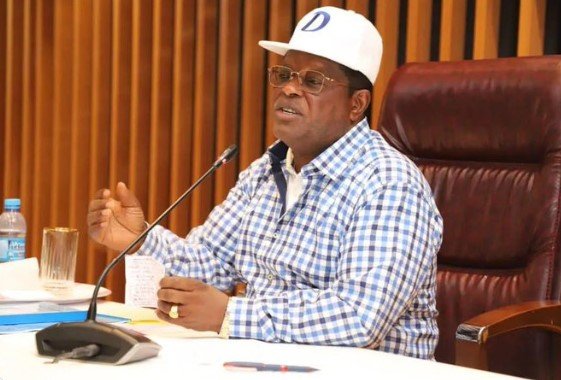
Umahi issued the order during a strategic meeting with the ministry’s Coordinating Directors in charge of Highways, Construction and Rehabilitation, Bridges and Design, as well as Zonal Directors.
The meeting was held as the Federal Government intensified efforts to address deteriorating sections of the national road network before the anticipated increase in traffic during the festive period.
According to a statement issued by the Ministry of Works on Saturday, November 14, and signed by its Director of Information and Public Relations, Mohammed Ahmed, the minister instructed officials to return to the field immediately and ensure that critical highways were made motorable within the next three weeks.
Umahi emphasised that the immediate safety and convenience of motorists must take priority over the pursuit of long-term construction targets, particularly where sections of highways remain impassable.
The minister expressed concern that some contractors were concentrating on permanent construction activities on certain portions of highways while other sections of the same roads remained in deplorable conditions.
He warned that such situations would no longer be tolerated, insisting that Nigerians should not continue to experience unnecessary hardship because of unfinished road projects.
According to him, contractors must ensure that road users can travel safely even while major construction and rehabilitation projects are ongoing.
The three-week deadline therefore places responsibility on the ministry’s field officers and contractors to identify failed portions of federal roads and carry out immediate remedial work.
Umahi prioritises emergency repairs over permanent construction
The minister explained that the directive was not necessarily an order to complete every major highway reconstruction project within three weeks.
Rather, the immediate objective is to restore the motorability of damaged sections through emergency and palliative interventions while permanent construction continues.
He directed officials to ensure that failed portions of roads were properly identified, excavated where necessary and treated with appropriate construction materials.
The interventions are expected to include the removal of failed road sections, filling of potholes and the application of sharp sand, stone base, cement stabilisation, asphalt binder and wearing courses, depending on the condition of each road.
These measures are intended to provide immediate relief to motorists and prevent damaged sections from continuing to obstruct traffic.
Umahi also stressed that road repairs must be carried out according to the condition and engineering requirements of individual locations rather than through temporary measures that may quickly fail.
The minister’s directive comes amid persistent complaints from motorists and other road users about the condition of several federal highways, particularly routes connecting major commercial centres and state capitals.
Poor road conditions have remained a concern for commuters, transport operators, traders and businesses that depend on highways to move people and goods across the country.
The Federal Government is therefore seeking to ensure that the most critical sections are accessible before the festive travel period reaches its peak.
Major federal highways listed for urgent rehabilitation
Umahi identified several important highways across the country that require immediate attention under the three-week rehabilitation directive.
The affected routes include roads connecting the North-West, North-Central, South-East, South-South and other parts of the country.
Among the major highways listed for urgent intervention are:
Zaria–Funtua–Gusau–Sokoto Road.
Mararaba–Keffi Road.
Abuja–Lokoja Road.
Kano–Katsina Road.
Keffi–Makurdi Road.
Makurdi–Enugu Road.
East-West Road.
Benin Bypass.
Benin–Warri Road.
Benin–Asaba Road.
Warri–Oleh Road.
Kano–Shuwarin Road.
Bauchi–Gombe Road.
The roads are important transportation corridors connecting different parts of Nigeria and supporting the movement of agricultural produce, manufactured goods, passengers and other essential commodities.
The Abuja–Lokoja highway, for instance, is a major route linking the Federal Capital Territory with Kogi State and other parts of the North-Central and Southern regions.
Similarly, the Kano–Katsina and Zaria–Funtua–Gusau–Sokoto routes serve important transportation and commercial connections across the North-West.
The inclusion of these roads in the emergency rehabilitation exercise highlights the ministry’s intention to address road conditions across multiple geopolitical zones rather than concentrate exclusively on one region.
Umahi also directed that major highways in the South-East should receive immediate attention.
The roads specifically identified in the region include the Enugu–Port Harcourt Road, Enugu–Aba Road, Abakaliki–Enugu Road, Abakaliki–Gojia Road and Aba–Port Harcourt Road.
These highways serve as important connections between communities, commercial centres and neighbouring states.
Their rehabilitation is expected to improve transportation within the region and reduce the difficulties experienced by motorists travelling between major towns.
The minister instructed officials to ensure that contractors handling the affected projects cooperate fully with ministry representatives and carry out the required emergency repairs.
He maintained that no contractor should allow the pursuit of permanent construction targets to compromise the safety and convenience of road users.
Contractors face warning over failure to comply
Umahi also issued a warning to contractors who fail to comply with the three-week directive.
He instructed Zonal Directors and other supervising officers to report contractors whose activities or failure to carry out necessary interventions put motorists at risk.
The minister assured officials that appropriate action would be taken against contractors found wanting.
He further directed Zonal Directors to personally visit project locations, inspect the condition of highways and engage contractors to establish the work required to make the roads motorable.
The officials are expected to submit comprehensive reports detailing the condition of each road, the extent of work already completed, outstanding construction activities, challenges affecting project delivery and the specific interventions required.
The reporting exercise is intended to provide the ministry with a clearer picture of the situation on the ground and identify areas requiring urgent government attention.
Umahi also directed that failed road sections without contractors currently working on them should be reported immediately.
This is important because some damaged portions may not fall within active construction contracts, making it necessary for the ministry to identify alternative arrangements for emergency intervention.
The minister stressed that situations involving bridges at risk of collapse or roads that have been completely cut off require immediate attention and should not be delayed by unnecessary bureaucratic procedures.
He assured officials that the ministry would engage competent contractors to address such emergencies and pursue the necessary approvals and funding.
Umahi to visit zones to monitor compliance
To ensure that the directive is implemented within the stipulated period, Umahi announced plans to begin visits to the various zones from Monday, November 16, 2026.
The visits will allow the minister to assess the progress of the rehabilitation exercise, inspect road projects and evaluate the performance of Zonal Directors and other supervising officers.
The ministry is also strengthening its reporting arrangements to monitor the activities of contractors and officials across the country.
Reports from the field are expected to contain information about project locations, responsible officers, contractors, challenges encountered and recommendations for resolving outstanding problems.
The monitoring arrangement is intended to improve accountability and ensure that the three-week deadline does not remain a directive without measurable results.
Umahi also assured Zonal Directors that the ministry would provide logistical support to facilitate their field operations.
The support is expected to include accommodation, fuel and vehicle hire where necessary.
He explained that officials must have the resources required to carry out inspections, supervise contractors and respond quickly to emergencies at different project locations.
In addition, the minister announced that special awards would be presented to zones that demonstrate outstanding performance in ensuring that major federal highways are motorable.
The recognition is expected to encourage commitment and healthy competition among the different zones.
Umahi described the assignment as a collective responsibility rather than simply a punitive exercise, urging officials to demonstrate seriousness, dedication and accountability.
Festive travel raises concerns over road safety
The directive comes ahead of the Christmas and New Year celebrations, a period traditionally associated with increased movement of people across Nigeria.
During the festive season, thousands of Nigerians travel from major cities to their hometowns and other destinations to celebrate with family members, attend social gatherings and participate in religious activities.
The increase in road traffic often places additional pressure on highways, particularly those connecting major commercial centres and rural communities.
For transport operators, poor road conditions can increase travel time, fuel consumption, vehicle maintenance costs and the risk of accidents.
Commercial drivers also face additional challenges when travelling through roads with deep potholes, failed sections, inadequate drainage and damaged shoulders.
Such conditions can force motorists to reduce their speed, drive against traffic or make sudden manoeuvres to avoid dangerous portions of the road.
The Federal Government’s intervention is therefore expected to reduce some of these difficulties by ensuring that critical sections are accessible before the busiest travel period.
However, the effectiveness of the exercise will depend on the quality of the repairs, the availability of construction materials, proper supervision and the ability of contractors to meet the deadline.
Emergency palliative repairs may improve accessibility in the short term, but they are not necessarily substitutes for comprehensive road reconstruction where the underlying pavement structure has deteriorated significantly.
This means that the ministry will need to ensure that temporary interventions are properly executed and that roads requiring more extensive rehabilitation are not neglected.
Government’s broader road infrastructure agenda
The three-week directive is part of the Federal Government’s wider efforts to improve Nigeria’s road infrastructure under President Bola Tinubu’s administration.
The Works Ministry has responsibility for federal highways, including their construction, rehabilitation, maintenance and supervision.
Umahi has repeatedly emphasised the need to improve road infrastructure, describing functional highways as essential to economic development, national integration and the movement of goods and services.
Nigeria’s road network remains particularly important because road transportation accounts for a substantial proportion of domestic passenger and freight movement.
Agricultural producers depend on roads to transport produce from farming communities to markets, while manufacturers and distributors rely on highways to move finished products between states.
Consequently, deteriorating roads can affect transportation costs, business operations and the prices consumers pay for goods.
The minister’s latest directive reflects the government’s attempt to balance long-term infrastructure projects with the immediate need to keep existing roads accessible.
Rather than allowing motorists to wait until major reconstruction projects are completed, the ministry wants contractors to address dangerous and impassable sections while permanent construction continues.
Umahi has also maintained that contractors must be held accountable for the quality of their work, including defective sections of previously completed projects.
The ministry’s monitoring exercise is expected to help identify contractors and supervising officers responsible for different road projects and establish whether the required interventions have been carried out.
What Nigerians should expect in the coming weeks
With the three-week deadline now in place, attention will turn to the activities of the ministry’s Zonal Directors, Controllers of Works, engineers and contractors.
The success of the exercise will largely be determined by whether motorists can experience noticeable improvements on the identified highways within the stipulated period.
Road users will also be watching to see whether the government can address particularly dangerous sections that have continued to cause delays and inconvenience.
For motorists travelling during the festive season, the expected improvements could help reduce journey times and make interstate transportation less difficult.
Nevertheless, road users are advised to continue exercising caution, particularly on highways where construction and rehabilitation activities are ongoing.
Drivers should observe speed limits, avoid dangerous overtaking, maintain safe distances and pay attention to warning signs around construction areas.
The ministry has yet to establish through completed inspections that every affected highway will be fully rehabilitated within the three-week period. The directive is a target for emergency interventions, and the actual condition of the roads will determine the extent of work required.
As Umahi prepares to visit the various zones beginning November 16, the coming weeks will provide an opportunity to assess whether the ministry’s instructions are translating into visible improvements.
For millions of Nigerians expected to travel during the Christmas and New Year celebrations, the priority will be simple: safer roads, fewer delays and more reliable journeys.
The Federal Government will therefore face the task of ensuring that the three-week order produces tangible results rather than remaining another announcement about road rehabilitation.
The directive and list of affected highways were reported by THISDAY, Channels Television, Vanguard and Arise News in reports published between November 13 and November 15, 2026.