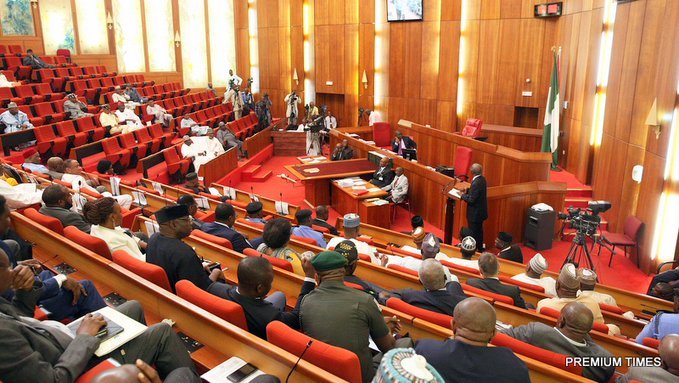
Abuja | November 26, 2025 — The Nigerian Senate has issued a strong call to the Federal Government to urgently review the nation’s firearms laws to permit “responsible citizens” to own guns legally. Lawmakers say the proposal has become necessary due to a sharp rise in violent attacks, mass abductions, and community raids across Kwara, Kebbi and Niger states.
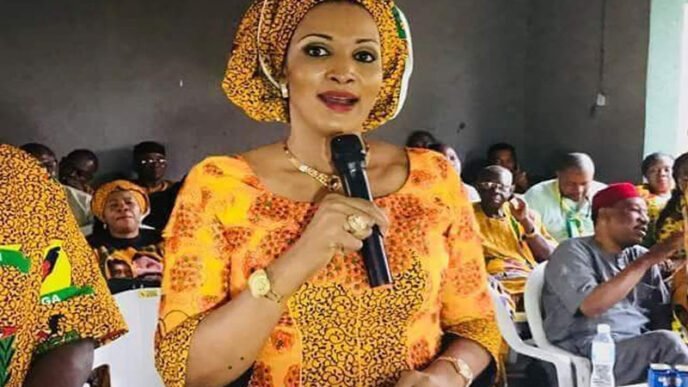
The resolution followed a motion sponsored by Senator Lola Ashiru (APC, Kwara South), titled “Urgent Need to Address Escalating Insecurity in Kwara, Kebbi and Niger States.” The motion highlighted a disturbing surge in attacks on rural communities, schools, highways, and places of worship — a reality senators described as evidence that existing security structures are insufficient.
A Wave of Attacks That Prompted the Senate’s Action
Lawmakers cited several tragic incidents, including the November 18 attack on a church in Eruku, Ekiti Local Government Area of Kwara State. During the attack, worshippers were ambushed during a service, leading to the killing of two individuals and the abduction of 38 others. The incident shocked the nation and intensified calls for more effective security measures.
The Senate also noted that the spike in violence has forced several schools — including federal unity schools — to close temporarily, disrupting academic activities for thousands of students. Communities in many rural areas across Kwara, Kebbi, and Niger reportedly live under fear, with armed groups frequently raiding villages, stealing livestock, and kidnapping residents.
During debate, senators warned that the criminals involved in these attacks are often heavily armed, operating with sophisticated weapons that outmatch the limited resources and equipment available to local vigilantes or security volunteers.
Why the Senate Wants Gun-Law Reform Now
The Senate argued that Nigeria’s current firearms legislation is outdated and ill-matched to the realities on the ground. The existing law places strict restrictions on civilian weapon ownership, allowing only limited categories of firearms — such as hunting rifles and shotguns — to be licensed under highly controlled conditions.
Licensing is further complicated by bureaucratic procedures and the discretionary approval powers of the presidency or authorized departments.
Senators insisted that in a country where security forces are overstretched and criminals operate with impunity, responsible citizens should have the right to defend themselves, their families, and their communities — provided strict regulatory systems are in place.
Some lawmakers also referenced the global context, noting that more than 170 countries worldwide allow civilians to own firearms under regulated frameworks. They argued that Nigeria’s situation warrants similar consideration, especially given the increasing sophistication of criminal networks.
Earlier Attempts to Amend Nigeria’s Firearms Policy
The renewed push echoes earlier efforts within the National Assembly. In 2024, Senator Ned Nwoko proposed a bill advocating that law-abiding citizens should be allowed to own guns legally under stringent controls. His argument was based on the notion that self-defence is a fundamental right, especially in societies facing widespread insecurity.
However, that bill generated widespread debate. While some Nigerians supported the idea of responsible civilian gun ownership, others raised alarms over the potential risks — including accidental killings, rise in domestic violence, and misuse by individuals with no formal training.
Security experts and senior police officers have also repeatedly warned that allowing civilians broad access to firearms could worsen an already fragile security climate. They argue that without strong regulatory institutions, such reforms could lead to uncontrolled gun proliferation.
The Current Firearms Framework — and Its Limitations
Nigeria’s firearms law prohibits civilians from owning automatic weapons, pistols, grenades, and a wide range of military-grade equipment. Even for permissible weapons, the process of licensing is slow, highly restricted, and inconsistently enforced.
Despite the law, illegal firearms remain widespread. Security agencies frequently report large seizures of smuggled weapons, while analysts say that Nigeria is already flooded with illicit small arms, many entering through porous borders, conflict zones, and black markets.
Critics of the existing framework argue that the law has not prevented criminals from accessing weapons, but instead leaves ordinary citizens defenceless.
Supporters of the current restrictions believe otherwise — insisting that weak institutions, corruption, and inadequate oversight would make firearm liberalization dangerous.
Possible Impact of a Firearm Law Review
Should the Federal Government act on the Senate’s recommendation, several significant outcomes may follow:
1. Major Legal and Institutional Reform
Nigeria would need to overhaul its regulatory system — defining who qualifies as a “responsible citizen,” what categories of firearms may be owned, and what training or certifications are required.
2. Mandatory Background and Mental Health Checks
Experts say that any new firearm regime must include psychological evaluations, criminal background checks, and continuous monitoring to prevent misuse.
3. Strengthening of Licensing and Tracking Systems
The government may need to develop biometric registration, weapon-tracking technologies, and stricter renewal processes to ensure accountability.
4. Community Self-Defence Capabilities
Advocates argue that well-regulated civilian gun ownership may deter attacks in remote areas where security forces often take hours — or days — to respond.
5. Risk of Escalation
Opponents warn that more guns in circulation could fuel communal clashes, increase violent crime, and trigger accidental killings or misuse by untrained individuals.
6. Impact on Law Enforcement
Police officers and security agencies may face additional challenges managing civilian gun use, including disputes, vigilante actions, and the possibility of weapons falling into criminal hands.
Supporters vs Critics: A Deepening National Debate
Supporters say:
- Citizens need a means of protection where the state fails to secure lives.
- Criminals are already heavily armed; civilians deserve a fighting chance.
- Community-based defence could reduce kidnappings and bandit attacks.
- Licensing frameworks and training can ensure responsible use.
Critics argue:
- Nigeria lacks the regulatory capacity to monitor civilian gun ownership.
- More firearms may intensify violence rather than reduce it.
- Guns could be misused in domestic disputes, business conflicts, or political thuggery.
- Weak oversight may lead to widespread diversion of weapons into criminal markets.
Why the Call Is Coming Now
The Senate’s renewed push stems from:
- Increasing sophistication of criminal gangs, often armed with assault rifles.
- A surge in mass abductions, especially in rural northern communities.
- Recent high-profile attacks, including the deadly church incident in Kwara.
- A pattern of impunity, with many criminals rarely arrested or prosecuted.
- Growing frustration among citizens and lawmakers over government inaction.
- Calls from civil society groups urging a rethink of the national security strategy.
The Senate believes that permitting controlled civilian firearm ownership could play a role in turning the tide.
The Road Ahead: What Nigeria Should Watch For
Over the coming weeks and months, attention will be focused on:
1. The Federal Government’s Response
Whether the Executive will initiate a formal review of the Firearms Act.
2. Reactions from Security Agencies
The Nigeria Police Force, the military, and intelligence agencies are expected to weigh in.
3. Civil Society and Religious Leaders
Their positions will influence public opinion across urban and rural communities.
4. Legislative Proposals
Lawmakers may introduce fresh bills to define the scope, criteria, and mechanisms for any new firearm regime.
5. Possible Pilot Programs
Some experts suggest test-running controlled licensing in high-risk communities before nationwide rollout.
Conclusion
The Nigerian Senate’s call to review the nation’s firearms laws marks a major shift in the national debate on security and citizens’ rights. While the proposal promises empowerment for vulnerable communities, it also raises serious questions about regulation, safety, enforcement, and the risk of escalating violence.
Nigeria now faces a pivotal moment. Whether the government moves toward controlled civilian gun ownership — or maintains strict prohibitions — the decision will shape the country’s security landscape for years to come.
The coming debates will determine how Nigeria balances citizen self-defence with public safety, how it confronts the realities of banditry and terrorism, and what future its communities can expect in the fight against nationwide insecurity.