The Nigeria Police Force has commenced a major enforcement operation to ensure full compliance with President Bola Ahmed Tinubu’s directive prohibiting the unauthorized use of police personnel for Very Important Persons’ (VIPs) escort and guard duties. To this end, a Special Enforcement Team has been deployed across Lagos State to monitor, arrest, and prosecute defaulters.
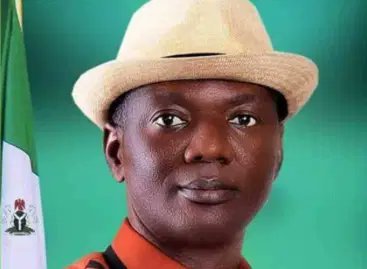
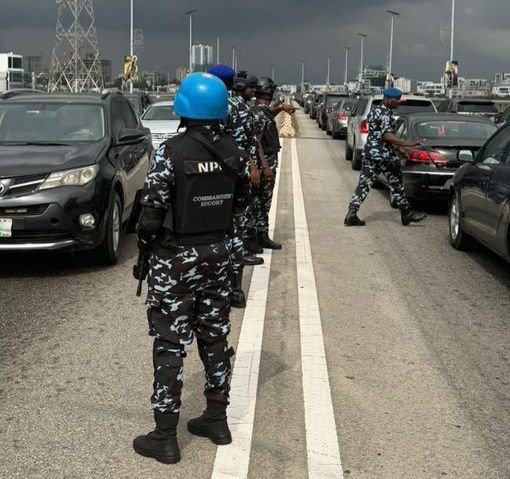
The directive was confirmed in a statement released on Saturday via the official X handle of the Nigeria Police Force. The Force Public Relations Officer, Chief Superintendent of Police (CSP) Benjamin Hundeyin, disclosed that the enforcement team began a statewide monitoring operation in Lagos on December 6, 2025, at about 10:00 a.m.
According to the police spokesman, the operation is aimed at restoring professionalism to police deployment, freeing up personnel for core policing duties, and strengthening public safety across the country’s most populous city.
Background to the Presidential Directive
President Bola Tinubu’s directive banning the use of police officers as personal security details for unauthorized VIPs forms part of a broader reform agenda targeted at repositioning the Nigeria Police Force for effective internal security management.
For years, public concern has grown over the widespread deployment of police officers to guard politicians, celebrities, private business owners, religious leaders, and other affluent individuals, often at the expense of ordinary citizens who require police protection in crime-prone communities.
In many urban centers, particularly Lagos, Abuja, and Port Harcourt, it became a common sight to see multiple heavily armed police officers attached to private individuals, sometimes accompanying them to social events, private parties, religious gatherings, and commercial activities. This practice significantly reduced police visibility on highways, in neighborhoods, and in crime hotspots.
Security experts have long warned that the misuse of police personnel for private protection weakened crime prevention efforts and distorted the purpose of public policing. Against this backdrop, President Tinubu issued a clear directive that henceforth, police personnel must not be used for VIP escort and guard duties except in cases expressly approved by appropriate authorities and justified on national security grounds.
Special Enforcement Team Begins Operations in Lagos
In his statement, CSP Benjamin Hundeyin explained that Lagos was selected as the starting point for the enforcement operation due to its unique security challenges as Nigeria’s commercial nerve center and its high concentration of VIP movements.
“The Special Enforcement Team commenced a statewide monitoring operation in Lagos on Friday, December 6, 2025, at about 10:00 a.m., in compliance with the directive of Mr. President on the prohibition of unauthorized police escort and guard duties for VIPs,” the statement said.
The team, made up of senior officers and operatives drawn from tactical and monitoring units, has been mandated to identify and dismantle illegal police deployments, recall officers from unauthorized guard duties, and apply appropriate sanctions in line with the law.
According to the police, the operation will cover major highways, airports, hotels, entertainment centers, political zones, religious centers, highbrow neighborhoods, and commercial districts where the practice of VIP escort has been most prevalent.
Scope of the Enforcement Exercise
The Special Enforcement Team has been empowered to take sweeping actions, including:
- Stopping convoys using police escorts without valid authorization
- Identifying police officers attached to private individuals without official deployment orders
- Retrieving firearms issued for unauthorized duties
- Arresting impostors unlawfully parading as police escorts
- Recommending disciplinary measures against erring officers and their supervisors
The police leadership has made it clear that no individual, regardless of social status, political influence, or economic power, will be exempt from the enforcement exercise.
“This is a zero-tolerance operation. Anyone found violating the directive will face the full weight of the law,” the police statement emphasized.
Rationale Behind the Crackdown
Security analysts have described the enforcement operation as one of the most decisive attempts in recent years to sanitize police deployment and restore public trust in law enforcement.
Nigeria currently grapples with a severe shortage of police personnel relative to its population of over 220 million people. With an estimated police-to-citizen ratio far below international standards, the diversion of officers to private escort duties has consistently drawn criticism from civil society groups and security stakeholders.
Many communities, particularly in suburban and rural areas, operate with skeletal police presence, leaving citizens vulnerable to armed robbery, kidnapping, cult-related violence, and other crimes.
By withdrawing officers from unauthorized VIP duties, the Police Force hopes to redeploy thousands of personnel to frontline policing, crime prevention patrols, intelligence gathering, and emergency response.
Public Reaction to the Enforcement Operation
News of the crackdown has generated widespread reactions across Lagos and other parts of the country. Many residents have welcomed the move, describing it as long overdue and necessary for restoring equity in public security.
A commercial bus driver in Ikeja said, “We see police escorting rich people everywhere while our streets are unsafe. If this enforcement is serious, it will help ordinary Nigerians.”
Similarly, a trader at Oshodi market noted that armed robbery incidents often go unchallenged due to lack of police patrols. “If the police now return to the streets instead of following big men, it will help us,” she said.
However, some VIPs and corporate organizations have expressed concerns over their safety in high-risk areas, arguing that the withdrawal of police escorts could expose them to attacks unless alternative security arrangements are made.
Clarification on Authorized Guards and Escorts
The Nigeria Police Force has clarified that the presidential directive does not outlaw all forms of police protection. Instead, it targets the abuse and commercialization of police services.
Certain categories of public office holders, critical infrastructure operators, and individuals facing verified threats may still qualify for police protection, subject to strict approval by the appropriate authorities and periodic review.
Such approvals are expected to be guided by intelligence assessments, risk evaluations, and national security considerations, rather than social status or financial influence.
Private security companies are also being encouraged to expand their operations within the limits of the law to fill gaps created by the withdrawal of police officers from VIP duties.
Disciplinary Consequences for Erring Officers
The police leadership has warned that any officer found flouting the directive will face severe disciplinary action. This may include suspension, dismissal, demotion, or prosecution depending on the gravity of the offense.
Supervising officers who authorize illegal deployments will also be held accountable under the doctrine of command responsibility.
This marks a firm departure from previous practices where illegal escort duties were often tolerated or quietly ignored within the system.
Tinubu’s Security Reform Agenda
President Tinubu’s directive on VIP police escorts aligns with his broader security reform agenda since assuming office. His administration has emphasized the need for professionalism, accountability, and efficient use of security resources in tackling Nigeria’s internal security challenges.
The president has consistently stressed that public security institutions must serve the collective interest of all Nigerians, not a privileged few.
By curbing the privatization of police services, the federal government hopes to restore confidence in the Nigeria Police Force and ensure that public funds used to train, equip, and pay officers translate into improved safety for the general population.
Lagos as Strategic Starting Point
Lagos, with its population estimated at over 20 million people, remains Nigeria’s largest commercial and economic hub. It also accounts for one of the highest concentrations of politicians, business executives, entertainers, diplomats, and foreign investors.
The prevalence of VIP convoys in Lagos is higher than in any other state in the country, often causing severe traffic gridlock and posing risks to pedestrians and other road users.
By starting the enforcement operation in Lagos, the Police Force aims to send a strong message nationwide that the directive will be implemented without compromise.
Security sources indicate that similar enforcement exercises will soon be rolled out across other states of the federation after the Lagos phase.
Legal and Human Rights Implications
Human rights advocates have applauded the enforcement drive, arguing that it will reduce the culture of intimidation often associated with VIP convoys.
In the past, motorists and pedestrians have reported harassment, physical assault, and verbal abuse by police escorts attached to VIPs, creating a sense of law enforcement serving private interests rather than public good.
By dismantling these illegal deployments, rights groups believe that the police can begin to rebuild trust with ordinary citizens.
However, they also caution that the enforcement must be carried out professionally and without excessive force or abuse of authority.
Early Signs from the Field
Within hours of the commencement of the operation on December 6, reports emerged of several convoys being stopped across major routes in Lagos, including Ikoyi, Victoria Island, Ikeja, and along the Lekki-Epe Expressway.
In some cases, police officers were reportedly ordered to disembark from unauthorized escort duties and return to their respective commands. Firearms and operational equipment were also allegedly recovered for proper documentation.
Although the Police Force has yet to release official figures on arrests or sanctions from the first day of the exercise, insiders describe the initial phase as “firm and uncompromising.”
What This Means for National Policing
If sustained, the enforcement of the VIP escort ban could mark a turning point in Nigeria’s policing culture. It has the potential to:
- Improve police visibility in crime-prone communities
- Enhance response time to emergencies
- Reduce public resentment against perceived elite protection
- Strengthen accountability within the police hierarchy
- Promote fairness and equity in public security deployment
Security experts have noted that meaningful reform will require consistency, strong political will, and protection for enforcement officers who may face pressure from powerful interests.
Looking Ahead
The Nigeria Police Force has assured the public that the Special Enforcement Team will remain active for as long as necessary to ensure total compliance with the presidential directive.
CSP Benjamin Hundeyin urged members of the public to cooperate with the operatives and to report any violations observed during the course of the operation.
As the Lagos monitoring exercise continues, all eyes are now on the Police Force to see whether the crackdown will be sustained nationwide or fade under political and social pressure, as has happened with past reform efforts.
For now, the deployment of the Special Enforcement Team represents one of the boldest steps yet taken to reclaim public policing from private appropriation and to align the Nigeria Police Force more closely with its constitutional mandate of protecting all citizens equally.