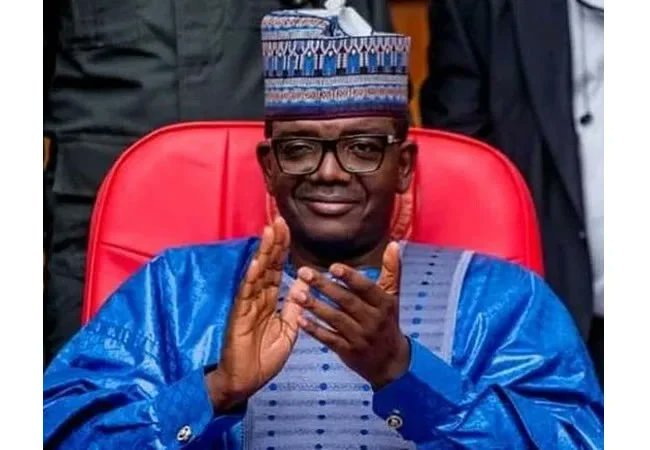
In what is being described as one of the most remarkable family ceremonies in recent Nigerian social history, nine children of former Zamfara State Governor and current Minister of State for Defence, Bello Muhammad Matawalle, are set to marry on the same day in Abuja, turning the Federal Capital Territory into the centre of a highly anticipated, large-scale wedding celebration.
The planned event, which has generated widespread public interest and intense discussion across social and traditional media, is expected to bring together political heavyweights, traditional rulers, senior military officers, business leaders, diplomats, and religious figures from across Nigeria and beyond.
A Rare and Symbolic Family Event
According to information circulating within political and social circles, the nine children — comprising sons and daughters of the Matawalle family — will each be formally joined in marriage in ceremonies scheduled to take place on the same day, though potentially at different venues within Abuja.
Such a multiple-marriage event within a single family is rare in Nigeria, particularly at this scale, and has sparked fascination due to its logistical complexity, cultural symbolism, and political undertones.
Family sources say the decision reflects unity, shared family values, and cultural pride, rather than extravagance alone.
Who Is Bello Matawalle?
Bello Muhammad Matawalle is a prominent Nigerian politician who served as Governor of Zamfara State from 2019 to 2023. He later joined the federal cabinet as Minister of State for Defence, a role that places him at the centre of Nigeria’s national security architecture.
Matawalle remains a highly influential figure in northern Nigerian politics, particularly in Zamfara and neighbouring states. His political career, security advocacy, and strong ties with traditional institutions have kept him in the national spotlight.
The planned weddings of his children have therefore attracted attention not only as a family affair but also as a significant social and political gathering.
Abuja Braces for a High-Profile Ceremony
Abuja is already witnessing heightened preparations ahead of the weddings. Hotels, event planners, caterers, decorators, security outfits, and transport services are reportedly experiencing increased demand linked to the ceremonies.
Multiple venues across the city are said to be involved, with:
- Separate halls for different wedding receptions
- Central prayer or solemnisation venues
- Coordinated logistics for guests and dignitaries
Security arrangements are also expected to be extensive, given the presence of senior government officials and high-profile guests.
Cultural and Religious Dimensions
Marriage in northern Nigerian and Islamic tradition is not merely a social celebration but a deeply religious and cultural institution. Sources familiar with the planning say the ceremonies will strictly adhere to Islamic rites, with nikah ceremonies conducted by respected clerics.
Observers note that organizing multiple marriages on the same day aligns with Islamic values that encourage marriage while avoiding unnecessary delay or excessive financial burden.
Some scholars have described the move as a symbolic endorsement of marriage as a social stabiliser, particularly at a time when many young Nigerians face economic barriers to starting families.
Public Reactions: Praise, Curiosity, and Debate
News of the planned weddings has triggered mixed reactions across Nigeria.
Supporters and admirers of the Matawalle family have praised the event as:
- A celebration of family unity
- A reaffirmation of cultural and religious values
- A private family milestone that should be respected
Others, however, have raised questions about:
- The scale of the ceremonies
- The symbolism of such a lavish event amid economic hardship
- The optics of political families holding grand celebrations
Despite the debate, many Nigerians have expressed curiosity and amazement at the coordination required to marry nine children on the same day.
Political Undertones and Networking
Beyond the personal and cultural dimensions, analysts say the weddings could also serve as a major political networking event.
In Nigeria, weddings of prominent figures often double as informal political gatherings where alliances are strengthened and relationships renewed. With elections always on the horizon, such events provide rare opportunities for political actors to interact in relaxed, non-official settings.
However, associates of Matawalle insist that the weddings are purely family-oriented and should not be politicised.
Economic Impact on Abuja’s Events Industry
Large ceremonies of this nature typically generate significant economic activity.
Event planners say the weddings will likely involve:
- Hundreds of service providers
- Large-scale food and logistics contracts
- Temporary employment for decorators, ushers, drivers, and security personnel
For Abuja’s hospitality and events industry, the ceremonies represent a major economic boost, particularly during a period when many businesses are struggling with rising costs.
Family Values and Coordination
Insiders describe the Matawalle family as tightly knit, noting that the decision to hold the weddings on the same day was made after extensive consultation among family elders, religious advisers, and the couples involved.
Coordinating nine marriages simultaneously requires meticulous planning, from scheduling religious rites to ensuring fairness and dignity for each couple.
Family sources say care has been taken to ensure that each bride and groom is individually honoured, even within the larger collective celebration.
A Rare Chapter in Nigeria’s Social History
Multiple weddings within a single family are not entirely unheard of in Nigeria, but nine weddings on the same day involving a sitting minister’s children is highly unusual.
Social historians say the event will likely be remembered as:
- A unique family milestone
- A cultural talking point
- A reflection of how tradition and modernity intersect in contemporary Nigeria
The ceremonies also highlight the continued importance of marriage as a defining social institution, even among elite and political families.
Privacy Amid Public Interest
Despite the intense attention, the Matawalle family has reportedly urged respect for privacy, particularly for the couples involved.
Close associates note that while the family understands public curiosity, the weddings are fundamentally about new beginnings, commitment, and family joy, not public spectacle.
Conclusion
The decision by Bello Matawalle to celebrate the marriages of nine of his sons and daughters on the same day in Abuja has captured national attention, blending family tradition, cultural symbolism, and public fascination.
As Abuja prepares for the high-profile ceremonies, the event stands out as a rare convergence of personal milestones and national interest. Whether viewed through cultural, political, or social lenses, the weddings represent a remarkable chapter in Nigeria’s contemporary social narrative — one that underscores the enduring importance of family, faith, and unity in Nigerian society.