
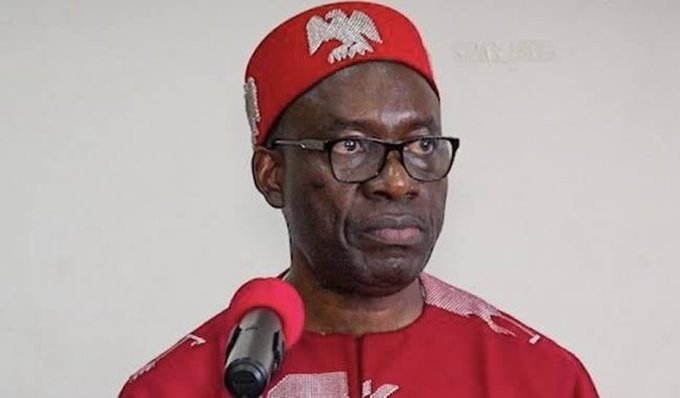
Traders at the bustling Onitsha Main Market and adjoining commercial hubs in Anambra State have resumed business activities following stern warnings and threats issued by Governor Chukwuma Charles Soludo over continued market closures linked to the sit-at-home practice. The reopening, which began cautiously in the early hours of Monday, marked the end of a tense week-long shutdown that had paralysed one of West Africa’s largest open markets and intensified economic anxiety across the state.
From Egerton Road to Ose Foodstuff Market, Main Market lines, Emeka Offor Plaza and adjoining trading zones, shop owners gradually lifted their shutters, responding to the state government’s directive that failure to reopen could attract punitive measures, including prolonged closure, revocation of shop allocations, or outright takeover of market spaces by the government.
A Market Forced Back to Life
By mid-morning, commercial activities had resumed in many sections of the market, although the atmosphere remained cautious. Traders were seen attending to customers, arranging goods, and engaging in wholesale and retail transactions that had been suspended for days. Commercial buses, tricycles and motorcycles returned to the area, easing traffic congestion that had earlier signalled the market’s shutdown.
The reopening followed Governor Soludo’s uncompromising stance against the enforcement of sit-at-home orders by non-state actors, which he described as illegal, economically destructive, and inimical to the welfare of Ndi Anambra. The governor had accused traders of defying government authority by closing their shops and warned that the state would no longer tolerate actions capable of crippling economic life.
“We cannot allow a few people to hold the economy of Anambra hostage,” Soludo was quoted as saying during a recent interaction with market leaders. “If traders choose not to open their shops on a legitimate working day, the government will take necessary action to protect the collective interest of the people.”
Background to the Shutdown
The Onitsha Main Market, a critical commercial nerve centre serving traders from across Nigeria and neighbouring countries, has in recent years been affected by recurring sit-at-home observances, particularly on Mondays. The practice, originally linked to protests and political agitation in the South-East, gradually became enforced through fear, intimidation and sporadic violence, leading many traders to close their shops out of concern for their safety.
Last week’s shutdown was triggered after traders again stayed away from the market, despite repeated assurances by the state government and security agencies that it was safe to operate. In response, Governor Soludo ordered the immediate closure of the market for one week, warning that continued defiance would attract harsher sanctions.
The directive sparked widespread debate, with some traders accusing the government of failing to provide adequate security, while others argued that the sit-at-home culture was destroying livelihoods and deepening poverty in the region.
Soludo’s Hardline Approach
Governor Soludo’s handling of the situation reflects his broader economic philosophy, which prioritises productivity, formal economic growth and investor confidence. Since assuming office, he has repeatedly criticised practices that disrupt commerce, insisting that Anambra cannot achieve its development goals if markets remain shut on working days.
According to sources within the state government, the governor personally engaged market leaders, traders’ unions and security agencies, making it clear that the era of forced shutdowns was over. He reportedly warned that any shop found locked during official market hours without government approval risked being sealed, reallocated or taken over for public use.
The governor’s threats, though controversial, appear to have achieved the desired effect. By Monday morning, compliance was visible, even if tentative, as traders weighed the risks of reopening against the potential consequences of continued closure.
Mixed Reactions Among Traders
Reactions among traders were mixed. While many welcomed the reopening as a relief from mounting financial losses, others remained fearful, opening their shops only partially or standing outside, ready to close at the slightest sign of trouble.
A spare parts dealer at Egerton Road said the decision to reopen was driven more by necessity than confidence. “If we don’t sell, our families will suffer. The government says we should open, and we don’t want problems with authorities. But the fear is still there,” he said.
A foodstuff trader at Ose Market expressed cautious optimism, noting that Mondays used to be one of her busiest days before the sit-at-home disruptions. “We are happy to work, but security must be guaranteed. We don’t want a situation where government says open, and then we are left on our own,” she said.
Others praised the governor’s firmness, arguing that the sit-at-home practice had long outlived its usefulness. “This market feeds thousands of families. Closing every Monday is killing us slowly. Soludo is right to take a stand,” a market union official remarked.
Security Presence and Government Assurance
To reinforce the reopening, security agencies deployed personnel around major market entrances, roads and strategic locations. Patrol vehicles were stationed nearby, while officers conducted visible surveillance to reassure traders and customers.
The Anambra State government reiterated its commitment to protecting lives and property, urging residents to ignore unlawful directives and go about their legitimate businesses. Officials emphasised that the state would not abandon traders who complied with its orders, promising swift response to any security threats.
Government spokespersons also warned against spreading panic or misinformation, stressing that the reopening was a collective effort to restore normalcy and economic stability.
Economic Cost of Market Closures
The repeated closure of Onitsha Main Market has had severe economic consequences. As one of the largest trading hubs in the region, the market supports supply chains that stretch across the South-East, South-South, North-Central and beyond. When it shuts down, the impact is felt nationwide, from delayed goods delivery to rising prices.
Economists estimate that billions of naira are lost each day the market remains closed. Small and medium-scale traders, who depend on daily sales to survive, are often the hardest hit. Transporters, loaders, food vendors and artisans who rely on market traffic also suffer collateral losses.
Governor Soludo has repeatedly cited these figures in his condemnation of sit-at-home actions, arguing that Anambra cannot attract investment or create jobs in an environment of uncertainty and fear.
Political and Social Implications
The reopening of Onitsha markets under government pressure highlights a broader struggle for authority and legitimacy in the South-East. While many residents sympathise with the grievances that gave rise to protests in the region, there is growing fatigue over the economic and social toll of prolonged disruptions.
Community leaders and traditional rulers have increasingly called for dialogue, urging all parties to prioritise peace and development. Some see Soludo’s approach as a necessary assertion of state authority, while others worry that coercion without comprehensive security reforms could deepen resentment.
Nevertheless, the governor’s supporters argue that decisive leadership is required to break the cycle of fear and restore confidence in public institutions.
Gradual Return to Normalcy
By late afternoon, trading activities had picked up in several sections of the market, although not at full capacity. Some traders chose to observe from a distance, while others reopened fully, encouraged by the absence of incidents.
Market leaders announced plans to sensitise members on the importance of compliance with government directives and cooperation with security agencies. They also appealed to the state to sustain its presence and follow through on promises of protection.
Looking Ahead
The reopening of shops at Onitsha Main Market following Governor Soludo’s threats marks a significant moment in Anambra State’s ongoing battle to restore economic normalcy. Whether this development signals a permanent end to sit-at-home disruptions or merely a temporary pause remains to be seen.
For now, traders are back at work, balancing hope with caution, as the state government seeks to assert control and revive commerce. The coming weeks will test the durability of this reopening and the ability of authorities to maintain security, build trust and ensure that the markets remain open—not just under threat, but through confidence and consensus.
As one trader put it, “We want peace, we want to work, and we want to survive. If everyone plays their part, this market will thrive again.”