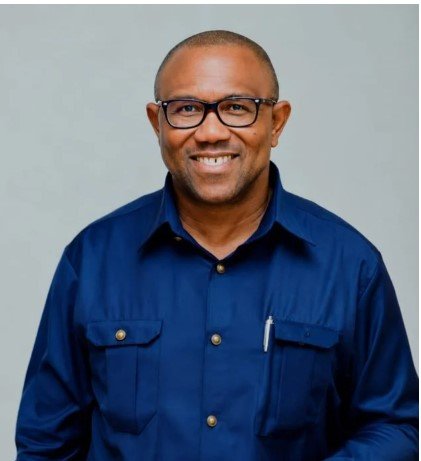
Former Labour Party presidential candidate, Peter Obi, has called on Nigerians to collectively reject the growing hardship facing the country, declaring that citizens must say “enough” to hunger and poverty by demanding responsible governance and accountable leadership.
Obi made the remarks while addressing supporters and members of the Obidient Movement during a public engagement, where he expressed concern over Nigeria’s worsening socio-economic conditions. He argued that millions of Nigerians continue to struggle with rising food prices, unemployment, inflation and declining purchasing power despite the country’s vast natural and human resources.
The former Anambra State governor said the fight against poverty and hunger should transcend politics, insisting that every Nigerian has a stake in ensuring that public resources are properly managed and government policies are directed toward improving the welfare of citizens.
Obi Calls for National Awakening
According to Obi, Nigeria possesses enormous potential to become one of the world’s leading economies but has continued to underperform due to poor leadership, weak institutions and misplaced priorities.
He urged Nigerians not to become accustomed to hardship or accept poverty as a normal way of life.
“Nigerians must say enough to hunger and poverty,” Obi said, stressing that citizens should continue to demand transparency, accountability and effective governance from elected leaders.
The former presidential candidate maintained that leadership should be measured by improvements in education, healthcare, security, job creation and economic opportunities rather than political rhetoric.
He said government at all levels must focus on productive investments capable of lifting millions of Nigerians out of poverty.
Rising Cost of Living
Obi’s comments come amid persistent concerns over Nigeria’s economic challenges.
Since the removal of fuel subsidy and the liberalisation of the foreign exchange market, Nigerians have experienced sharp increases in the prices of transportation, food, electricity and other essential goods and services.
The country has also witnessed elevated inflation, which continues to erode household incomes and reduce consumers’ purchasing power.
Many families have struggled to cope with the rising cost of living as wages have largely failed to keep pace with inflation.
Food prices in particular have remained a major concern, with staples such as rice, beans, yam, garri and cooking oil becoming increasingly expensive in many parts of the country.
Economic analysts have noted that while some government reforms are aimed at stabilising the economy over the long term, many households continue to face immediate financial pressures.
Need for Productive Governance
Obi argued that Nigeria’s abundant resources should translate into improved living standards for citizens rather than widespread deprivation.
According to him, government policies should prioritise investments in agriculture, manufacturing, education, healthcare and small businesses to stimulate economic growth and create sustainable employment opportunities.
He maintained that improving productivity rather than expanding consumption remains one of the most effective ways to reduce poverty.
The Labour Party chieftain has consistently advocated increased investment in human capital development, arguing that education and healthcare are essential foundations for long-term economic prosperity.
He also reiterated his position that prudent management of public finances and elimination of wasteful government expenditure are necessary to restore public confidence.
Accountability Remains Critical
Obi stressed that democracy functions best when citizens actively hold leaders accountable.
He encouraged Nigerians to remain engaged in civic affairs by demanding transparency in public spending and insisting that elected officials fulfil campaign promises.
According to him, good governance cannot thrive without an informed and active citizenry willing to ask questions and participate in democratic processes.
He noted that political office should be viewed as an opportunity to serve rather than a means of personal enrichment.
Focus on Youth Development
The former governor also highlighted the importance of creating opportunities for Nigeria’s large youth population.
He warned that high unemployment and underemployment pose significant risks to national development and security.
Obi said investment in education, vocational training, technology and entrepreneurship would enable young Nigerians to become productive contributors to the economy.
He maintained that Nigeria’s demographic advantage could become a major driver of economic growth if supported by sound public policies.
Agriculture as a Solution
Obi identified agriculture as one of the sectors capable of addressing both hunger and unemployment.
He called for increased investment in modern farming, irrigation, agricultural financing, storage facilities and rural infrastructure.
According to him, boosting agricultural productivity would improve food security while creating millions of jobs across the value chain.
He argued that Nigeria should leverage its vast arable land to reduce dependence on food imports and strengthen domestic production.
Security and Economic Growth
The former presidential candidate also linked economic development with improved security.
He observed that insecurity continues to discourage investment, disrupt farming activities and increase food prices in several parts of the country.
Obi called for comprehensive security reforms aimed at protecting lives, property and economic activities.
He noted that peace and stability remain essential conditions for sustainable development and investor confidence.
Government’s Position on Economic Reforms
The Federal Government has maintained that ongoing economic reforms are necessary to reposition Nigeria’s economy for long-term growth.
Officials have argued that difficult policy decisions, including subsidy removal and foreign exchange reforms, are intended to eliminate longstanding distortions, improve fiscal sustainability and attract investment.
The administration has also introduced several intervention programmes aimed at cushioning the effects of economic hardship, including student loans, social investment initiatives, agricultural support programmes and targeted assistance for vulnerable households.
However, many Nigerians continue to express concern over the immediate impact of these reforms on their daily lives, particularly rising food prices and transportation costs.
Political Significance of Obi’s Remarks
Obi’s comments are expected to resonate among supporters of the Obidient Movement, many of whom continue to advocate governance reforms, accountability and greater citizen participation.
Since the 2023 presidential election, the former presidential candidate has remained one of Nigeria’s most prominent opposition voices, frequently commenting on national economic issues, governance and public policy.
Political analysts believe his consistent emphasis on fiscal discipline, production-driven growth and investment in human capital has helped sustain his relevance in national political discourse.
His latest remarks reinforce his longstanding message that Nigeria’s development challenges require leadership focused on competence, integrity and measurable outcomes.
Citizens’ Role in National Development
Beyond government responsibility, Obi urged Nigerians to remain hopeful while contributing positively to national development.
He encouraged citizens to participate actively in democratic processes, promote peace and support initiatives capable of improving their communities.
He argued that sustainable national progress requires collaboration between government, the private sector, civil society and ordinary citizens.
According to him, lasting solutions to poverty and hunger will only emerge through responsible leadership supported by active civic engagement.
Looking Ahead
As Nigeria continues to navigate economic reforms and rising living costs, debates over governance, accountability and poverty reduction remain central to public discourse.
Obi’s call for Nigerians to reject hunger and poverty reflects broader concerns shared by many citizens over economic hardship and the need for policies that deliver tangible improvements in living standards.
Whether through expanded agricultural production, job creation, improved education, enhanced healthcare or prudent public financial management, the challenge of reducing poverty remains one of the country’s most pressing priorities.
For millions of Nigerians facing daily economic difficulties, the demand for effective leadership and inclusive economic growth continues to shape conversations about the nation’s future.