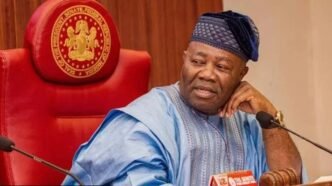
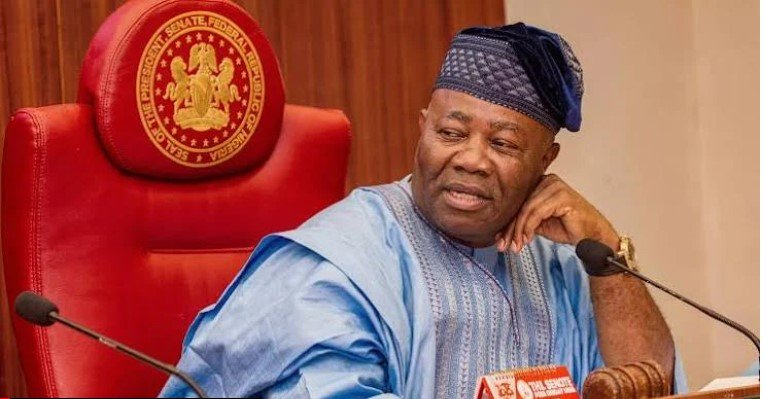
President of the Senate, Senator Godswill Akpabio, has charged members of the National Assembly to remain committed to protecting public funds, stressing that lawmakers have a responsibility to guard the nation’s public purse.
Akpabio made the call on Monday, September 28, 2026, while speaking at the 2026 Capacity-Building Workshop organised by the Senate Press Corps in Abuja.
The workshop was held under the theme, “Leveraging Legislative Oversight and Media Collaboration to Safeguard the National Budget from Unlawful Insertions.”
The event brought together lawmakers, parliamentary journalists and other stakeholders to discuss the role of legislative oversight and responsible media reporting in strengthening transparency and accountability in Nigeria’s budget process.
Akpabio, while addressing participants, said lawmakers must remain focused on their constitutional responsibility to ensure that public resources are properly protected and used for the benefit of Nigerians.
He emphasised the importance of safeguarding public funds as part of the responsibilities entrusted to the National Assembly.
The Senate President also called on journalists covering the Senate to raise the standard of parliamentary reporting in the country.
He urged members of the Senate Press Corps to deepen their knowledge of the Nigerian Constitution and the rules and procedures governing the National Assembly.
Akpabio: National Assembly Must Guard Public Purse
Akpabio told lawmakers that the National Assembly owes Nigerians a duty to protect public resources.
The call comes amid continuing discussions around the national budget, legislative oversight, public expenditure and allegations of questionable budget insertions.
The Senate President said lawmakers must take their oversight responsibilities seriously and ensure that public funds are properly accounted for.
The responsibility of the legislature, he noted, goes beyond the passage of annual appropriation bills.
Lawmakers are also expected to exercise oversight over government agencies and ministries to ensure that approved funds are deployed for the purposes for which they were appropriated.
Akpabio’s remarks therefore placed emphasis on the need for accountability throughout the budget cycle, from appropriation to implementation.
Senate President Challenges Parliamentary Journalists
The Senate President also turned his attention to journalists who cover the activities of the National Assembly.
He urged parliamentary correspondents to set a high standard for reporting legislative activities in Nigeria.
According to Akpabio, journalists covering the Senate need a strong understanding of the Constitution, parliamentary procedures and the rules of the National Assembly to effectively report legislative proceedings.
He encouraged members of the Senate Press Corps to deepen their knowledge of the institution they cover.
The call is particularly relevant because parliamentary reporting often involves complex legislative procedures, committee activities, appropriation processes, motions, bills and constitutional responsibilities.
A proper understanding of these processes can help journalists accurately explain legislative decisions and their implications to the public.
Workshop Focuses on Budget Accountability
The 2026 Senate Press Corps Capacity-Building Workshop focused specifically on legislative oversight and media collaboration in protecting the national budget from unlawful insertions.
The theme of the workshop was designed to address concerns about the integrity of Nigeria’s annual budget and the mechanisms available to detect questionable provisions.
The media plays an important role in scrutinising budget documents and reporting issues surrounding public expenditure, while the National Assembly has constitutional oversight responsibilities over government spending.
The workshop provided an opportunity for stakeholders to discuss how both institutions can strengthen their roles in ensuring greater transparency.
The organisers also emphasised the importance of professional development for journalists covering the National Assembly.
Importance of Legislative Oversight
Legislative oversight is one of the key responsibilities of the National Assembly.
Through committees, hearings, investigations and reviews of government activities, lawmakers monitor the implementation of policies and the utilisation of public funds.
Budget oversight is particularly important because the annual appropriation determines how government resources are allocated across ministries, departments and agencies.
The process also provides lawmakers with an opportunity to examine government spending priorities and monitor whether funds are being used in accordance with approved allocations.
Akpabio’s call for lawmakers to protect the public purse reinforces the importance of this responsibility.
Media’s Role in Budget Monitoring
The workshop also highlighted the role of journalists in promoting accountability.
Parliamentary journalists regularly report on budget proposals, committee proceedings, appropriation debates, government spending and other legislative activities.
Through investigative reporting and careful analysis of official documents, journalists can help members of the public understand how public funds are allocated and spent.
However, Akpabio’s call for journalists to deepen their understanding of the Constitution and parliamentary rules underscores the importance of accuracy in legislative reporting.
A strong understanding of parliamentary procedures can help journalists distinguish between proposals, resolutions, bills, amendments and laws, as well as explain the different stages through which legislation passes.
Call for Better Understanding of the Constitution
The Senate President specifically urged journalists to improve their knowledge of the Constitution.
Nigeria’s Constitution establishes the powers and responsibilities of the National Assembly, including its legislative and oversight functions.
For journalists reporting parliamentary activities, understanding these constitutional provisions is important when interpreting the actions of lawmakers and explaining them to the public.
Akpabio’s message was therefore not simply a call for more coverage of Senate proceedings but for more informed and professional reporting.
He encouraged journalists to understand the rules that govern the institution so that their reports can accurately reflect legislative proceedings.
Protecting Public Funds
The issue of protecting public funds remains a major component of discussions surrounding Nigeria’s budget.
The National Assembly approves government spending through the appropriation process, while government ministries, departments and agencies implement approved programmes and projects.
Legislative oversight provides mechanisms through which lawmakers can examine whether those funds are being used as approved.
Akpabio’s position is that lawmakers must recognise the responsibility placed on them by Nigerians to ensure that public resources are protected.
This responsibility includes scrutinising government expenditure and ensuring that agencies remain accountable for funds appropriated to them.
Senate Press Corps and Professional Development
The Senate Press Corps workshop is part of efforts to improve the capacity of journalists covering the National Assembly.
Capacity-building programmes allow parliamentary reporters to strengthen their understanding of legislative processes, public finance and constitutional responsibilities.
For journalists, this knowledge is useful in covering complex issues such as the national budget, committee investigations, appropriation bills and legislative amendments.
The workshop’s focus on media collaboration also reflects the importance of communication between the legislature and the press.
Journalists require access to accurate information to report legislative activities, while lawmakers and parliamentary institutions rely on the media to communicate their activities and decisions to citizens.
Akpabio’s Message to Lawmakers
The Senate President’s message to lawmakers centred on accountability and responsibility.
He reminded members of the National Assembly that their position comes with a duty to protect public resources.
The call is particularly significant in the context of the workshop’s focus on unlawful budget insertions, an issue that has generated public discussion around the preparation and passage of Nigeria’s annual budget.
Akpabio urged lawmakers to remain committed to protecting the public purse and ensuring that legislative oversight contributes to accountability.
Higher Standards for Parliamentary Reporting
For journalists, the Senate President’s challenge was clear: parliamentary reporting should meet a high professional standard.
He urged the Senate Press Corps to set the benchmark for legislative reporting in Nigeria.
This involves understanding the Constitution, parliamentary rules and the procedures that guide the Senate.
It also requires journalists to accurately report legislative proceedings and provide the public with sufficient context to understand the decisions made by lawmakers.
The call comes at a time when parliamentary activities increasingly attract public attention, particularly on issues involving national budgets, legislation, public expenditure and government accountability.
Budget Transparency and Accountability
The central theme of the workshop brought together two important aspects of democratic governance: legislative oversight and media scrutiny.
The National Assembly has the constitutional responsibility to legislate and exercise oversight, while the media provides citizens with information about government and legislative activities.
Effective collaboration between the two can contribute to greater public awareness of how public resources are allocated and managed.
However, such collaboration does not remove the need for independent scrutiny by journalists.
The workshop therefore focused on strengthening the capacity of both lawmakers and journalists to contribute to a more transparent budget process.
Conclusion
Senate President Godswill Akpabio has charged lawmakers to remain committed to protecting Nigeria’s public funds, stressing that the National Assembly has a responsibility to guard the public purse.
He also challenged journalists covering the Senate to raise the standard of parliamentary reporting by developing a deeper understanding of the Constitution and the rules governing the National Assembly.
Akpabio made the remarks at the 2026 Capacity-Building Workshop organised by the Senate Press Corps in Abuja.
The workshop, themed “Leveraging Legislative Oversight and Media Collaboration to Safeguard the National Budget from Unlawful Insertions,” examined the roles of lawmakers and journalists in promoting transparency and accountability in Nigeria’s budget process.
The discussions placed emphasis on stronger legislative oversight, informed parliamentary reporting and the need to protect public resources.
For the National Assembly, the message was to strengthen oversight and remain accountable in its management of public resources. For journalists, the challenge was to provide accurate, informed and professional coverage of the institution and its activities.