Ojulari Hails Dangote Refinery as Lifeline for Nigeria’s Energy Security Amid NNPC Refinery Struggles
The Group Chief Executive Officer of the Nigerian National Petroleum Company Limited (NNPC Ltd), Mr. Bayo Ojulari, has described the Dangote Petroleum Refinery as a critical stabiliser of Nigeria’s energy system, acknowledging that the privately owned facility has provided the country with much-needed relief at a time when government-owned refineries are still battling operational challenges.
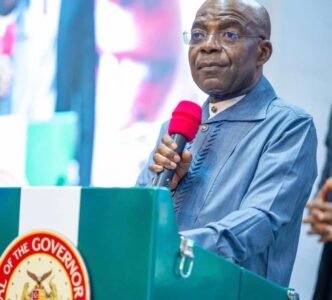
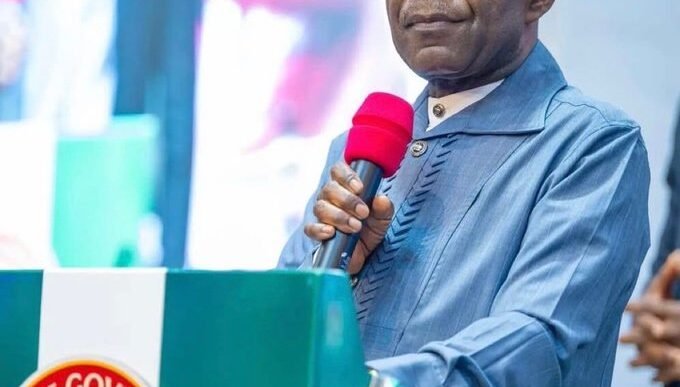
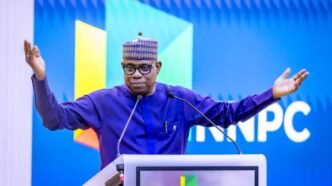
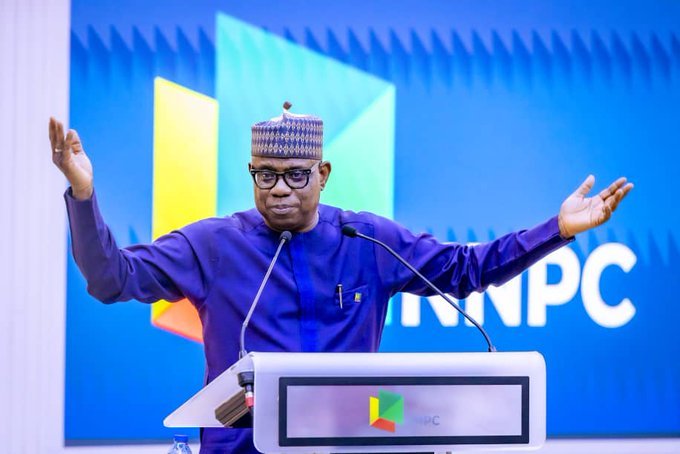
Ojulari made the remarks on Wednesday in Abuja during a fireside chat titled “Securing Nigeria’s Energy Future” at the Nigeria International Energy Summit (NIES) 2026. His comments, delivered with unusual candour, drew sustained applause from industry stakeholders, policymakers, investors, and energy experts in attendance.
According to the NNPC chief, the existence of a functional, large-scale refinery within Nigeria has significantly reduced pressure on the national oil company to maintain uninterrupted fuel supply, particularly amid ongoing efforts to rehabilitate and stabilise state-owned refineries.
“Thank God for Dangote Refinery. Thank God. Whether you love Dangote, you hate him, say whatever you want to say, Nigerians should thank God for Dangote,” Ojulari said, prompting applause from the audience.
A rare public endorsement
Ojulari’s statement represents one of the strongest public endorsements yet of the Dangote Petroleum Refinery by a sitting head of the national oil company. For years, the relationship between NNPC and the Dangote Group was marked by tension, public disagreements, and mutual suspicion, especially during the refinery’s construction and early operational phases.
The 650,000 barrels-per-day Dangote Refinery, located in Lekki, Lagos State, is Africa’s largest single-train refinery and one of the biggest in the world. Its gradual commencement of operations has been widely seen as a turning point for Nigeria’s long-standing dependence on imported refined petroleum products.
Ojulari said the timing of the refinery’s entry into production could not have been more critical, coming at a period when Nigeria’s legacy refineries in Port Harcourt, Warri, and Kaduna were yet to achieve consistent output despite years of rehabilitation efforts and significant public expenditure.
“The coming on stream of that refinery was a major relief for us,” he said. “At a time when our government-owned refineries are still struggling to deliver at scale, having a refinery that is working made a real difference.”
Breathing space for fuel supply
Nigeria, Africa’s largest crude oil producer, has historically faced fuel supply disruptions due to its heavy reliance on imported petrol, diesel, and aviation fuel. These challenges have often translated into fuel scarcity, price volatility, and pressure on foreign exchange reserves.
Ojulari noted that while the Dangote Refinery does not yet meet Nigeria’s full domestic fuel demand, its operations have significantly reduced vulnerabilities within the fuel supply chain.
“Yes, it may not meet our full needs, but it gives us a breathing space,” he said. “That breathing space is extremely important when you are managing a system as complex and as sensitive as Nigeria’s energy supply.”
He added that the refinery’s output has helped cushion the impact of logistical disruptions, foreign exchange constraints, and global market volatility, which previously left Nigeria exposed to external shocks.
Local ownership and national security
Beyond capacity and output, Ojulari stressed that the local ownership of the Dangote Refinery carries strategic importance for Nigeria’s national energy security.
“Thank God he’s a Nigerian,” he said, referring to the refinery’s owner, Aliko Dangote. “He’s not someone from another continent or another planet. Despite everything, that gave us an opportunity because we have a refinery that is working, built in Nigeria, working in Nigeria.”
Energy experts at the summit noted that local ownership reduces geopolitical risks, enhances policy alignment, and ensures that critical infrastructure decisions are more closely tied to national priorities.
Ojulari also reminded participants that NNPC itself holds an equity stake in the Dangote Refinery, a factor he described as both commercially and strategically significant.
“And luckily, we are shareholders in that refinery as well,” he said, underscoring NNPC’s interest in the facility’s long-term success.
From confrontation to collaboration
Perhaps the most notable aspect of Ojulari’s remarks was his acknowledgment of a shift in NNPC’s approach towards the Dangote Group. Under previous leadership, relations between both sides were often strained, with public disputes over crude supply agreements, regulatory approvals, pricing frameworks, and concerns about market dominance.
Dangote, at various points, accused state institutions of frustrating the refinery project, while regulators maintained that they were enforcing necessary quality, safety, and competition standards.
Ojulari said the current NNPC leadership has deliberately moved away from confrontation in favour of pragmatic collaboration.
“So we said, what’s the hurry?” he explained. “We have a refinery that is working. It’s not owned by NNPC, but it’s a Nigerian refinery, built in Nigeria, working in Nigeria.”
According to him, this shift reflects a broader understanding that Nigeria’s energy challenges require partnership across public and private sectors rather than rivalry.
Engagement under the Petroleum Industry Act
Ojulari disclosed that NNPC has since held direct engagements with Alhaji Aliko Dangote to develop a cooperation framework aligned with the Petroleum Industry Act (PIA), Nigeria’s landmark oil and gas reform law.
“Our strategy is to collaborate with the Dangote Refinery and maximise the value delivered to Nigerians,” he said. “That was our first strategy.”
He explained that during discussions with Dangote, NNPC outlined its institutional responsibilities under the PIA, including its commercial mandate, regulatory boundaries, and obligations to the Nigerian public.
“We had a meeting with Alhaji Dangote, explained our institutional responsibilities, and we agreed on the pathway towards deeper collaboration while maintaining our role as NNPC,” Ojulari said.
Industry analysts say this cooperative approach could help resolve longstanding bottlenecks around crude supply, pricing transparency, and distribution logistics, while also strengthening domestic refining capacity.
Implications for fuel prices and imports
The growing role of the Dangote Refinery is already reshaping Nigeria’s downstream oil sector. With locally refined petrol and diesel gradually entering the market, Nigeria has begun to reduce its reliance on imported fuel, a shift that could have far-reaching implications for foreign exchange demand and fuel pricing.
Ojulari cautioned, however, that the transition will take time and must be managed carefully to avoid disruptions.
“No single refinery can solve all our problems overnight,” he said. “But what matters is that we are moving in the right direction.”
He reiterated NNPC’s commitment to rehabilitating and optimising its own refineries while leveraging private sector investments to ensure supply stability.
Applause from stakeholders
Ojulari’s frank assessment of the Dangote Refinery’s impact resonated strongly with participants at the Nigeria International Energy Summit. Many industry players described his comments as a refreshing acknowledgment of reality and a signal of policy maturity.
Energy economists at the event noted that Nigeria’s path to energy security will depend on a mix of functional public assets, efficient private investments, and regulatory clarity.
“The significance of what Ojulari said cannot be overstated,” one analyst remarked. “It shows that the national oil company recognises that collaboration, not rivalry, is key to solving Nigeria’s energy challenges.”
A turning point for Nigeria’s energy future
As Nigeria continues to navigate subsidy reforms, foreign exchange pressures, and the global energy transition, the Dangote Refinery has emerged as a symbol of what large-scale local investment can achieve.
Ojulari’s remarks suggest that NNPC now views the refinery not as a competitor, but as a partner in the shared goal of securing Nigeria’s energy future.
For many observers, this shift could mark a turning point in the country’s oil and gas sector—one where public and private actors work together to reduce fuel scarcity, strengthen energy security, and deliver tangible benefits to Nigerians.
As Ojulari put it at the summit, the priority is clear: “Maximise the value delivered to Nigerians.” And for now, he believes, the Dangote Refinery is playing an indispensable role in that mission.