The United States has slammed sanctions on eight Nigerians for alleged links to terrorist organisations and cybercrime, freezing their assets and properties in a move aimed at disrupting global security threats.
- he United States has imposed sanctions on eight Nigerians linked to terrorism and cybercrime to counteract global security threats.
- This action by the U.S. Treasury’s Office of Foreign Assets Control (OFAC) freezes the individuals’ assets and prohibits transactions with them.
- The targeted individuals are connected with organizations such as Boko Haram and ISIL, reflecting ongoing security concerns in Nigeria.
- The sanctions emphasize the United States’ commitment to combating terrorism and stabilizing regions affected by violence.
The announcement was contained in a 3,000-page document released on February 10 by the U.S. Treasury’s Office of Foreign Assets Control (OFAC).
According to the Treasury, the sanctions target individuals connected to Boko Haram, the Islamic State of Iraq and the Levant (ISIL), and cybercrime networks, reflecting Washington’s continued concerns about Nigeria’s security landscape.
The OFAC designation effectively bars all U.S. persons and entities from transacting with these individuals, while freezing any assets under U.S. jurisdiction.
The Nigerians listed include:
- Salih Yusuf Adamu – Boko Haram funding
- Babestan Oluwole Ademulero – Terrorism
- Abu Abdullah ibn Umar Al-Barnawi – Terrorism
- Abu Musab Al-Barnawi – Boko Haram leader
- Khaled Al-Barnawi – Boko Haram
- Ibrahim Ali Alhassan – Boko Haram
- Abu Bakr ibn Muhammad Al-Mainuki – ISIL
- Nnamdi Orson Benson – Cybercrime
U.S. moves follow heightened security concerns
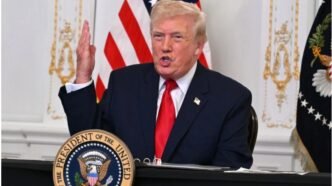
The designation follows the Trump administration’s continued emphasis on Nigeria as a “country of concern” due to persistent insecurity in the northeast, where Boko Haram and ISIL-affiliated groups operate.
The latest OFAC sanctions come amid a broader debate in Washington over how to hold accountable actors perceived as driving insecurity in Nigeria.
Separate recommendations from some U.S. lawmakers have called for asset freezes and visa restrictions on former Kano State governor Rabiu Musa Kwankwaso and groups like the Miyetti Allah Cattle Breeders Association of Nigeria (MACBAN) over alleged violations of religious freedom and links to violent extremism.
Kwankwaso, a long‑time political figure and former presidential candidate — was cited in a proposed bill before the U.S. Congress that would target individuals or entities accused of “severe religious freedom violations.”
However, his name has not yet appeared on the official OFAC sanctions list, and the proposal has sparked controversy in Nigeria, with critics dismissing the inclusion as politically motivated or unfounded.
A major pastoralist organisation in Nigeria, MACBAN has also rejected the allegations, insisting it has no links to terrorism or violent extremism and urging diplomatic engagement with American authorities to clarify its status.
The focus on Nigeria reflects growing U.S. concern about persistent insecurity in the northeast, where insurgent groups like Boko Haram and ISIL‑linked factions remain active.
Members of Miyetti Allah Cattle Breeders Association. (Guardian)
In 2025, the Trump administration redesignated Nigeria as a “Country of Particular Concern” on religious freedom issues, a move that has influenced subsequent legislative and sanctions initiatives.
“The sanctions reflect our commitment to countering terrorism and preventing the exploitation of global financial systems by violent extremist actors,” the U.S. Treasury said.
In a move underlining its regional security strategy, the U.S. has also deployed troops and special operations advisors to Nigeria to assist in intelligence, surveillance, and counterterrorism operations targeting Boko Haram and ISIL-linked cells.
The presence of American forces is part of a broader strategy to stabilize Nigeria’s volatile northeast while supporting Nigerian security forces.
Security analysts note that these sanctions and troop deployments are interconnected measures, intended to disrupt the financing, leadership, and operational capacity of extremist organisations in Nigeria.
The actions highlight Washington’s willingness under President Trump to take an active role in confronting threats in Africa, beyond diplomatic pressure or financial penalties.
By targeting both financial networks and on-the-ground leadership, the United States aims to reinforce its long-standing policy of containing extremist activity, protecting regional stability, and signaling that involvement in terrorism or cybercrime carries severe consequences.