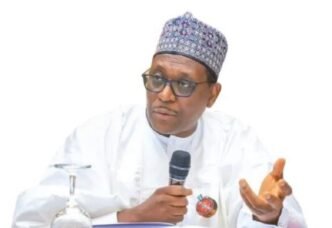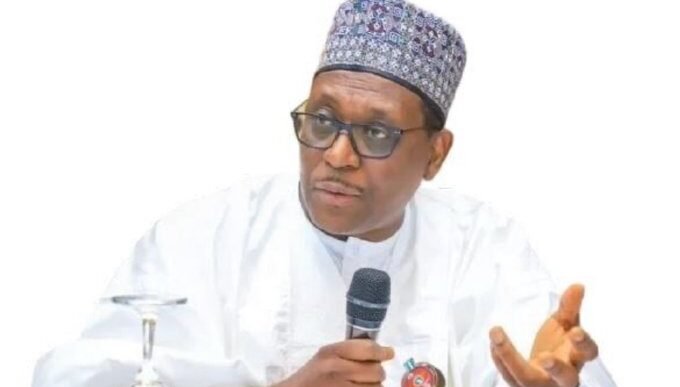
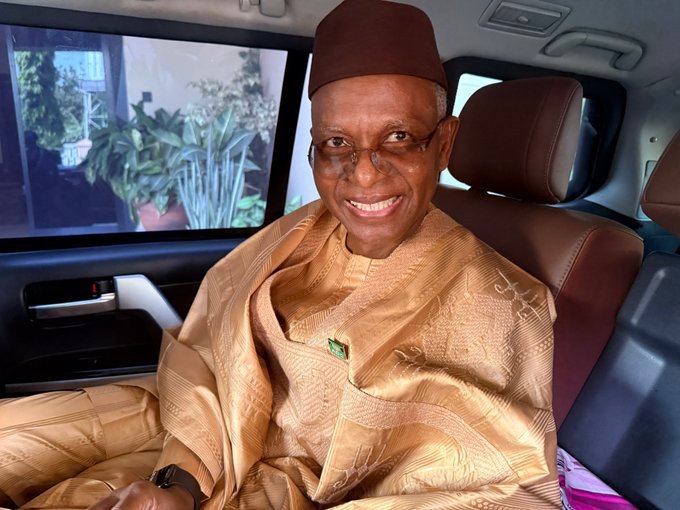
The Federal Government has filed criminal charges against former Kaduna State Governor, Nasir El-Rufai, over allegations that he was involved in the unlawful interception of communications linked to the National Security Adviser, Nuhu Ribadu.
The charges, filed at the Federal High Court, mark a dramatic escalation in what officials describe as a “serious breach of national security protocols” involving the alleged interception and unauthorized access to the phone communications of the National Security Adviser (NSA).
Government prosecutors allege that the former governor either directly authorized or was complicit in activities that led to the monitoring or interception of sensitive communications belonging to Ribadu, who currently heads the Office of the National Security Adviser (ONSA).
Nature of the Charges
According to court documents reviewed by judicial correspondents, the Federal Government is charging El-Rufai under provisions of Nigeria’s Cybercrimes (Prohibition, Prevention, etc.) Act and other applicable national security laws.
The prosecution alleges that the interception of the NSA’s phone communications constituted:
- Unauthorized access to a protected communication system
- Illegal interception of electronic communications
- Conspiracy to compromise national security infrastructure
- Abuse of public office, if proven that official capacity was used to facilitate the act
While prosecutors have not publicly disclosed the full details of the alleged interception mechanism, sources familiar with the case say the investigation centers on the use of technical surveillance tools and telecommunications access without lawful authorization.
Under Nigerian law, interception of communications without judicial authorization is a criminal offense, particularly when it involves individuals holding sensitive national security positions.
Timeline of Events
Although government officials have not provided an exact date when the alleged interception occurred, investigative findings reportedly emerged following internal intelligence reviews within federal security agencies.
Security sources indicate that anomalies were detected in communication logs tied to the NSA’s official lines. Subsequent digital forensic analysis allegedly revealed indicators of unauthorized monitoring.
Investigators are said to have traced the activity to actors with links to former political officeholders, prompting a broader probe that eventually led to the filing of charges against El-Rufai.
The Federal Government has not confirmed whether other individuals will also face charges in connection with the case.
El-Rufai’s Political Standing
El-Rufai, a prominent political figure and former governor of Kaduna State from 2015 to 2023, has remained influential in national political discourse.
Before his governorship, he served as Minister of the Federal Capital Territory and was widely regarded as a key reformist voice within Nigeria’s political landscape.
The charges represent one of the most high-profile legal challenges faced by the former governor since leaving office.
As of press time, El-Rufai has not publicly issued a detailed response to the charges. Sources close to him suggest he intends to contest the allegations vigorously in court.
Legal Implications Under Nigerian Law
Nigeria’s Cybercrimes Act criminalizes the intentional interception of electronic communications without authorization. Offenses involving national security communications may carry severe penalties, including substantial fines and potential imprisonment.
Legal analysts note that prosecutors must demonstrate:
- That the interception occurred;
- That it was unauthorized by law or court order;
- That the accused knowingly participated in or directed the act;
- That the act compromised protected communications infrastructure.
If convicted, penalties may include custodial sentences depending on the severity and impact of the offense.
Legal experts also caution that proving direct involvement in technical surveillance cases can be complex, as such activities often involve multiple layers of actors and digital intermediaries.
National Security Sensitivities
The case carries significant national security implications, given that the alleged victim is the sitting National Security Adviser.
The Office of the National Security Adviser plays a central role in coordinating intelligence, counterterrorism operations, and strategic security planning across Nigeria’s armed forces and security agencies.
Any breach involving the NSA’s communications raises concerns about:
- Exposure of classified information
- Compromise of counterterrorism strategies
- Risk to intelligence assets
- Diplomatic implications if foreign communications were involved
Security analysts say the prosecution underscores the Federal Government’s intent to signal zero tolerance for unauthorized surveillance within political and security circles.
Political Reactions Begin to Emerge
Although official statements remain limited, early political reactions suggest the case could spark intense debate.
Some commentators view the charges as a necessary enforcement of rule of law, arguing that no public official—past or present—should be above national security laws.
Others caution that the matter must be handled transparently to avoid perceptions of political rivalry or selective prosecution.
Nigeria has witnessed politically sensitive prosecutions in the past, and observers say the credibility of the judicial process will depend heavily on the strength of evidence presented in court.
Due Process and Presumption of Innocence
Under Nigerian law, El-Rufai remains presumed innocent until proven guilty.
The Federal High Court is expected to issue a date for arraignment, where the charges will be formally read and the defendant will enter a plea.
Legal proceedings may involve:
- Bail applications
- Preliminary objections
- Admissibility challenges regarding digital forensic evidence
- Witness testimonies from telecommunications and intelligence experts
Given the technical nature of the allegations, the case could hinge on expert digital forensic testimony and chain-of-custody documentation.
Broader Context: Surveillance and Governance
The charges also bring renewed focus to the broader issue of surveillance practices in Nigeria.
Governments worldwide use lawful interception tools for security and intelligence purposes. However, such powers are typically regulated by court authorization and oversight mechanisms.
Unauthorized interception—especially involving senior security officials—can destabilize trust within national security institutions.
If proven, the alleged act would represent a serious breach of protocol and institutional safeguards.
Implications for Nigeria’s Political Landscape
El-Rufai remains a politically active figure with influence across party lines and ideological camps. Legal proceedings against such a high-profile individual could reshape alliances and public narratives ahead of future electoral cycles.
Analysts note that high-level prosecutions often carry both legal and symbolic weight.
For the Federal Government, the case may signal a broader anti-corruption and accountability push. For critics, it may raise questions about intra-elite political tensions.
What Happens Next?
The immediate next step is the formal arraignment process.
The court will determine bail conditions and set timelines for hearings. Prosecutors are expected to present digital forensic reports, investigative findings, and potentially classified materials subject to court review procedures.
It remains unclear whether any aspects of the trial may be held in camera (closed session) due to national security sensitivities.
The Nigerian public is likely to follow developments closely, given the prominence of both individuals involved.
Conclusion
The Federal Government’s decision to file charges against former Kaduna State Governor Nasir El-Rufai over the alleged interception of National Security Adviser Nuhu Ribadu’s phone marks a significant moment in Nigeria’s legal and political landscape.
At stake are not only the legal questions surrounding unauthorized surveillance but also broader issues of accountability, institutional integrity, and national security safeguards.
As court proceedings unfold, attention will focus on the evidence presented, the transparency of the process, and the implications for Nigeria’s democratic and security institutions.
Further updates will follow as the case progresses through the judicial system.