
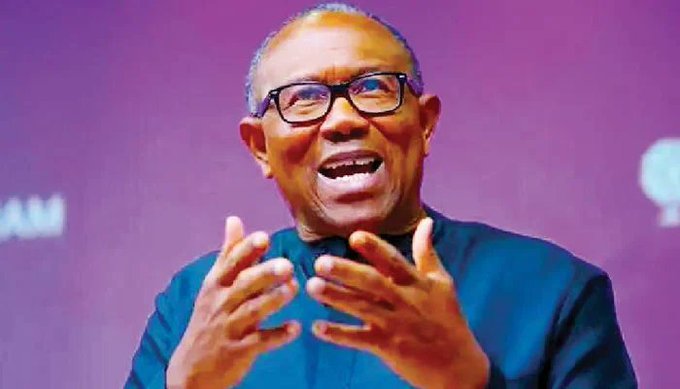
Former presidential candidate Peter Obi has announced plans to challenge the provisions of the newly enacted 2026 Electoral Act in court, raising concerns over aspects of the legislation that he believes could undermine transparency and credibility in Nigeria’s electoral process.
Obi, who contested the 2023 presidential election under the Labour Party (Nigeria), said the legal challenge would seek judicial interpretation of specific provisions in the law which he argues may weaken the integrity of elections.
According to him, safeguarding the credibility of Nigeria’s electoral system is essential for strengthening democracy and restoring public confidence in the voting process.
Concerns Over Electoral Transparency
Obi stated that certain elements of the 2026 Electoral Act require legal scrutiny to ensure they align with democratic principles and constitutional provisions.
He emphasized that the use of technology in elections, particularly the electronic transmission of results, must remain central to Nigeria’s electoral framework.
In recent years, debates around election transparency have focused heavily on the role of digital systems used by the Independent National Electoral Commission in transmitting results from polling units.
Obi argued that any legal framework governing elections must clearly guarantee transparency and prevent opportunities for manipulation or delays in the collation process.
Plan to Seek Judicial Interpretation
The former Anambra State governor said his legal team would approach the courts to seek clarification on areas of the law that could potentially affect the integrity of future elections.
He explained that the move is not targeted at any individual or political party but is intended to protect the democratic process.
According to Obi, the judiciary plays a crucial role in ensuring that electoral laws are consistent with the constitution and the expectations of Nigerian voters.
He noted that legal challenges are part of democratic practice and can help refine legislation where necessary.
Background to Electoral Law Reforms
Nigeria has undergone several electoral reforms in recent years aimed at improving transparency, reducing irregularities, and strengthening the credibility of elections.
The 2022 Electoral Act introduced new technologies such as electronic accreditation and the uploading of polling unit results through digital platforms.
These reforms were widely seen as significant steps toward modernizing Nigeria’s election management system.
However, discussions surrounding further amendments to the electoral framework have continued, with stakeholders debating the balance between technology, legal provisions, and administrative processes.
Calls for Stronger Electoral Institutions
Obi reiterated that strong institutions are essential for the survival of democracy in Nigeria.
He urged policymakers to prioritize reforms that enhance the independence and effectiveness of electoral bodies while ensuring that citizens’ votes are accurately recorded and counted.
The former governor also encouraged civil society organizations, legal experts, and political stakeholders to participate actively in discussions around electoral reform.
According to him, broad national consensus is necessary to ensure that election laws reflect the aspirations of the Nigerian people.
Reactions from Political Observers
Political analysts say Obi’s decision to challenge the Electoral Act could spark renewed debate about electoral reforms in Nigeria.
Observers note that legal scrutiny of election laws is common in many democracies and often leads to clearer guidelines for election management bodies.
Some analysts believe the court challenge could help address lingering concerns about result transmission, election technology, and transparency.
Others argue that legislative dialogue may also be necessary to ensure that future amendments to electoral laws enjoy broad support across political parties.
Importance of Electoral Credibility
Nigeria’s electoral process has frequently been at the center of national debate, particularly during presidential and gubernatorial elections.
Concerns about transparency, vote collation, and the use of technology have shaped public discussions about how to strengthen democratic institutions.
Experts say that ensuring credible elections is critical for political stability, economic confidence, and public trust in governance.
They emphasize that both legal frameworks and the conduct of electoral bodies must meet high standards of transparency and accountability.
Looking Ahead
As preparations gradually begin for future elections, Obi’s proposed court challenge could become an important test of the legal framework guiding Nigeria’s democratic process.
The outcome of such a case may influence how electoral laws are interpreted and implemented in the coming years.
For now, Obi maintains that his intention is to ensure that Nigeria’s electoral system remains transparent, credible, and aligned with democratic ideals.
He expressed confidence that the courts will carefully examine the issues raised and deliver judgments that strengthen the nation’s democratic institutions.