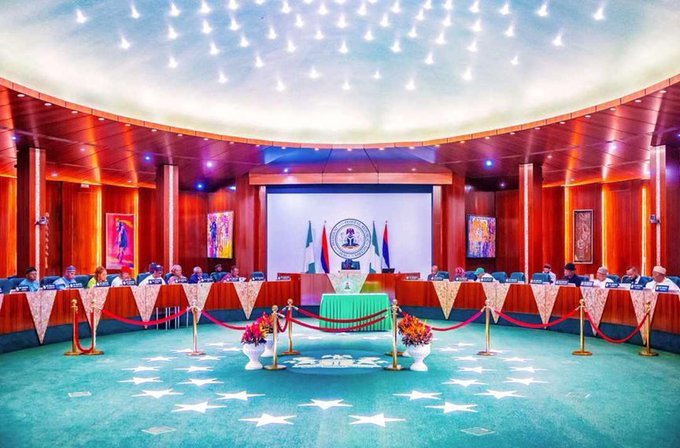
The Federal Executive Council (FEC) has approved contracts for three major rail transportation projects across Nigeria following its meeting held today, marking a significant step in the Federal Government’s efforts to improve urban mobility and modernize public transport infrastructure.
The approved projects include the Lagos Green Line Rail Project (Phase 1A), the Kano Metro City Rail Project, and the Kaduna State Light Rail Project.
According to details from the council meeting, the projects will be financed by the Ministry of Finance Incorporated (MOFI) on behalf of the Federal Government of Nigeria, signaling a major federal investment in mass transit systems across key urban centers.
Major Rail Projects Approved
The Lagos Green Line Rail Project (Phase 1A) is expected to serve as one of the flagship transportation developments in Lagos, Nigeria’s commercial capital.
The Green Line is designed to improve connectivity across major business and residential corridors, reduce road congestion, and support economic productivity in Africa’s largest city.
In Kano, the Kano Metro City Rail Project aims to strengthen urban transportation within one of northern Nigeria’s largest commercial hubs. The metro system is expected to improve mobility for residents, ease pressure on road networks, and boost economic activity.
Meanwhile, the Kaduna State Light Rail Project is expected to transform urban commuting in Kaduna by providing a modern rail-based transport alternative for workers, students, and businesses operating within the city.
Together, the three projects represent one of the most ambitious recent investments in Nigeria’s urban rail transport sector.
Financing Through MOFI
The Ministry of Finance Incorporated (MOFI), which serves as the investment and asset management arm of the Federal Government, will finance the projects on behalf of the country.
This financing arrangement is expected to provide structured funding support and help accelerate project implementation without immediate direct budgetary pressure on regular ministry allocations.
Analysts say MOFI’s involvement could improve long-term sustainability and investor confidence, particularly if private-sector participation is later introduced through public-private partnerships.
The funding model also reflects the government’s renewed focus on infrastructure-led economic growth and transportation reform.
Lagos Green Line Seen as Strategic Priority
Among the approved projects, the Lagos Green Line Rail Project has attracted particular attention due to Lagos’ growing transportation challenges.
With millions of daily commuters facing heavy traffic congestion, the Green Line is expected to become a major relief corridor once completed.
Urban planning experts say the rail line could significantly reduce travel time, lower transportation costs, and improve productivity across the state.
The project is also expected to complement existing rail systems such as the Blue Line and Red Line, helping Lagos move closer to a fully integrated multimodal transport network.
Residents and transport stakeholders have long called for expanded rail options as road transportation continues to face capacity challenges.
Kano and Kaduna Rail Expansion
The Kano Metro City Rail Project is being viewed as a major boost for northern Nigeria’s infrastructure development.
Kano remains one of the country’s most populous cities and a key center for trade, manufacturing, and agriculture. Improved urban transport is expected to strengthen commercial movement and reduce commuting difficulties.
Similarly, the Kaduna State Light Rail Project aligns with the state’s ongoing infrastructure modernization agenda.
Kaduna has witnessed increasing urban growth and rising transport demand, making rail investment a strategic long-term solution for mobility and city planning.
Experts believe these projects could also stimulate job creation during construction and long-term economic activity after completion.
Federal Government Push for Rail Modernization
The approval reflects the Federal Government’s broader policy direction toward rail modernization across Nigeria.
In recent years, attention has focused heavily on intercity rail corridors such as the Abuja-Kaduna rail line, Lagos-Ibadan railway, and other national rail expansions.
The latest FEC approvals show increasing emphasis on intra-city rail systems designed for daily urban commuting rather than only long-distance transportation.
Transportation experts argue that city rail systems are critical for sustainable development, especially as Nigeria’s urban population continues to grow rapidly.
Improved rail systems are also expected to reduce pressure on roads, lower fuel consumption, and contribute to environmental sustainability through reduced emissions.
Economic and Social Impact
Beyond transportation benefits, the projects are expected to generate major economic advantages.
Construction activities are likely to create thousands of direct and indirect jobs across engineering, construction, logistics, security, and support services.
Property values along rail corridors may also increase, while businesses located near transit stations could benefit from higher commercial activity.
For ordinary citizens, more reliable and affordable transport options could improve access to employment, education, healthcare, and other essential services.
Experts say modern urban rail systems often serve as catalysts for wider city transformation and economic inclusion.
Public Reactions and Expectations
The announcement has generated widespread reactions from Nigerians, especially residents of Lagos, Kano, and Kaduna who have long faced transport difficulties.
Many citizens welcomed the development, expressing hope that the projects would move beyond approval stages and reach actual implementation without delays.
Concerns were also raised about transparency, project timelines, and ensuring that funding is used efficiently.
Given Nigeria’s history of delayed infrastructure execution, many observers say public confidence will depend heavily on visible progress and accountability.
Transport advocacy groups have called for clear timelines, contractor transparency, and regular public updates throughout the construction process.
Conclusion
The Federal Executive Council’s approval of contracts for the Lagos Green Line Rail Project, Kano Metro City Rail Project, and Kaduna State Light Rail Project marks a major step in Nigeria’s transportation and infrastructure development agenda.
With financing to be handled by the Ministry of Finance Incorporated, the projects represent a bold federal commitment to urban mobility, economic growth, and long-term modernization.
If successfully implemented, the rail systems could significantly reshape commuting patterns, improve productivity, and strengthen urban development across three major Nigerian cities.
For millions of Nigerians facing daily transportation challenges, the announcement offers hope that modern rail transit may soon become a practical reality rather than a distant promise.