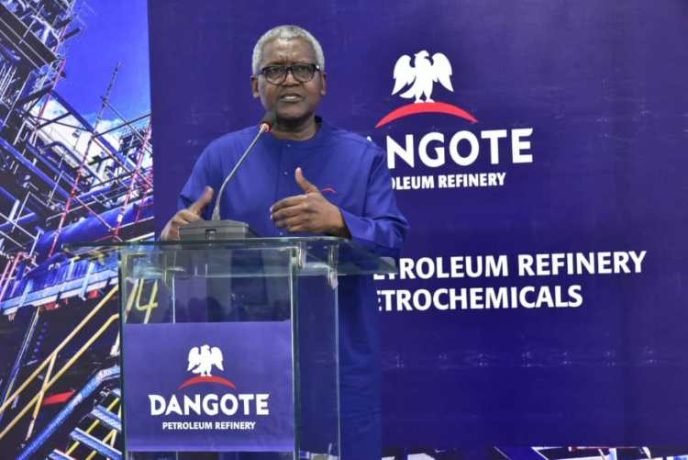
The Dangote Petroleum Refinery has reportedly recalled a group of engineers who were previously disengaged from the facility, while also issuing a strong warning against what it described as misconduct and violations of workplace protocols.
The development comes amid growing attention on labour relations within one of Africa’s largest and most strategic private refinery projects, located in the Lekki Free Zone area of Lagos State.
Although full official details surrounding the number of engineers affected and the specific circumstances of their initial disengagement remain limited, the decision to recall the workers has sparked widespread discussion within Nigeria’s energy and industrial sectors.
Recall Follows Internal Review Process
According to industry sources familiar with the matter, the decision to recall the engineers followed an internal review of staffing needs and operational requirements within the refinery.
The facility, which is still in phases of ramping up production and optimizing its operations, is believed to have reassessed certain technical roles critical to sustaining output efficiency and maintenance standards.
The recalled engineers are understood to have been part of earlier staffing adjustments linked to operational discipline, workflow alignment, and internal compliance expectations.
While the refinery has not released a detailed public statement outlining the exact reasons for the initial disengagement, the recall suggests a reconsideration of earlier personnel decisions in line with operational demands.
Warning Over Workplace Conduct
Alongside the recall, the management of the refinery reportedly issued a warning emphasizing strict adherence to workplace rules, safety procedures, and professional conduct.
The warning is said to focus on maintaining discipline within the highly technical and sensitive environment of petroleum refining, where operational errors or breaches of protocol can have significant safety and financial consequences.
Sources indicate that the refinery stressed the importance of teamwork, compliance with internal procedures, and respect for hierarchical operational structures.
Industrial experts note that such warnings are not unusual in large-scale refinery operations, where safety standards, engineering precision, and shift discipline are considered critical to avoiding operational disruptions.
Strategic Importance of the Refinery
The Dangote Refinery remains one of the most significant industrial projects in Africa, with the capacity to refine hundreds of thousands of barrels of crude oil per day at full operation.
It is widely viewed as a key asset in Nigeria’s efforts to reduce dependence on imported refined petroleum products, stabilize domestic fuel supply, and conserve foreign exchange.
Given its scale and complexity, the refinery employs a large workforce of engineers, technicians, and operational staff across multiple departments including process engineering, mechanical maintenance, instrumentation, safety, and logistics.
Because of the technical nature of its operations, workforce management and strict adherence to safety protocols are considered essential components of its overall productivity strategy.
Labour Relations and Operational Adjustments
Large industrial facilities such as refineries often undergo periodic workforce restructuring as part of operational optimization.
In many cases, engineers and technical staff may be reassigned, suspended, or disengaged based on performance reviews, safety compliance records, or evolving operational needs.
However, such decisions can sometimes lead to tension between management and staff, particularly in environments where expectations for productivity and safety are extremely high.
The recall of previously sacked engineers suggests a possible recalibration of internal staffing decisions, potentially driven by the need for experienced hands during critical production phases.
Labour analysts say this type of back-and-forth adjustment is not uncommon in newly operational mega-refinery environments, where systems are still being stabilized and optimized.
Safety and Discipline in Refinery Operations
Refinery operations require strict adherence to safety protocols due to the highly flammable and technically complex nature of petroleum processing.
Engineering staff are typically expected to follow rigorous guidelines covering equipment handling, maintenance schedules, shift reporting, and emergency procedures.
Any deviation from established safety standards can pose risks not only to personnel but also to equipment integrity and production continuity.
For this reason, management teams in such facilities often enforce strict disciplinary frameworks to ensure compliance and minimize operational risks.
The reported warning issued alongside the recall reflects this broader emphasis on maintaining order and discipline within the workforce.
Industry Reactions
The development has generated mixed reactions among industry observers and labour analysts.
Some experts view the recall as a pragmatic decision aimed at ensuring operational stability, particularly in a facility that plays a crucial role in Nigeria’s downstream petroleum sector.
Others, however, suggest that the situation highlights ongoing challenges in balancing workforce discipline with employee relations in large-scale industrial environments.
Labour relations specialists note that clear communication, structured grievance mechanisms, and transparent disciplinary processes are essential in preventing misunderstandings between management and technical staff.
Significance for Nigeria’s Energy Sector
The Dangote Refinery is central to Nigeria’s long-term energy strategy, particularly in reducing reliance on imported refined petroleum products such as petrol, diesel, and aviation fuel.
Once fully stabilized, the facility is expected to significantly influence domestic fuel pricing, supply reliability, and regional export capacity.
As a result, internal operational stability—including workforce discipline and engineering efficiency—is considered critical not only to the company but also to the broader Nigerian economy.
Any disruptions in staffing or production efficiency could have wider implications for fuel availability and market stability.
Workers’ Rights and Corporate Governance Concerns
While industrial discipline is necessary in high-risk environments, labour advocates often emphasize the importance of fair treatment, due process, and clear communication in employment decisions.
Issues such as sudden disengagement, reinstatement, or disciplinary warnings can raise questions about corporate governance practices, especially in large private-sector infrastructure projects.
Observers say that maintaining a balance between strict operational control and employee welfare is essential for long-term productivity and workforce stability.
The recall of engineers in this case may also prompt discussions about internal review mechanisms and how decisions affecting technical staff are managed within the refinery.
Conclusion
The reported recall of sacked engineers by the Dangote Refinery, alongside a warning against misconduct, highlights the complex dynamics of workforce management in one of Africa’s largest industrial facilities.
As the refinery continues its operational ramp-up phase, maintaining discipline, safety, and efficiency remains a top priority for management.
At the same time, the development underscores the importance of clear labour relations practices in ensuring stability within critical national infrastructure projects.
For Nigeria’s energy sector, the situation reflects both the challenges and demands of running a mega-refinery that carries significant economic and strategic importance.
While details of the internal decisions remain limited, the broader message is clear: operational discipline and adherence to professional standards are central to the refinery’s long-term success.