Vice President Kashim Shettima has revealed that President Bola Tinubu deliberately kept his decision to remove fuel subsidy a closely guarded secret before assuming office, fearing that political allies and stakeholders might attempt to discourage him from implementing the policy.
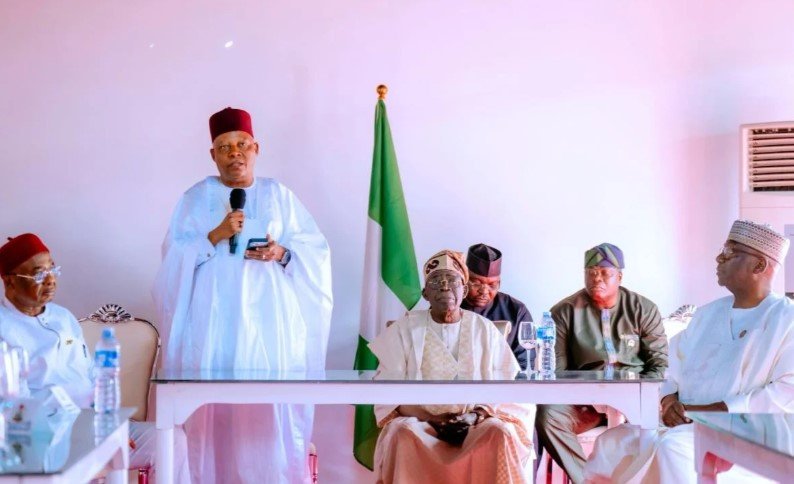
Shettima made the disclosure on Friday during a courtesy visit by state governors to President Tinubu at his private residence in Lagos as part of activities marking the Eid el-Kabir celebrations and the third anniversary of the administration.
According to the Vice President, the fuel subsidy removal was intentionally omitted from Tinubu’s written inaugural speech despite being a major policy decision already concluded before the President’s swearing-in.
“Your Excellency, the withdrawal of the fuel subsidy, you kept it a top secret; it wasn’t part of your speech,” Shettima said.
“It wasn’t a spur-of-the-moment decision. You had made that decision and kept it close to your heart because you believed if you had incorporated it into your speech, some people would try to persuade you not to do so.”
Fuel Subsidy Removal Marked Turning Point
President Tinubu announced the removal of fuel subsidy during his inauguration speech on May 29, 2023, declaring that “fuel subsidy is gone.”
The announcement immediately triggered nationwide reactions and marked one of the most consequential economic policy decisions in recent Nigerian history.
Within days of the declaration, petrol prices surged across the country as the downstream petroleum sector adjusted to deregulation.
The policy also led to sharp increases in transportation costs, food prices, electricity expenses, and general living costs, contributing significantly to inflationary pressure across the economy.
The Federal Government defended the decision by arguing that the subsidy regime had become financially unsustainable and largely benefited a few individuals involved in corruption and smuggling.
Government officials maintained that trillions of naira previously spent on subsidy payments could instead be redirected toward infrastructure, healthcare, education, and social development projects.
Shettima Praises Tinubu’s Political Courage
During the gathering in Lagos, Shettima commended the President for what he described as political courage and determination in implementing difficult economic reforms despite anticipated backlash.
The Vice President suggested that Tinubu had carefully prepared for the decision long before assuming office and deliberately avoided external influence that could weaken his resolve.
Political observers say Shettima’s remarks provide new insight into the internal considerations behind one of the administration’s most controversial policy moves.
The comments also reinforce claims by government officials that the subsidy removal was part of a broader economic reform strategy aimed at restructuring Nigeria’s finances and reducing wasteful spending.
Supporters of the administration have repeatedly argued that previous governments delayed confronting the subsidy issue due to fears of public resistance and political consequences.
Economic Impact Continues to Spark Debate
Three years after the removal of subsidy, debates over the policy continue across Nigeria.
While the Federal Government insists the decision was necessary to prevent fiscal collapse, many Nigerians continue to struggle with the economic consequences.
The removal of subsidy contributed to a sharp increase in petrol prices nationwide, with transportation and food costs rising significantly in both urban and rural communities.
Labour unions, civil society groups, and opposition politicians have repeatedly criticised the policy, arguing that ordinary citizens have borne the brunt of the reforms without adequate social protection.
The Nigeria Labour Congress and Trade Union Congress organised protests and negotiations with the Federal Government following the implementation of the policy.
In response to public outcry, the government introduced several intervention measures, including wage awards for civil servants, conditional cash transfer programmes, compressed natural gas initiatives, and support packages for states.
However, critics insist that many Nigerians continue to face severe hardship due to inflation and declining purchasing power.
Governors Visit Tinubu in Lagos
The Vice President made the remarks during a gathering attended by governors from different states who visited President Tinubu at his Lagos residence for the Eid el-Kabir celebration and the administration’s third anniversary.
The meeting reportedly focused on national unity, economic reforms, governance, and collaboration between federal and state governments.
Several governors at the meeting praised the administration’s reform agenda while acknowledging the challenges facing citizens due to economic adjustments.
The gathering also highlighted ongoing cooperation between the Presidency and state governments on issues relating to infrastructure, security, and fiscal management.
Political analysts say the visit demonstrated continued support for the President within the ruling political structure despite growing public concerns over economic hardship.
Tinubu Administration Defends Reform Policies
Since assuming office, the Tinubu administration has implemented several major economic reforms aimed at restructuring Nigeria’s economy.
These include the removal of fuel subsidy, exchange rate reforms, tax adjustments, and efforts to attract foreign investment.
Government officials argue that the reforms are necessary to stabilise public finances, reduce debt pressure, and create long-term economic growth.
The administration has repeatedly stated that the previous subsidy regime consumed a significant portion of government revenue and encouraged corruption within the petroleum sector.
According to officials, ending the subsidy created more fiscal space for investment in critical sectors of the economy.
However, the reforms have also coincided with rising inflation, currency depreciation, and increased living costs, leading to growing public dissatisfaction in some quarters.
Opposition and Labour Criticise Policy Effects
Opposition parties and labour organisations have continued to criticise the administration over the economic impact of the subsidy removal.
Critics argue that the policy was introduced without sufficient measures to cushion its effects on low-income Nigerians.
Many households and businesses have struggled with rising transportation fares, increased electricity costs, and higher prices of goods and services since the subsidy was removed.
Transport operators, traders, manufacturers, and small business owners have repeatedly complained about the pressure created by high fuel prices.
Economic experts also warn that inflationary pressure linked to energy costs continues to affect food supply chains and business operations nationwide.
Despite these criticisms, the Federal Government maintains that reversing the subsidy removal would worsen Nigeria’s fiscal situation and undermine ongoing economic reforms.
Mixed Reactions Trail Shettima’s Revelation
Shettima’s comments have generated widespread reactions among Nigerians, with some praising Tinubu’s decisiveness while others criticised the secrecy surrounding such a major policy decision.
Supporters of the administration argue that difficult reforms often require strong political will and strategic planning to overcome resistance from vested interests.
Others, however, contend that policies affecting millions of Nigerians should involve broader consultation and transparency.
Political analysts say the Vice President’s remarks may further intensify public conversations about the planning, communication, and implementation of Nigeria’s economic reforms.
Many Nigerians continue to demand greater accountability and clearer explanations regarding how savings from subsidy removal are being utilised.
Focus Remains on Economic Recovery
As the Tinubu administration marks its third anniversary, attention remains focused on whether ongoing reforms will eventually translate into economic stability and improved living conditions.
Government officials continue to express optimism that current economic challenges are temporary and necessary for long-term recovery.
However, millions of Nigerians remain concerned about inflation, unemployment, insecurity, and the high cost of living.
Analysts believe the administration’s long-term political and economic legacy may ultimately depend on whether the reforms deliver measurable improvements in citizens’ welfare.
For now, Shettima’s revelation that the fuel subsidy removal was deliberately kept secret has added a new dimension to public understanding of one of the most defining decisions of the Tinubu presidency.