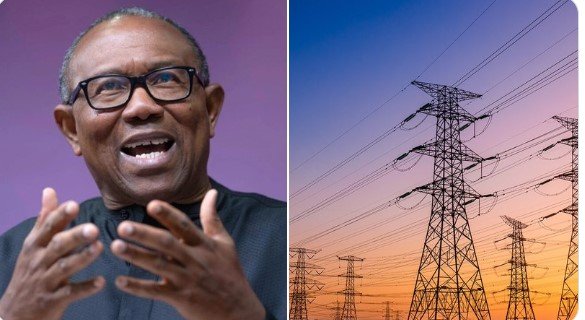
Former presidential candidate of the Labour Party, Peter Obi, has declared that his administration would increase Nigeria’s electricity generation capacity to 10,000 megawatts within four years if elected president in 2027.
Obi made the statement while speaking on the state of Nigeria’s economy, infrastructure, and power sector, insisting that stable electricity remains critical to industrial growth, job creation, and economic development.
According to him, Nigeria cannot achieve meaningful economic transformation without solving the persistent electricity crisis that has continued to affect businesses, manufacturers, and millions of households across the country.
The former Anambra State governor said his administration would prioritize investment in power generation, transmission, and distribution while creating policies capable of attracting both local and foreign investors into the energy sector.
Obi Says Power Sector Requires Urgent Reforms
Peter Obi argued that Nigeria possesses the resources and manpower required to significantly improve electricity supply but lacks proper leadership, policy consistency, and accountability.
He noted that despite billions of dollars invested in the power sector over the years, many Nigerians still suffer from unstable electricity supply and frequent blackouts.
Obi stated that improving power generation to 10,000 megawatts within four years is achievable through deliberate reforms, improved management, and transparency in the sector.
He stressed that countries with stronger economies achieved rapid industrialization partly because they invested heavily in stable electricity infrastructure.
According to Obi, reliable electricity would help reduce production costs for businesses, boost manufacturing, encourage small-scale enterprises, and create employment opportunities for millions of Nigerians.
Nigeria’s Electricity Challenges Persist
Nigeria continues to face major electricity challenges despite being Africa’s largest economy and one of the continent’s biggest oil producers.
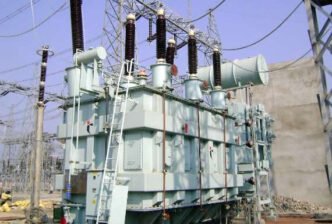
The country has struggled for decades with inadequate generation capacity, poor transmission infrastructure, vandalism, and weak distribution networks.
Although Nigeria’s installed electricity generation capacity is estimated at over 13,000 megawatts, actual available supply often falls far below demand due to technical, operational, and gas supply constraints.
Many businesses and households rely heavily on generators and alternative energy sources because of irregular electricity supply from the national grid.
Economic experts have repeatedly identified poor electricity supply as one of the biggest obstacles to industrial growth and foreign investment in Nigeria.
Obi Promises Economic Transformation Through Stable Electricity
The Labour Party chieftain maintained that improved power supply would directly impact Nigeria’s economic productivity and national development.
He said stable electricity would support industries, improve healthcare delivery, enhance education, encourage digital innovation, and strengthen small and medium-sized enterprises.
Obi also emphasized the importance of decentralizing electricity generation and encouraging states and private investors to participate more actively in power production and distribution.
According to him, Nigeria must move away from excessive dependence on a centralized power system and embrace modern energy solutions capable of meeting growing national demand.
He added that renewable energy sources such as solar and gas-powered projects should also be expanded to improve electricity access across rural and urban communities.
Reactions Trail Obi’s Statement
Peter Obi’s remarks have generated reactions from supporters, political analysts, and Nigerians on social media.
Supporters of the former presidential candidate described the target as ambitious but achievable if supported by proper planning, transparency, and competent leadership.
Some analysts noted that increasing electricity supply to 10,000 megawatts would require massive investment in generation, transmission, and distribution infrastructure as well as policy stability.
Others argued that beyond increasing generation capacity, the government must also address challenges affecting transmission lines, metering, electricity theft, and financial sustainability within the power sector.
Critics, however, questioned whether such promises could be realistically implemented within four years given Nigeria’s long-standing structural challenges in the energy sector.
Power Supply Remains Key Political Issue
Electricity has remained one of the most important issues in Nigeria’s political and economic discussions for decades.
Successive administrations have repeatedly promised to improve electricity generation and supply, but millions of Nigerians continue to experience unreliable power supply.
The issue has also become central to political campaigns as parties and candidates seek to convince voters of their ability to transform the country’s infrastructure and economy.
Analysts say any administration capable of significantly improving electricity supply would likely boost economic activities, reduce unemployment, and improve living standards nationwide.
Calls for Long-Term Energy Policies
Energy experts have continued to advocate long-term reforms and sustained investment in Nigeria’s power sector.
They argue that solving the country’s electricity crisis requires policy consistency, improved regulation, stronger institutions, and collaboration between government and private investors.
Some stakeholders also called for increased investment in renewable energy and regional electricity projects to reduce pressure on the national grid.
Observers believe that achieving stable electricity supply in Nigeria will require not only political promises but also effective implementation of reforms and accountability in the management of power sector resources.
As political activities ahead of the 2027 general elections gradually gather momentum, statements on economic recovery, infrastructure, and electricity supply are expected to remain major topics in national conversations.
For many Nigerians, however, the real expectation remains practical solutions capable of ending decades of unreliable electricity supply and improving the country’s economic future.