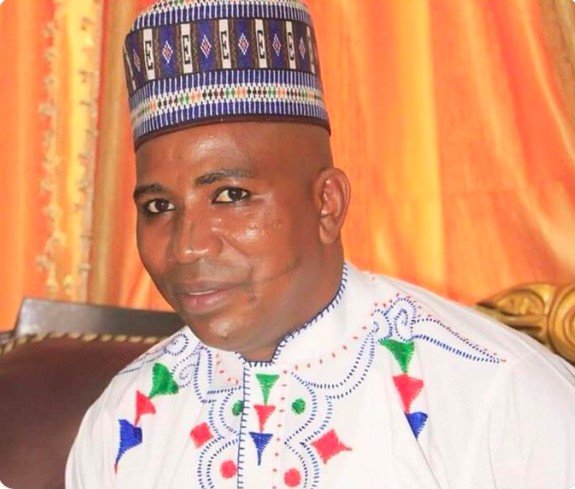
ABUJA, Nigeria — The Federal High Court in Abuja has granted Bello Bodejo, President of the Miyetti Allah Kautal Hore, bail in the sum of ₦2 billion following his arraignment over an alleged $2.63 million money laundering case.
Justice Emeka Nwite delivered the ruling on Monday after hearing arguments from both the prosecution and the defence, setting stringent bail conditions for the defendant while ordering that he remain in custody until the conditions are fully met.
The ruling marks a significant development in a high-profile financial crime case that has attracted national attention due to Bodejo’s position as the leader of one of Nigeria’s most prominent Fulani socio-cultural organisations.
EFCC Arraigns Bodejo Over Alleged Money Laundering
Bodejo was arraigned before the Federal High Court by the Economic and Financial Crimes Commission (EFCC) on charges bordering on alleged money laundering involving $2.63 million.
According to the anti-graft agency, the charges stem from alleged financial transactions said to contravene the provisions of Nigeria’s Money Laundering (Prevention and Prohibition) Act.
The EFCC alleged that the defendant handled funds suspected to be proceeds of unlawful activities through financial transactions that violated existing anti-money laundering regulations.
During the court proceedings, the charges were read to Bodejo, who pleaded not guilty to all counts.
His plea paved the way for the commencement of trial at a later date.
Court Approves ₦2 Billion Bail
Following the defendant’s plea, his legal team filed an application requesting that he be admitted to bail pending trial.
After considering submissions from both parties, Justice Emeka Nwite granted the application but imposed strict conditions designed to ensure the defendant’s availability throughout the judicial process.
The court fixed bail at ₦2 billion with two sureties in like sum.
Justice Nwite ruled that the sureties must satisfy conditions stipulated by the court before the defendant can regain his freedom.
The judge further directed that Bodejo should remain in the custody of the appropriate authorities pending the perfection of the bail conditions.
Stringent Bail Conditions
As part of the bail requirements, the Federal High Court directed that the sureties must possess verifiable assets acceptable to the court.
The court also ordered that relevant ownership documents presented by the sureties would undergo verification before approval.
In addition, the sureties are expected to provide evidence of financial capacity and satisfy other administrative requirements prescribed by the court.
Legal experts note that high-value bail conditions are common in cases involving substantial financial crime allegations, particularly where prosecutors argue that the accused has access to significant financial resources.
The purpose of such conditions is to guarantee the defendant’s appearance throughout the trial.
Allegations Yet to Be Proven
Although the EFCC has filed criminal charges against Bodejo, the allegations remain unproven.
Under Nigerian law, every defendant charged before a court is presumed innocent until proven guilty beyond reasonable doubt.
The court has not made any finding on the substance of the allegations, and the ongoing proceedings will determine whether the prosecution can establish its case during trial.
Bodejo’s not guilty plea means the prosecution will be required to present witnesses, documentary evidence and other materials in support of the charges.
The defence will also have the opportunity to challenge the prosecution’s evidence and present its own case.
Who Is Bello Bodejo?
Bello Bodejo is the President of Miyetti Allah Kautal Hore, a prominent Fulani socio-cultural association in Nigeria.
The organisation represents the interests of many Fulani pastoralists and has frequently participated in national conversations concerning livestock development, grazing policies, agriculture and security.
Over the years, Bodejo has emerged as one of the most recognised leaders within the Fulani community.
He has often spoken on issues relating to herders, ranching, community conflicts and national security.
His activities have attracted both support and criticism depending on the issues under discussion.
Previous Legal Challenges
The latest money laundering case comes months after Bodejo was involved in another legal dispute concerning the establishment of a security outfit known as Kungiya Zaman Lafiya.
He was previously arrested and prosecuted over allegations relating to the activities of the organisation before eventually regaining his freedom through court proceedings.
The current money laundering charges are separate from those earlier legal matters and are being prosecuted independently.
The outcome of the present case will depend entirely on the evidence presented before the Federal High Court.
Understanding Money Laundering Laws in Nigeria
Money laundering refers to the process of concealing the origin of funds believed to have been obtained through unlawful activities.
Nigeria’s Money Laundering (Prevention and Prohibition) Act establishes rules governing financial transactions and imposes obligations on individuals, financial institutions and businesses to report suspicious transactions.
The legislation forms part of Nigeria’s broader efforts to combat financial crimes, terrorism financing and illicit financial flows.
The EFCC is one of the principal agencies responsible for investigating and prosecuting alleged violations of the law.
Convictions under the legislation may attract substantial fines, forfeiture of assets and terms of imprisonment depending on the nature of the offence and the evidence presented before the court.
EFCC’s Anti-Corruption Drive
The prosecution of the case forms part of the EFCC’s continuing campaign against financial crimes across Nigeria.
In recent years, the commission has intensified investigations into alleged money laundering, advance fee fraud, cybercrime, public sector corruption and financial misconduct involving individuals and corporate entities.
The agency maintains that strict enforcement of anti-money laundering regulations is essential to protecting Nigeria’s financial system and strengthening public confidence in economic governance.
However, legal experts consistently emphasise that criminal prosecutions must adhere to constitutional safeguards, including the right to a fair hearing and the presumption of innocence.
Trial Expected to Commence
Following the grant of bail, the Federal High Court is expected to fix dates for the commencement of trial.
During the proceedings, the prosecution will call witnesses and tender documentary evidence intended to establish the allegations against the defendant.
The defence will have the opportunity to cross-examine prosecution witnesses and present its own evidence in response.
Depending on the complexity of the case, the trial could involve multiple sittings before the court eventually delivers judgment.
Until then, the charges remain allegations that have not been established by any judicial finding.
Public Interest in the Case
The case has generated significant public interest because of Bodejo’s position as the national leader of Miyetti Allah Kautal Hore and the substantial amount involved in the alleged money laundering case.
Observers are expected to monitor the proceedings closely as they unfold before the Federal High Court in Abuja.
The case also underscores the continued focus of Nigerian anti-corruption agencies on enforcing financial crime laws regardless of the public status of individuals facing prosecution.
Conclusion
The decision of the Federal High Court in Abuja to grant Bello Bodejo ₦2 billion bail represents an important procedural step in the ongoing alleged $2.63 million money laundering case instituted by the Economic and Financial Crimes Commission.
While the court has admitted the Miyetti Allah President to bail under strict conditions, it has not made any determination on his guilt or innocence.
As the trial proceeds, the prosecution will bear the legal burden of proving the allegations beyond reasonable doubt, while Bodejo remains entitled to the constitutional presumption of innocence.
The outcome of the case is expected to be closely watched by legal observers, civil society groups and the wider public as Nigeria continues its efforts to strengthen the enforcement of anti-money laundering laws and uphold the rule of law.