The Dangote Petroleum Refinery has defended its latest increase in the price of Premium Motor Spirit, popularly known as petrol, saying the adjustment reflects the cost of crude oil purchased earlier and the lengthy process involved in sourcing, shipping and delivering the commodity to the refinery.
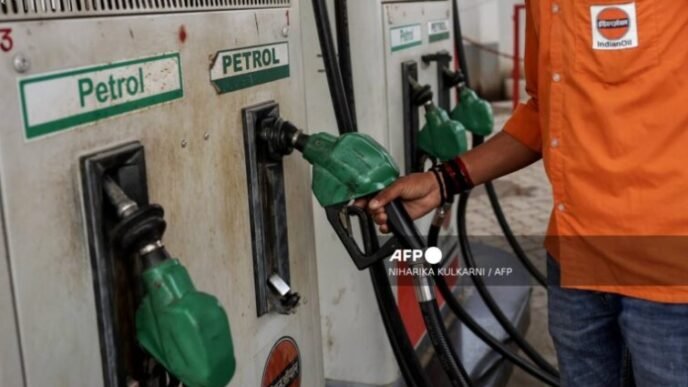
The explanation comes amid another rise in petrol prices across Nigeria, with the product now selling for between N1,310 and N1,400 per litre in different parts of the country.
Petrol is currently selling for around N1,310 per litre in Lagos and Ogun states, while motorists in northern states and other locations farther from the Dangote refinery are paying N1,350 or more. In some markets, the pump price is approaching N1,400 per litre.
The latest development has increased pressure on motorists, transport operators and households already dealing with elevated living costs.
Dangote explains reason for price increase
The latest adjustment has generated questions because it came at a time when international crude oil prices had begun to decline.
A senior executive of the Dangote refinery, who spoke on condition of anonymity because he was not authorised to speak publicly, explained that current international crude prices cannot be used as the only basis for determining the price of petrol produced from crude that the refinery purchased earlier.
According to the executive, there is a significant time gap between the purchase of crude oil and its eventual arrival at the refinery for processing.
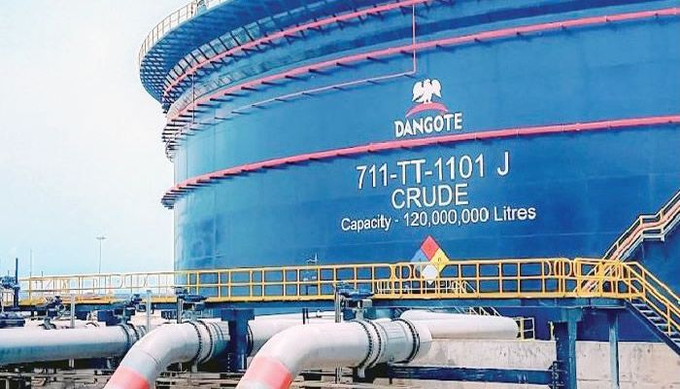
The process involves negotiating and completing the crude purchase, securing a loading window, chartering a vessel, loading the crude, sailing to Nigeria and arranging for the cargo to be discharged into the refinery’s storage facilities.
The executive argued that the crude being processed today may have been purchased weeks earlier when international prices were considerably different.
He also pointed to the cost of crude already purchased and stored by the refinery.
The explanation effectively means that a fall in international crude prices does not automatically translate into an immediate reduction in the cost of petrol produced from crude already acquired at a higher price.
Dangote raises petrol gantry price three times
The latest increase followed Dangote Refinery’s decision to raise its PMS gantry price by N65 per litre, from N1,200 to N1,265 per litre, effective August 29, 2026.
It was the refinery’s third upward adjustment in just eight days.
On August 21, Dangote increased its gantry price from N1,165 to N1,185 per litre.
Five days later, on August 26, the refinery raised the price again to N1,200 per litre.
The August 29 adjustment subsequently pushed the price to N1,265 per litre.
Overall, the three increases added N100 per litre to the refinery’s gantry price within eight days, representing an increase of about 8.6 per cent.
The repeated adjustments have fuelled concerns among petroleum marketers and consumers, particularly because they occurred against the backdrop of softer international crude prices.
Petrol price reaches N1,310 in Lagos and Ogun
The increase in Dangote’s wholesale price has already filtered through to retail petrol markets.
In Lagos and Ogun, where the refinery is located and distribution distances are relatively shorter, petrol is selling for around N1,310 per litre.
The situation is different in northern states and other areas farther away from the refinery.
In those markets, petrol is selling for N1,350 or more, while some locations have recorded prices approaching N1,400 per litre.
The variation highlights the role of transportation and distribution costs in determining the final price motorists pay at filling stations.
Why petrol costs more in northern Nigeria
The Dangote refinery is located in Lekki, Lagos, meaning petroleum products supplied to distant parts of Nigeria have to travel significant distances before reaching filling stations.
Transportation costs, logistics, storage and other distribution expenses are subsequently added to the cost of the product.
This creates a regional price gap, with markets closer to the refinery generally recording lower prices than areas hundreds of kilometres away.
Consequently, the N1,310 price being reported in Lagos and Ogun does not necessarily translate into the same retail price in other parts of the country.
For motorists in distant locations, the additional cost of transporting petrol from coastal markets can significantly increase the final pump price.
Falling crude prices raise questions
The latest petrol price increases have attracted attention because international crude prices have recently fallen from higher levels.
The development has prompted questions about how quickly changes in the international oil market should be reflected in the Nigerian petrol market.
However, Dangote’s explanation centres on inventory costs and the time required to purchase and transport crude.
The refinery’s position is that it cannot simply calculate the cost of petrol based on the international crude benchmark on the day the product is sold.
Instead, it must consider the price paid for crude already purchased, as well as the costs incurred in transporting the crude to Nigeria and processing it.
This distinction is important because crude oil is not purchased, delivered and refined instantaneously.
What the price increase means for motorists
The latest increase is likely to have broader implications for consumers because petrol remains a major input in Nigeria’s transportation and distribution networks.
Higher petrol prices can increase transportation costs for commuters and commercial operators.
They can also affect the cost of moving agricultural produce, food, manufactured goods and other commodities from one part of the country to another.
For businesses that rely on petrol-powered generators, the impact can also extend to operating expenses.
The latest increase therefore comes at a time when households and businesses continue to monitor energy and transportation costs closely.
Dangote’s price strategy
The repeated price adjustments have also highlighted the changing dynamics of Nigeria’s downstream petroleum market.
With the Dangote refinery producing petrol domestically on a large scale, the country’s dependence on imported refined products has reduced significantly.
However, the refinery itself remains exposed to international crude markets because crude oil is the primary feedstock required to produce petrol and other refined petroleum products.
Reuters reported last week that roughly 30 to 40 per cent of the refinery’s crude supply is imported, illustrating the challenges involved in securing adequate and cost-effective feedstock.
The cost of acquiring crude, transporting it and processing it therefore remains an important factor in the refinery’s pricing decisions.
Dangote plans wider distribution
The difference between petrol prices in coastal areas and distant parts of the country has also increased attention on logistics.
Dangote Refinery has been working on measures to expand the distribution of its petroleum products across Nigeria.
One of the initiatives involves extending its free distribution scheme, which could help reduce some of the transportation burden associated with moving products from the refinery to distant markets.
Such measures could potentially narrow the price difference between petrol sold in Lagos and that available in other parts of Nigeria.
However, the immediate impact of the latest gantry price increase is already being felt in the retail market.
Petrol price outlook
The direction of petrol prices in the coming weeks will depend on several factors, including international crude prices, crude supply costs, exchange-rate movements, transportation expenses and the pricing decisions of domestic refiners and petroleum marketers.
If crude prices remain lower for a sustained period, consumers may expect domestic petrol prices to eventually respond.
However, the Dangote refinery’s latest explanation suggests that there could be a delay between movements in global crude benchmarks and changes in the cost of petrol produced from previously purchased crude.
For now, Nigerian motorists are facing another increase in fuel costs, with petrol selling at about N1,310 per litre in Lagos and Ogun, N1,350 or more in several northern and distant markets, and approaching N1,400 per litre in some locations.
The latest development is likely to keep petrol pricing, crude supply costs and the impact of domestic refining at the centre of Nigeria’s economic debate as consumers continue to contend with elevated transportation and living costs.