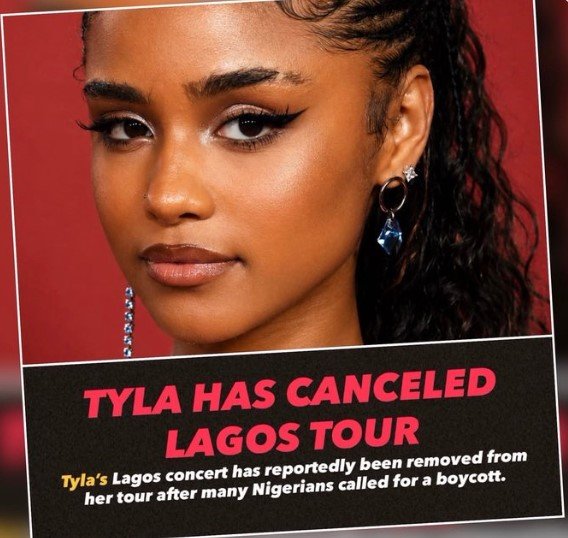
Lagos dropped from A*POP World Tour schedule as organisers remain silent on cancellation or postponement
South African pop star and Grammy winner Tyla has removed Nigeria from the schedule of her upcoming A*POP World Tour, triggering widespread reactions among fans and entertainment stakeholders across Africa. The development comes only days after the singer announced Lagos as one of the African stops on the global tour.
A review of Tyla’s official tour itinerary on Friday showed that the Lagos concert, previously scheduled for December 22, 2026, is no longer listed among the confirmed tour dates. The Nigerian show had initially been announced as part of the final leg of the tour, alongside performances in Cape Town and Johannesburg.
As of the time of filing this report, Tyla, her management team, and the concert organisers have not issued an official statement explaining why the Lagos date was removed from the schedule. It also remains unclear whether the concert has been cancelled outright, postponed, or may be rescheduled for a later date.
The sudden disappearance of the Lagos show has fueled intense debate on social media, with many Nigerians linking the decision to recent public outrage over renewed reports of xenophobic attacks against Nigerians and other African migrants in South Africa.
Lagos Date Quietly Removed From Official Schedule
Tyla announced the A*POP World Tour earlier this week in support of her second studio album, APOP*. The tour is expected to begin in Europe, continue through North America, and conclude with selected African performances.
When the itinerary was first unveiled, Lagos was included as the only Nigerian stop, making it one of the most anticipated concerts on the African entertainment calendar for 2026.
However, by Friday afternoon, fans noticed that the Lagos date had been removed from the official schedule published on the singer’s tour platforms, while other international and South African dates remained intact.
The removal occurred without any accompanying notice, refund information, or public communication from the organisers.
Social Media Backlash Intensified
The development follows several days of criticism directed at the singer on Nigerian social media platforms. Some users called for a boycott of the Lagos concert, arguing that South African artists should speak more forcefully against xenophobic violence targeting Nigerians living in South Africa.
The backlash intensified after online commentators questioned whether it was appropriate to host a major South African concert in Lagos while concerns about the safety and treatment of Nigerians in South Africa remained unresolved.
Although Tyla herself was not accused of participating in or endorsing xenophobic actions, many social media users demanded that she publicly address the issue before proceeding with the Nigerian show.
The singer has not publicly responded to the criticism.
No Official Confirmation of Cancellation
Despite widespread reports that the concert has been cancelled, there is currently no official confirmation from Tyla’s team that the Lagos show has been permanently scrapped.
Industry observers note that removing a date from a tour schedule can sometimes indicate:
- A full cancellation
- A postponement
- Ongoing negotiations with promoters
- Logistical or security concerns
- Ticketing or venue-related issues
Until an official announcement is made, the exact status of the Lagos concert remains uncertain.
Fans who had expected ticket sales and venue details to be released in the coming weeks have expressed frustration over the lack of communication.
Why the Story Has Resonated in Nigeria
The reaction to Tyla’s tour change cannot be separated from the broader history of Nigeria–South Africa relations, particularly around recurring episodes of xenophobic violence.
Over the past two decades, several outbreaks of violence in South Africa have targeted foreign African nationals, including Nigerians, Zimbabweans, Somalis, Ethiopians, and others. These incidents have repeatedly sparked diplomatic tensions and public anger across the continent.
In previous years, Nigerian entertainers, businesses, and consumers have occasionally called for cultural and economic boycotts of South African brands and artists during periods of heightened tension.
As a result, Tyla’s tour schedule became entangled in a much larger conversation about African solidarity, migration, and public accountability.
Mixed Reactions From Fans
The removal of Lagos from the tour has produced sharply divided reactions.
Supporters of the Removal
Some Nigerians welcomed the decision, saying it reflected public sentiment and avoided a potentially hostile reception.
A number of social media users argued that cultural exchanges should be accompanied by stronger condemnation of xenophobic violence.
Disappointed Fans
Others expressed disappointment that Nigerian fans may lose the opportunity to see one of Africa’s biggest breakout stars perform live.
Many pointed out that Tyla has a significant fan base in Nigeria and that music should not be used as a tool for collective punishment.
Some entertainment commentators also warned that escalating online hostility could discourage future international performances in Nigeria.
Tyla’s Growing Influence in Africa and Globally
Tyla has become one of Africa’s most prominent musical exports following the global success of “Water,” which earned her international recognition and a Grammy Award.
Her rise has been particularly notable because she has achieved commercial success across multiple markets, including:
- South Africa
- Nigeria
- The United States
- The United Kingdom
- Europe
- Latin America
Nigeria has played an important role in the growth of Amapiano and related African pop genres, with collaborations and cross-border promotion helping many South African artists reach wider audiences.
For that reason, the removal of Lagos from the tour is being viewed as more than a routine scheduling change; it is also seen as a symbolic moment in the relationship between two of Africa’s largest music markets.
Entertainment Industry Watches Closely
Promoters and music executives are closely monitoring the situation because it could have implications for future cross-border events.
Nigeria remains one of Africa’s most lucrative live entertainment markets, particularly for Afrobeats, Amapiano, and international touring acts.
Analysts say prolonged uncertainty surrounding major concerts can affect:
- Ticket confidence
- Sponsorship negotiations
- Venue planning
- Security arrangements
- Brand partnerships
The absence of a clear statement from organisers has therefore become a key concern for industry stakeholders.
Diplomatic Context Matters
Although the controversy is unfolding in the entertainment space, it has broader diplomatic undertones.
Nigeria and South Africa maintain significant economic, political, and cultural ties. Both countries are influential members of the African Union and are often regarded as continental powerhouses.
However, public sentiment between the two countries has periodically been strained by:
- Xenophobia-related incidents
- Business disputes
- Immigration concerns
- Perceptions of unequal treatment of citizens
Cultural events frequently become flashpoints for these tensions because artists are highly visible public figures.
What Happens Next?
For now, all other announced dates on Tyla’s A*POP World Tour remain listed, including performances in South Africa.
The key unanswered questions are:
- Was the Lagos show cancelled?
- Was it postponed?
- Will refunds be offered if tickets had been sold?
- Will the date return to the schedule after further discussions?
Until Tyla or her management provides clarification, speculation is likely to continue.
A Test for African Pop’s Cross-Border Unity
The Tyla–Lagos controversy highlights the delicate intersection of music, politics, and public sentiment in contemporary Africa.
African pop has increasingly thrived on cross-border collaboration, with Nigerian and South African artists regularly working together, sharing audiences, and building continental and global fan bases.
Yet the current backlash shows that cultural integration does not exist in isolation from social and political realities. Public concerns about xenophobia can quickly spill into entertainment, forcing artists and organisers to navigate issues that extend far beyond music.
Whether the Lagos concert eventually returns to the tour schedule or not, the episode has already become one of the most discussed entertainment stories in Africa this week. It underscores how closely fans now expect public figures, brands, and cultural institutions to respond to wider societal concerns.
For Nigerian fans awaiting clarity, the next move rests with Tyla’s team and the concert promoters. Until then, the status of what was expected to be one of Lagos’s biggest international concerts of 2026 remains uncertain.