Abuja, Nigeria — November 11, 2025:
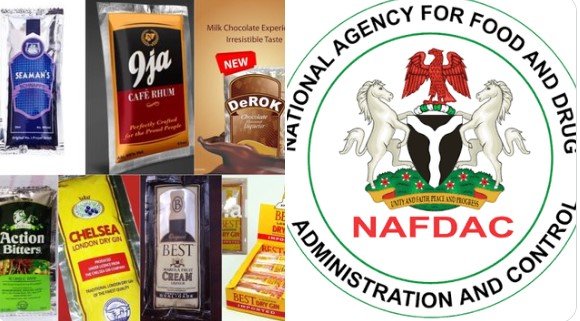
The National Agency for Food and Drug Administration and Control (NAFDAC) has reaffirmed its decision to ban the production and sale of alcohol in sachets and small bottles (below 200 millilitres) by December 2025, citing rising public health concerns and the need to protect young Nigerians from alcohol abuse.
The announcement marks the final phase of a five-year transition agreement reached in 2020 between NAFDAC, the Federal Ministry of Health, and industry stakeholders, including the Distillers and Blenders Association of Nigeria (DIBAN), which allowed producers to gradually phase out the controversial packaging format.
NAFDAC’s Director-General, Prof. Mojisola Adeyeye, confirmed the deadline in a statement on Tuesday, saying the move aligns with the agency’s mandate to regulate and control the manufacture, importation, exportation, and distribution of food and drugs, including alcoholic beverages.
“Effective December 31, 2025, the production, sale, and consumption of alcoholic beverages in sachets, PET bottles, and glass bottles smaller than 200ml will no longer be permitted in Nigeria,” Adeyeye said.
“This decision follows extensive consultations and scientific evidence showing that the availability of cheap, high-alcohol-content drinks in sachets contributes significantly to underage drinking and public health risks.”
A Policy Rooted in Public Health
The regulation banning sachet alcohol was first announced in January 2020, following growing concerns that portable, inexpensive alcoholic drinks—often sold for as little as ₦100—were being consumed by minors, commercial drivers, and students.
At the time, NAFDAC entered into a five-year agreement with industry players to gradually eliminate sachet packaging and replace it with larger, standardised containers.
Adeyeye said the transition period was designed to allow manufacturers to adjust production lines, reformulate packaging, and avoid abrupt job losses in the sector.
Now, five years later, the agency says it is ready to fully enforce the ban, insisting that “public safety must take precedence over commercial interests.”
“We cannot allow a situation where children and teenagers can easily purchase strong alcohol disguised in sachets,” Adeyeye stated.
“The health and social consequences far outweigh any short-term economic benefit.”
Why Sachet Alcohol Is Being Targeted
Alcohol sachets—typically 30ml to 100ml pouches—have flooded Nigerian markets over the past decade, offering cheap, high-concentration drinks accessible at roadside kiosks and motor parks.
Health experts say the packaging makes alcohol more portable, affordable, and less regulated, leading to widespread misuse.
A 2024 survey by the Nigerian Medical Association (NMA) found that nearly 32% of underage drinkers admitted to consuming alcohol in sachet form, while commercial tricycle riders and motor park workers reported sachet alcohol as their most common beverage of choice during work hours.
Public health analyst Dr. Chioma Udeh said sachet alcohol poses a “hidden epidemic” in Nigeria’s low-income communities.
“The packaging makes it deceptively convenient,” Udeh said.
“People can consume alcohol anywhere—inside buses, classrooms, or workplaces—without detection, and that has contributed to rising addiction, domestic violence, and mental health cases.”
Economic Impact and Industry Pushback
While the health rationale for the ban is widely acknowledged, manufacturers have expressed concern about the potential economic fallout.
The Distillers and Blenders Association of Nigeria (DIBAN), under the Manufacturers Association of Nigeria (MAN), has in the past appealed for an extension of the deadline, warning that the move could lead to mass layoffs and loss of investment worth billions of naira.
In a previous letter to NAFDAC, DIBAN argued that over 25,000 workers could be affected, especially in the packaging and distribution chain, where sachet and small bottle products dominate sales.
However, NAFDAC insists that the policy will stimulate innovation in safer packaging alternatives and strengthen compliance with international health standards.
“The alcohol industry must evolve in a way that safeguards Nigerians,” Adeyeye said.
“Other countries have long prohibited such packaging, and Nigeria cannot be an exception.”
Enforcement Strategy
According to NAFDAC, the final phase of enforcement will begin in January 2026, following the December 2025 deadline.
The agency says it will work closely with the Nigeria Police Force, Nigeria Customs Service, and the Standards Organisation of Nigeria (SON) to ensure that no banned alcohol products remain in circulation.
Manufacturers, distributors, and retailers who fail to comply face severe penalties, including:
- Revocation of production licences,
- Product seizure and destruction, and
- Legal prosecution under NAFDAC’s enabling laws.
The agency has also pledged to launch nationwide awareness campaigns to educate consumers on the health risks associated with sachet alcohol and the benefits of the policy.
Reactions from Stakeholders
Reactions to the renewed enforcement announcement have been mixed.
Civil society groups and public health advocates have commended NAFDAC’s firmness, saying the ban could significantly reduce substance abuse among youths.
Mrs. Amina Ibrahim, coordinator of the Coalition Against Drug and Alcohol Abuse (CADAA), said sachet alcohol has been a major contributor to addiction and social decay.
“When you can buy a 40% spirit for ₦100, it’s no surprise that schoolchildren are experimenting with alcohol,” she said.
“This policy is long overdue and will save lives.”
On the other hand, small business owners who rely on sachet alcohol sales expressed fear of economic hardship.
Chukwudi Eze, a retailer in Abuja, said the ban could hurt micro-traders who depend on sachet sales for survival.
“Not everyone can afford big bottles. People buy sachet drinks because they’re cheap. Government should find a balance,” he argued.
Global Perspective
Nigeria’s decision mirrors policies already implemented in countries such as Kenya, Uganda, and India, where small-packaged spirits have been banned to curb underage drinking and road accidents.
In Kenya, a 2019 ban on sachet spirits led to a 35% reduction in alcohol-related hospital admissions within two years, according to the World Health Organization (WHO).
NAFDAC says Nigeria’s initiative aligns with the WHO’s Global Alcohol Action Plan (2022–2030), which urges member states to reduce the harmful use of alcohol through pricing, advertising, and availability controls.
Public Health Gains Expected
Health experts predict that Nigeria could experience measurable improvements in mental health, road safety, and productivity once the ban takes full effect.
The Federal Road Safety Corps (FRSC) has linked numerous traffic accidents to sachet alcohol consumption by commercial drivers.
Similarly, mental health clinics across the country report rising cases of alcohol-induced depression and violence in households.
“Reducing access to cheap, potent alcohol is one of the most effective public health interventions available,” said Dr. Bayo Osagie, a consultant psychiatrist at the University of Lagos Teaching Hospital.
“It will not only save lives but also strengthen social discipline.”
Next Steps
As the December 2025 deadline approaches, NAFDAC says it will continue to engage manufacturers, state governments, and civil society to ensure a smooth transition.
The agency also urged Nigerians to support the policy by discouraging illegal sales and reporting violators through its consumer safety helpline.
“This is not a war against business,” Adeyeye emphasized.
“It is a war against preventable harm. Together, we can protect our youths, families, and future generations.”
Conclusion
The upcoming ban represents a pivotal moment in Nigeria’s public health and regulatory landscape.
While the move has sparked debate between economic and health interests, experts agree that the long-term benefits of reducing alcohol misuse far outweigh the short-term disruptions.
As enforcement looms, all eyes will be on NAFDAC and industry players to see whether this landmark policy can finally tackle one of Nigeria’s most pervasive social challenges.