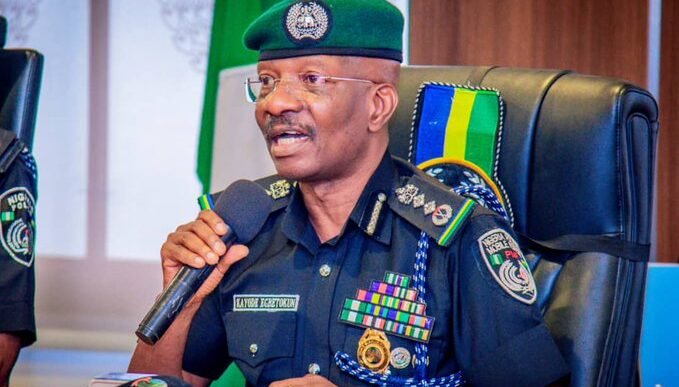
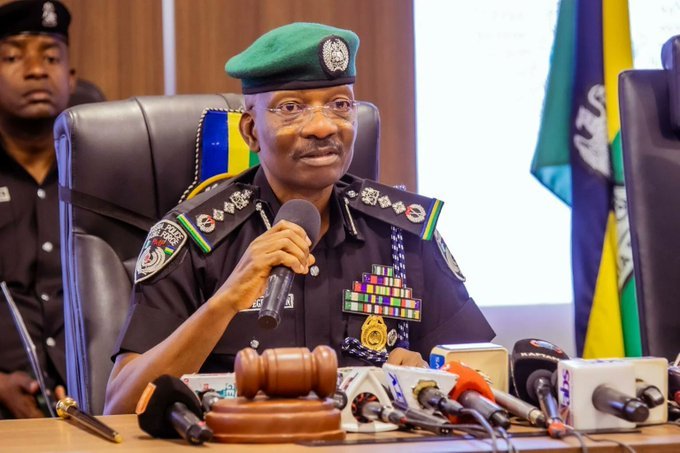
The Inspector-General of Police (IGP), Kayode Egbetokun, has firmly dismissed allegations that the Nigeria Police Force arrested innocent Nigerians and peaceful protesters during the recent unrest in Ekpoma, Edo State, describing such claims as a “false narrative” often peddled against the police after violent incidents.
Egbetokun made the remarks during an interview aired on Channels Television on Saturday, responding to growing public criticism and concern over the arrest and detention of dozens of persons following protests in the university town.
The unrest in Ekpoma, which drew national attention, reportedly followed tensions linked to local grievances that escalated into protests. Videos and eyewitness accounts circulating on social media had accused security operatives of clamping down on peaceful demonstrators, triggering outrage among civil society groups, students, and rights activists.
Police Push Back Against Public Allegations
Addressing the allegations directly, the Inspector-General rejected claims that the police targeted peaceful protesters, insisting that law enforcement officers acted strictly within the confines of the law to restore order and protect lives and property.
Responding to a question on whether he was aware of reports that innocent protesters were arrested, Egbetokun said such accusations were a familiar pattern whenever protests degenerated into violence.
“That’s the usual false narrative against the police,” the IGP said during the interview. “Whenever violence occurs under the guise of protest, the police are accused of arresting innocent people, even when those arrested are involved in criminal activities.”
He stressed that the police do not arrest citizens merely for expressing grievances but intervene when protests are hijacked by individuals intent on violence, vandalism, or attacks on security personnel.
Context of the Ekpoma Unrest
Ekpoma, home to Ambrose Alli University, has historically witnessed student-led protests and community demonstrations, often centred on welfare issues, infrastructure, or security concerns. The recent unrest reportedly involved gatherings that later turned chaotic, with allegations of property destruction and attacks on public facilities.
Police authorities say officers were deployed to prevent escalation and to ensure that the situation did not spiral into wider violence that could endanger residents, students, and businesses in the area.
While the police maintain that their actions were justified, critics argue that the response was heavy-handed and resulted in the arrest of individuals who were not involved in violent acts.
Egbetokun: Protest Is Not a Licence for Violence
The IGP emphasised that the right to peaceful protest is guaranteed under the Nigerian Constitution, but warned that this right does not extend to acts of violence or criminality.
“The police respect the rights of Nigerians to protest peacefully,” Egbetokun said. “However, once a protest turns violent, once it involves the destruction of property, attacks on innocent citizens, or threats to public order, the police have a duty to intervene.”
He added that officers are trained to distinguish between lawful assembly and unlawful conduct, noting that arrests are carried out based on intelligence, evidence, and observed criminal behaviour.
According to him, individuals taken into custody in Ekpoma were arrested not because they protested, but because they were allegedly involved in actions that threatened public safety.
Detentions and Due Process
Egbetokun also addressed concerns about the detention of suspects, stating that the police follow due process and that anyone arrested unlawfully has access to legal remedies.
“Nobody is arrested arbitrarily,” he said. “Those arrested are investigated, and where there is no evidence of wrongdoing, they are released. Where there is evidence, the law takes its course.”
He urged members of the public to avoid relying solely on social media narratives, which he said often present incomplete or misleading versions of events.
Public Criticism and Rights Groups React
Despite the police explanation, the Ekpoma arrests have continued to draw criticism from human rights organisations, student unions, and civil society actors. Some groups have called for an independent investigation into the police response, arguing that transparency is necessary to rebuild public trust.
Rights advocates insist that even when protests become disorderly, security agencies must exercise restraint and ensure that force is proportionate.
They also raised concerns about prolonged detention without charge, calling on authorities to either release detainees or promptly arraign them in court.
Trust Deficit Between Police and Citizens
The controversy has once again highlighted the fragile relationship between the police and the public in Nigeria. Years of accusations involving excessive force, unlawful arrests, and suppression of protests have contributed to widespread mistrust.
Security analysts say incidents like the Ekpoma unrest underscore the need for improved communication, better crowd-control strategies, and stronger accountability mechanisms within the Nigeria Police Force.
Egbetokun acknowledged the existence of public skepticism but maintained that efforts are ongoing to reform the force, improve professionalism, and change negative perceptions.
Police Reform and Operational Challenges
Since assuming office, the IGP has repeatedly pledged commitment to police reforms, including better training, improved welfare for officers, and stricter enforcement of rules of engagement.
However, analysts note that policing protests in Nigeria remains particularly challenging due to:
- High youth unemployment and social tension
- Rapid mobilisation through social media
- Infiltration of protests by criminal elements
- Limited crowd-control equipment and manpower
These factors, experts argue, often complicate efforts to manage protests without confrontation.
Call for Calm and Responsible Engagement
In his remarks, Egbetokun appealed to Nigerians, especially youths, to engage law enforcement constructively and to ensure that protests remain peaceful.
He warned that criminal elements frequently exploit protests to commit acts of violence, loot property, or attack security operatives, thereby undermining legitimate grievances.
“The police are not the enemy of the people,” he said. “Our duty is to protect lives and property, and we will continue to do so in line with the law.”
Edo State Government and Local Response
While the police leadership has defended its actions, observers say the Edo State Government and community leaders also have a role to play in addressing underlying grievances that often spark protests.
Dialogue, timely intervention, and responsive governance are seen as key to preventing future unrest in Ekpoma and similar university towns across the country.
Conclusion
The Inspector-General of Police’s rejection of allegations surrounding the Ekpoma arrests adds a new layer to the ongoing debate over policing protests in Nigeria.
While the police insist that those arrested were involved in criminal activities rather than peaceful protest, critics continue to demand accountability and transparency.
As tensions persist, analysts say the episode underscores the urgent need for trust-building between citizens and law enforcement, clearer protest-management frameworks, and sustained commitment to human rights and rule of law.
Whether the Ekpoma incident will lead to further reforms or deepen existing divides remains to be seen, but it has once again placed the conduct of security agencies under intense national scrutiny.