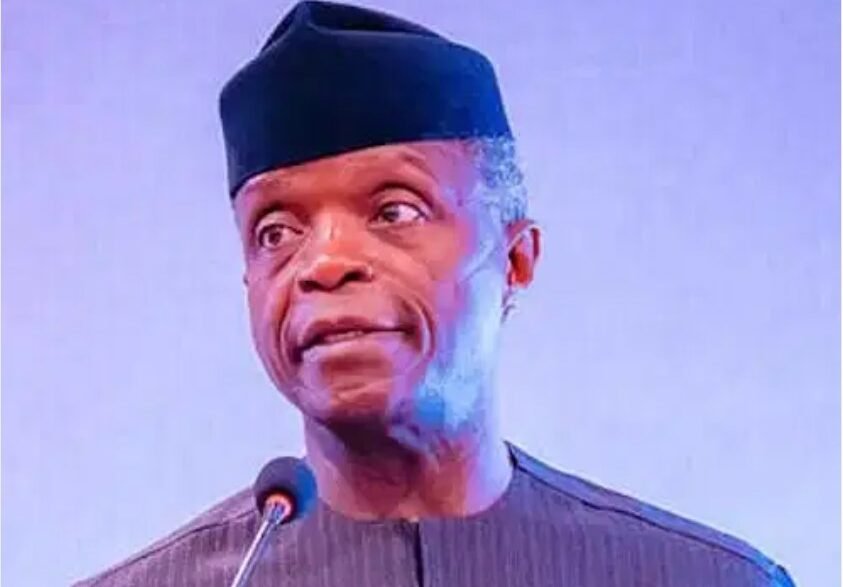
Former Vice President of Nigeria, Professor Yemi Osinbajo, has warned that the country is paying a heavy and long-term price for decades of underfunding the education sector, describing the situation as a major threat to national development, social stability and economic competitiveness.
Osinbajo made the remarks while speaking at a public forum on education reform and national development, where he reflected on Nigeria’s declining education standards and the consequences of neglecting human capital investment. According to him, no nation can rise above the quality of its education system, stressing that Nigeria’s current challenges are closely linked to years of inadequate funding, poor policy implementation and weak institutional support for learning.
Education as the Foundation of National Progress
The former vice president described education as the most critical driver of national progress, innovation and inclusive growth, noting that countries that have achieved sustainable development did so by prioritising education and skills development.
“Nigeria is paying a very heavy price today because we failed, for too long, to invest adequately in education,” Osinbajo said. “The consequences are evident in our economy, our security challenges, our productivity levels and even our social cohesion. Education is not just a social service; it is a strategic investment.”
He explained that underfunding has weakened public schools and universities, reduced the quality of teaching and learning, and widened inequality between those who can afford private education and those who cannot.
Declining Standards and Brain Drain
Osinbajo expressed concern over the declining quality of education at all levels, from primary to tertiary institutions. He pointed to overcrowded classrooms, outdated curricula, inadequate infrastructure and poorly motivated teachers as symptoms of chronic underinvestment.
According to him, the situation has contributed significantly to Nigeria’s brain drain, as talented academics, researchers and professionals seek better opportunities abroad due to poor working conditions and limited research funding at home.
“When our universities cannot fund research, when lecturers are poorly paid and facilities are decaying, it is not surprising that our best minds leave,” he said. “The tragedy is that we then spend scarce resources training people who end up contributing to the development of other countries.”
Link Between Education and Insecurity
The former vice president also linked Nigeria’s security challenges to the failure of the education system, particularly in addressing youth unemployment and skills gaps. He argued that millions of young Nigerians lack access to quality education and relevant skills, leaving them vulnerable to crime, extremism and social unrest.
“A society that neglects education creates fertile ground for insecurity,” Osinbajo noted. “When young people are uneducated, unemployable and frustrated, the consequences are predictable. Education is one of the most powerful tools for crime prevention and national security.”
He stressed that tackling insecurity requires not only military and policing solutions but also long-term investment in education, vocational training and skills acquisition.
Funding Gaps and Policy Inconsistency
Osinbajo criticised persistent funding gaps in the education sector, noting that Nigeria has struggled to meet international benchmarks for education spending. He observed that budgetary allocations to education have remained low relative to the country’s population size and development needs.
Beyond funding levels, he highlighted policy inconsistency and poor implementation as major obstacles. According to him, frequent changes in education policies, lack of continuity across administrations and weak accountability mechanisms have undermined progress.
“It is not just about how much money we allocate, but how effectively it is spent,” he said. “We need clear priorities, transparency, and a long-term vision that survives political cycles.”
Role of Teachers and Institutions
Emphasising the central role of teachers, Osinbajo called for better remuneration, training and professional development for educators. He argued that teachers are the backbone of any education system and must be treated as such if meaningful reform is to occur.
He also urged stronger governance of educational institutions, saying that universities, polytechnics and colleges of education must be empowered to innovate, partner with industry and respond to changing labour market demands.
“Our institutions must produce graduates who can think critically, solve problems and compete globally,” he said. “This requires autonomy, accountability and sustained investment.”
Private Sector and Innovation
Osinbajo acknowledged the growing role of the private sector in education but warned against allowing public education to deteriorate to the point where quality learning becomes a privilege of the wealthy.
While encouraging private sector participation, he insisted that government must retain primary responsibility for ensuring access to quality education for all Nigerians, regardless of background.
He also called for greater use of technology and innovation in teaching and learning, noting that digital tools can help bridge gaps, expand access and improve outcomes if properly deployed.
A Call for Urgent Reform
The former vice president urged policymakers at all levels of government to treat education as a national emergency, requiring urgent, coordinated and sustained action. He called for increased funding, better management, curriculum reform and stronger links between education and the needs of the economy.
“Nigeria cannot afford to continue on this path,” Osinbajo warned. “The cost of inaction is far greater than the cost of reform. If we want a prosperous, secure and united country, education must be at the centre of our national agenda.”
Looking Ahead
Osinbajo’s comments have reignited debate over the state of Nigeria’s education sector and the urgent need for reform. Education advocates say his remarks reflect the reality faced by millions of students and educators across the country, calling on government to translate such warnings into concrete action.
As Nigeria grapples with economic pressures, insecurity and a rapidly growing youth population, experts argue that investing in education remains one of the most effective ways to secure the country’s future.
For many observers, Osinbajo’s message is clear: until Nigeria decisively addresses the chronic underfunding of education, the nation will continue to pay a heavy price—one measured not only in economic terms, but in lost potential, social instability and missed opportunities for generations to come.