
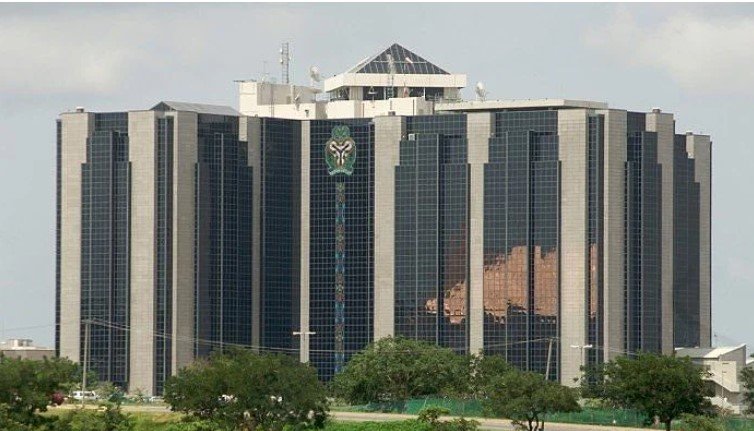
Nigeria’s Deposit Money Banks reduced their physical presence across the country by 476 branches and cash centres between 2022 and 2025, according to data from the Central Bank of Nigeria.
The development represents an 8.8 per cent decline in the number of bank branches and cash centres over the three-year period, as the banking industry continues to shift towards digital platforms, electronic payments and other alternative channels for delivering financial services.
Figures contained in the CBN’s 2025 Statistical Bulletin for the Financial Sector showed that the number of bank branches and cash centres in Nigeria fell from 5,410 in 2022 to 4,934 in 2025.
The reduction has affected different parts of the country at varying rates, with Lagos recording the largest decline in absolute numbers. Several other states, including Ekiti, Enugu, Oyo, Ondo, Plateau, Osun, Cross River and Rivers, also recorded significant reductions in their physical banking locations.
The figures cover branches and cash centres operated by commercial banks, merchant banks and non-interest banks.
Bank branches decline from 5,410 to 4,934
The contraction in Nigeria’s physical banking network was gradual in 2023 before becoming more pronounced in the following two years.
According to the CBN data, the country had 5,410 bank branches and cash centres in 2022.
That number fell by 37 locations in 2023 to 5,373.
The decline accelerated in 2024, when banks recorded a net reduction of 229 physical locations, bringing the total to 5,144.
Another 210 locations disappeared in 2025, reducing the national figure to 4,934.
This means that about 92 per cent of the total 476-location decline recorded between 2022 and 2025 occurred during 2024 and 2025.
The figures indicate that the reduction in physical branches is not simply a one-year development but part of a broader change in the way Nigerian consumers and businesses access banking services.
The decline also occurred despite changes in the number of banks operating in the country.
The number of banks rose from 32 in 2022 to 33 in 2023 and 35 in 2024 before falling slightly to 34 in 2025.
This means that the reduction in physical locations was not primarily driven by a fall in the number of licensed banks. Rather, the figures point to banks adjusting their physical networks while expanding or relying more heavily on alternative channels.
Lagos records biggest decline
Lagos, Nigeria’s commercial and financial hub, recorded the largest reduction in bank branches and cash centres during the period under review.
The state had 1,602 physical banking locations in 2022.
That figure dropped to 1,532 in 2023, fell further to 1,521 in 2024 and eventually reached 1,444 in 2025.
Overall, Lagos lost 158 branches and cash centres over the three-year period.
That represents a 9.9 per cent reduction in the state’s physical banking network.
Despite the decline, Lagos remained by far the most concentrated banking market in Nigeria, accounting for approximately 29 per cent of all bank branches and cash centres in the country in 2025.
The figures underscore the importance of Lagos to Nigeria’s financial system, while also showing that even the country’s biggest commercial centre has experienced a shift away from traditional brick-and-mortar banking.
The reduction could have implications for customers who still depend heavily on physical branches for transactions that require face-to-face interaction, particularly customers who are less comfortable with digital banking platforms.
Abuja also loses bank branches
The Federal Capital Territory also recorded a significant reduction in physical banking locations.
The number of bank branches and cash centres in Abuja stood at 400 in both 2022 and 2023.
The figure subsequently dropped to 391 in 2024 before falling to 362 in 2025.
This represents a net decline of 38 locations over the three-year period, equivalent to a reduction of 9.5 per cent.
The development places Abuja among the locations that experienced a substantial contraction in physical banking infrastructure.
As the federal capital and one of Nigeria’s major economic centres, Abuja has traditionally attracted significant banking activity. However, the latest figures show that banks are also reviewing their branch networks in the capital as customers increasingly adopt digital alternatives.
Ekiti records one of the steepest declines
While Lagos recorded the largest reduction in absolute numbers, Ekiti State experienced one of the sharpest percentage contractions.
The state had 107 bank branches and cash centres in 2022.
By 2025, the number had fallen to 57.
This represents a reduction of 50 locations, or approximately 46.7 per cent.
The scale of the decline means that almost half of Ekiti’s physical banking locations recorded in 2022 were no longer operating by 2025.
Such a reduction highlights the uneven distribution of physical banking infrastructure across Nigeria and raises questions about how customers in less commercially concentrated areas will continue to access financial services.
The shift also reinforces the growing importance of agent banking, mobile banking, electronic transfers, automated teller machines and other alternative financial channels.
Other states record significant reductions
The CBN figures showed that several other states also experienced sizeable reductions in bank branches and cash centres.
Enugu recorded a decline of 44 locations, falling from 162 in 2022 to 118 in 2025.
Oyo lost 41 locations, with its total declining from 237 to 196.
Ondo recorded a reduction from 127 to 105, while Plateau fell from 80 to 61.
Osun’s physical banking locations declined from 113 to 96, while Cross River fell from 83 to 67.
Rivers State also recorded a reduction, with its branch and cash-centre network falling from 290 in 2022 to 275 in 2025.
The figures demonstrate that the reduction was spread across different regions and was not restricted to one part of the country.
Northern states also affected
The contraction in physical banking infrastructure was also recorded in some of Nigeria’s major northern commercial centres.
Kano initially recorded growth in its number of bank branches and cash centres, rising from 164 in 2022 to 175 in 2023 and 183 in 2024.
However, the number fell sharply to 157 in 2025.
As a result, Kano ended the three-year period with seven fewer physical banking locations than it had in 2022.
Kaduna followed a similar pattern.
The state recorded 148 locations in 2022, increasing to 156 in 2023 and 164 in 2024 before declining to 146 in 2025.
The figures show that some states experienced temporary expansion before subsequently recording reductions, suggesting that banks have been continuously reviewing their physical footprints rather than following a uniform nationwide pattern.
Some states record growth
Not every state recorded a decline in bank branches and cash centres.
Some locations actually experienced an expansion during the period.
Delta State recorded an increase of 23 physical banking locations, with its total rising from 173 in 2022 to 196 in 2025.
Edo also recorded growth, increasing from 155 locations in 2022 to 165 in 2025.
Jigawa rose from 31 to 37, while Kogi increased from 63 to 68.
The increases indicate that banks are not simply withdrawing from physical banking nationwide.
Instead, the data suggest that financial institutions are reallocating physical resources depending on customer demand, commercial opportunities and the changing economics of operating branches.
Wide gap in banking infrastructure
The CBN figures also reveal a substantial disparity in the distribution of physical banking infrastructure across Nigeria.
While Lagos had 1,444 branches and cash centres in 2025, some states had only a few dozen.
Yobe had 23 locations, Taraba had 26 and Zamfara had 28.
Bayelsa and Gombe each had 31, while Ebonyi recorded 32.
The disparity is significant because physical access to financial services remains important, particularly for people who may have limited access to reliable internet services, smartphones, digital financial literacy or other electronic banking tools.
For some customers, the closure of a nearby bank branch can therefore mean longer journeys to access certain services.
Digital banking drives industry transformation
The reduction in bank branches comes against the backdrop of rapid growth in electronic and digital banking in Nigeria.
Customers increasingly use mobile applications, internet banking, USSD services, automated teller machines, point-of-sale terminals and electronic transfers for transactions that previously required visits to bank branches.
This transformation has changed the economics of maintaining extensive physical branch networks.
Banks can serve large numbers of customers through digital platforms without maintaining the same level of physical infrastructure.
The CBN has also continued to encourage the adoption of alternative payment channels as part of efforts to expand financial inclusion and improve access to financial services.
The apex bank has stressed the importance of alternative channels, particularly for farmers, traders, small businesses and operators in the informal sector who may have limited access to conventional banking services.
Branch closures do not mean reduced banking activity
The reduction in physical branches should not automatically be interpreted as a contraction in banking activity or a decline in the number of Nigerians using financial services.
Rather, it reflects a change in how banking services are delivered.
A customer who previously had to visit a branch to transfer money, pay bills or check an account balance can now perform many of those transactions through a mobile phone.
Likewise, businesses can receive electronic payments and make transfers without maintaining frequent physical contact with bank branches.
This has allowed banks to concentrate their physical operations in locations where demand for face-to-face services remains high while moving routine transactions to digital platforms.
However, branch closures can still present challenges for customers who depend on physical banking services.
Financial inclusion remains a key concern
The shift towards digital banking creates both opportunities and challenges for financial inclusion.
On one hand, digital financial services can bring banking closer to people in locations where establishing a full branch would be expensive or commercially unviable.
Agent banking and electronic payment systems can provide basic services without requiring customers to travel long distances to a conventional bank.
On the other hand, digital banking depends on access to mobile devices, telecommunications networks, electricity and sufficient digital literacy.
Customers who are elderly, less digitally literate or located in areas with weak connectivity may continue to depend heavily on physical branches and agents.
For that reason, the reduction in branches is likely to increase the importance of reliable alternative banking channels.
What the latest figures mean for Nigerian banking customers
The CBN figures provide a clear indication that Nigeria’s banking system is undergoing a structural transformation.
Between 2022 and 2025, the number of bank branches and cash centres declined by 476, even as the country continued to have more than 30 banks operating within the sector.
The trend is particularly pronounced in Lagos, Abuja and several other major states, although some states recorded increases.
For customers, the biggest change is likely to be the growing need to rely on multiple channels when accessing financial services.
Routine transactions are increasingly moving online, while branches are likely to remain important for more complex services, customer support and transactions requiring physical verification.
The banking industry’s challenge will therefore be to balance efficiency and digital innovation with accessibility.
As banks continue to reassess their physical networks, regulators and financial institutions will need to ensure that branch closures do not leave vulnerable customers and underserved communities without convenient access to essential financial services.
The CBN data ultimately show that the Nigerian banking industry is becoming less dependent on physical branches and increasingly driven by digital and alternative payment channels.
With 4,934 branches and cash centres remaining nationwide in 2025, compared with 5,410 three years earlier, the direction of travel is clear: Nigeria’s banking system is steadily moving from traditional brick-and-mortar banking towards a more digitally driven financial ecosystem.