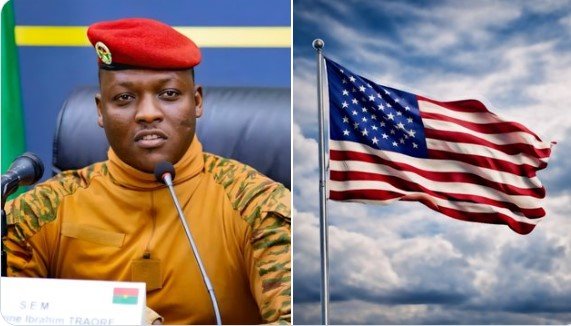
Burkina Faso has officially imposed a travel ban on United States citizens, marking a significant escalation in diplomatic tensions between the West African nation and Washington. The move, announced by authorities in Ouagadougou, is widely viewed as a retaliatory response to recent U.S. immigration and travel restrictions that affect Burkinabe nationals.
The decision places Burkina Faso among a growing number of countries adopting reciprocal measures against the United States, reflecting a broader shift in global diplomacy where visa and travel policies are increasingly used as instruments of political signaling and foreign policy leverage.
Government Confirms Reciprocal Action
In a statement released by Burkina Faso’s foreign affairs authorities, the government said the ban on U.S. citizens follows the principle of reciprocity, stressing that no country should expect preferential treatment for its nationals while imposing restrictive measures on others.
Officials noted that the decision was taken after careful consideration of recent U.S. actions that either limit or entirely block Burkinabe citizens from entering American territory. According to the government, the travel ban is intended to protect national dignity and assert Burkina Faso’s sovereign right to respond proportionately to policies it considers discriminatory.
The ban is reported to take immediate effect, applying to U.S. passport holders seeking entry for tourism, business, or other non-diplomatic purposes, unless specifically exempted by government approval.
Context: Rising Tensions Between Burkina Faso and the U.S.
Relations between Burkina Faso and the United States have deteriorated in recent years, particularly following political changes in the Sahel region and shifting alliances. Burkina Faso, under military leadership, has increasingly distanced itself from Western powers, accusing them of interference, selective diplomacy, and failure to adequately support the country’s fight against terrorism.
The United States, on the other hand, has expressed concerns over democratic governance, human rights, and security cooperation in Burkina Faso. These differences have resulted in reduced military collaboration, diplomatic strain, and now, reciprocal travel restrictions.
Analysts say the travel ban reflects deeper geopolitical realignments in the Sahel, where countries like Burkina Faso, Mali, and Niger are redefining their international partnerships and asserting greater independence from Western influence.
What the Travel Ban Means in Practice
Under the new policy, U.S. citizens will face denial of entry into Burkina Faso unless they fall under narrowly defined exceptions such as official diplomatic missions, humanitarian engagements approved by the government, or multilateral obligations.
Immigration authorities have reportedly been instructed to strictly enforce the directive at all entry points, including airports and land borders. Airlines and travel operators have also been notified to comply with the new restrictions to avoid sanctions.
For Americans currently residing in Burkina Faso, officials have advised them to regularize their status and seek clarification from local authorities regarding residency permits and exit arrangements.
Impact on Diplomacy, Business, and Aid
The travel ban is expected to have implications beyond tourism. Burkina Faso hosts a limited but notable presence of American diplomats, development workers, missionaries, and private sector actors, many of whom may now face operational challenges.
Humanitarian organizations and international NGOs, some of which rely on U.S. personnel, are closely monitoring the situation. While the government has not announced a blanket suspension of humanitarian activities, the restrictions may complicate staffing, logistics, and program continuity.
Business ties between Burkina Faso and the United States are relatively modest, but sectors such as mining, agriculture, and development consulting could be affected if travel limitations persist.
Regional Dimension and Sahel Solidarity
Burkina Faso’s decision aligns with a broader regional trend among Sahelian states adopting a more confrontational posture toward Western governments. Neighboring countries have similarly criticized U.S. and European travel and visa policies, framing them as unfair and politically motivated.
Observers note that Burkina Faso’s move sends a strong message of solidarity with other countries facing similar restrictions, reinforcing the narrative of resistance to what regional leaders describe as unequal global treatment.
International Reactions
As of the time of this report, the United States has not issued a formal response to Burkina Faso’s travel ban. However, diplomatic sources indicate that Washington is reviewing the decision and its potential impact on bilateral relations.
International relations experts caution that reciprocal travel bans, while symbolic, can harden positions and reduce opportunities for dialogue at a time when cooperation is needed to address security and humanitarian challenges in the Sahel.
Public Opinion in Burkina Faso
Within Burkina Faso, the travel ban has drawn mixed reactions. Supporters of the government view the move as a bold assertion of sovereignty and national pride, applauding leaders for standing up to what they perceive as Western double standards.
Critics, however, warn that escalating diplomatic disputes could further isolate the country internationally and complicate access to aid, investment, and global engagement. Some civil society voices have called for dialogue rather than confrontation, urging authorities to balance national dignity with pragmatic diplomacy.
A Turning Point in Relations
The imposition of a travel ban on U.S. citizens marks a notable moment in Burkina Faso–U.S. relations. While travel restrictions are often framed as administrative measures, they carry significant symbolic weight and can signal deeper political rifts.
Whether the ban will be temporary or evolve into a prolonged diplomatic standoff remains uncertain. What is clear is that Burkina Faso is signaling a new posture on the global stage—one that emphasizes reciprocity, sovereignty, and resistance to policies it considers unfair.
As developments continue, the situation will be closely watched by regional partners, international organizations, and foreign governments, all keen to understand how this latest move will reshape diplomacy in the Sahel and beyond.