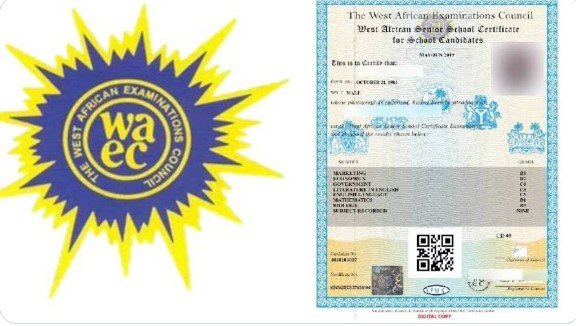
In a landmark move set to transform academic credential management across West Africa, the West African Examinations Council (WAEC) has officially rolled out its Digital Certificate Service across Nigeria, Ghana, The Gambia, Liberia, and Sierra Leone.
The initiative marks one of the most significant technological upgrades in the Council’s history, aimed at modernizing certificate access, verification, and authentication for millions of candidates who sit for the West African Senior School Certificate Examination (WASSCE) annually.
The digital rollout applies to all five member countries under WAEC’s jurisdiction and is expected to simplify certificate retrieval processes, reduce fraud, and improve global recognition of West African academic credentials.
A Major Step in Education Digital Transformation
Established in 1952, WAEC conducts standardized examinations across Anglophone West Africa and issues certificates recognized for secondary school completion and university admission.
With the introduction of the Digital Certificate Service, candidates can now securely access and share electronic versions of their WAEC certificates through an official online platform.
According to WAEC officials, the digital certificates:
- Are authenticated and verifiable
- Can be accessed via web and mobile platforms
- Allow candidates to share credentials directly with institutions and employers
- Provide a secure alternative to paper-based certificate handling
The Council clarified that the digital certificate does not replace the physical certificate, but serves as a secure electronic version that carries the same authenticity and recognition.
Countries Covered in the Rollout
The digital certificate service is now available in:
- Nigeria
- Ghana
- The Gambia
- Liberia
- Sierra Leone
These five countries make up WAEC’s operational member states, where millions of students sit for the WASSCE examinations each year.
Education stakeholders describe the regional rollout as a coordinated effort to ensure uniformity in credential verification standards across West Africa.
Why the Digital Certificate Matters
For decades, students across the region have faced challenges related to:
- Lost or damaged certificates
- Lengthy processing times for certificate confirmation
- Delays in verification for foreign admissions
- Physical travel to WAEC offices for documentation issues
The Digital Certificate Service is expected to address many of these longstanding concerns.
1. Faster Verification for Universities and Employers
Institutions worldwide often require direct verification of academic credentials. The digital certificate platform allows secure and immediate confirmation of certificate authenticity, potentially reducing admission and recruitment delays.
2. Reduction in Certificate Fraud
Forgery of academic certificates has been a persistent issue in many countries. By introducing encrypted digital credentials with secure verification mechanisms, WAEC aims to significantly curb certificate fraud.
3. Convenience and Accessibility
Candidates can access their certificates from anywhere, eliminating the need for physical visits to WAEC offices, especially beneficial for diaspora applicants and remote communities.
How the WAEC Digital Certificate System Works
WAEC’s digital platform allows candidates to:
- Create a secure account
- Retrieve their examination records
- Access an official digital copy of their certificate
- Share the certificate electronically with third parties
- Verify authenticity through built-in confirmation tools
The system also integrates candidate identity validation to prevent unauthorized access.
WAEC has advised users to utilize only official platforms to avoid scams or fraudulent intermediaries claiming to offer digital certificate services.
Background: WAEC’s Role in West African Education
The West African Examinations Council conducts examinations including:
- West African Senior School Certificate Examination (WASSCE)
- Basic Education Certificate Examination (in some member states)
Each year, millions of candidates participate in these exams, making WAEC one of the largest examining bodies in Africa.
The introduction of digital certificates aligns with global educational trends, where credential management systems are increasingly digitized to enhance efficiency and security.
Education Stakeholders React
Education experts across the five countries have welcomed the development.
University administrators say the innovation will:
- Streamline admissions processing
- Improve record verification accuracy
- Reduce paperwork and administrative bottlenecks
Employers have also expressed optimism that the system will speed up background checks during recruitment.
Student advocacy groups describe the move as “long overdue,” noting that digital access reflects the realities of a technology-driven global education ecosystem.
Alignment with Regional and Global Trends
The launch of WAEC’s digital certificate service mirrors broader digital transformation efforts in the education sector worldwide.
Globally, examination bodies and universities are adopting:
- Electronic transcripts
- Blockchain-based academic records
- Online verification portals
- Digital badges and credentials
WAEC’s initiative positions West Africa within this global modernization movement.
Security and Data Protection Measures
WAEC officials emphasized that the Digital Certificate Service incorporates:
- Encrypted authentication systems
- Secure user identity verification
- Anti-tampering safeguards
- Controlled certificate sharing permissions
The Council reassured candidates that data privacy and certificate integrity remain top priorities.
Potential Challenges
While widely praised, the rollout may face practical challenges, including:
- Limited internet access in rural communities
- Digital literacy gaps among some users
- Awareness levels during early implementation
Education analysts recommend targeted awareness campaigns and technical support centers to ensure smooth adoption across all member countries.
Impact on Nigerian Candidates
Nigeria, being WAEC’s largest examination market by candidate volume, stands to benefit significantly from the initiative.
Each year, over a million Nigerian students sit for the WASSCE. Digital certificates could:
- Ease university application processes
- Support international study applications
- Reduce congestion at WAEC offices nationwide
Officials note that the Nigerian rollout builds on previous pilot digital initiatives within the country.
What This Means for Students Abroad
Thousands of West African students apply annually to universities in Europe, North America, and other parts of Africa.
Digital certificates allow:
- Faster submission of verified credentials
- Immediate confirmation by foreign institutions
- Reduced courier and document handling costs
Education consultants believe this could improve processing times for international admissions.
WAEC’s Broader Reform Agenda
The digital certificate rollout forms part of WAEC’s broader modernization strategy, which includes:
- Strengthening examination security
- Enhancing result processing systems
- Expanding digital service delivery
- Improving operational transparency
Observers see the initiative as an institutional effort to remain relevant in a rapidly evolving education landscape.
What Comes Next?
WAEC is expected to:
- Conduct public sensitization campaigns
- Provide user guidelines for candidates
- Collaborate with universities and employers for seamless integration
- Monitor system performance and implement improvements
As adoption grows, the Digital Certificate Service may pave the way for further digitization of academic records across West Africa.
A Transformative Moment for West African Education
The rollout of WAEC’s Digital Certificate Service across Nigeria, Ghana, The Gambia, Liberia, and Sierra Leone represents a significant milestone in regional education reform.
By embracing digital transformation, WAEC is positioning itself to meet modern demands for secure, accessible, and globally verifiable academic credentials.
For millions of students and graduates across West Africa, this development signals a new era—one where academic achievements are no longer confined to paper documents but are securely accessible at the click of a button.
As implementation progresses, stakeholders across the education ecosystem will be watching closely to assess its long-term impact on credential security, administrative efficiency, and global competitiveness.