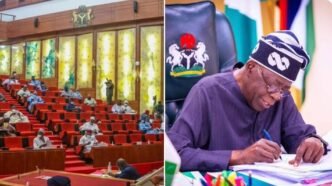
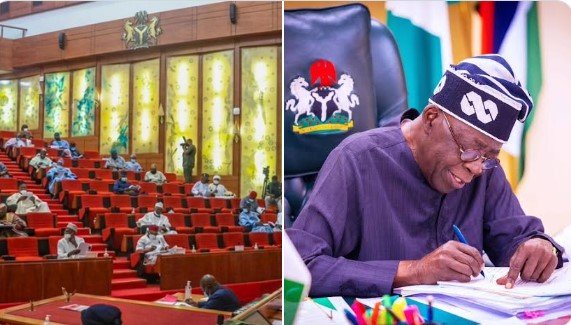
Nigeria’s Senate has approved a revised ₦68.32 trillion budget for the 2026 fiscal year, marking a significant increase from the initial proposal submitted by President Bola Ahmed Tinubu.
The approval follows the adoption of an additional ₦9.09 trillion adjustment to the President’s original fiscal plan, signaling the National Assembly’s decision to expand government spending in response to prevailing economic realities and funding needs.
Key Highlights of the Approved Budget
- Total Budget Size: ₦68.32 trillion
- Increase from Original Proposal: ₦9.09 trillion
- Initial Proposal by President Tinubu: ₦58.18 trillion
The newly approved figure represents a substantial upward revision, reinforcing the legislature’s constitutional authority to adjust appropriation bills before passage.
Background to the Budget Expansion
President Bola Ahmed Tinubu had initially presented a ₦58.18 trillion budget to the National Assembly in December 2025, describing it as a “Budget of Consolidation, Renewed Resilience and Shared Prosperity.”
The proposal was built on key fiscal assumptions, including:
- Oil benchmark of $64.85 per barrel
- Daily oil production target of 1.84 million barrels
- Exchange rate of ₦1,400/$1
- Projected deficit of ₦23.85 trillion (4.28% of GDP)
However, following deliberations, lawmakers increased the budget envelope to accommodate additional spending priorities and emerging economic pressures.
Why the Senate Increased the Budget
While full breakdown details are still emerging, the upward review is believed to be driven by several critical factors:
1. Rising Infrastructure Needs
Expanded funding is expected for roads, power, and transportation networks to stimulate economic growth.
2. Security Concerns
Nigeria continues to grapple with insurgency, banditry, and communal conflicts, necessitating increased defense spending.
3. Debt Obligations
With debt servicing already projected at over ₦15 trillion, lawmakers may have adjusted figures to ensure sustainability.
4. Social and Economic Programs
Additional allocations are likely aimed at cushioning citizens amid inflation and cost-of-living pressures.
Legislative Process and Approval
The Senate’s approval follows weeks of budget scrutiny, committee reviews, and consultations with key government agencies.
Under Nigeria’s legislative framework:
- The President submits the appropriation bill
- The National Assembly reviews, amends, and approves it
- Both chambers must pass identical versions before it is signed into law
The Senate’s decision aligns with earlier signals from lawmakers indicating a possible upward revision of the budget size.
Implications for Nigeria’s Economy
The ₦68.32 trillion budget now stands as one of the largest in Nigeria’s history, reflecting both ambition and fiscal pressure.
Potential Benefits:
- Increased capital expenditure could boost infrastructure development
- Expanded social spending may provide relief to vulnerable populations
- Higher government spending could stimulate economic activity
Potential Risks:
- Larger deficit may increase borrowing requirements
- Debt servicing burden could rise further
- Inflationary pressures may persist if spending is not efficiently managed
Shift Toward Fiscal Discipline
Despite the increase, the Tinubu administration has emphasized a commitment to fiscal discipline, including:
- Ending the long-standing practice of overlapping budgets
- Strengthening revenue collection through tax reforms
- Enhancing transparency and accountability in public finance
The 2026 budget is expected to serve as a test of these reforms, particularly in ensuring timely implementation and measurable outcomes.
What Happens Next
Following Senate approval:
- The House of Representatives must align with the final figures (if not already done)
- The harmonized budget will be transmitted to the President
- President Bola Ahmed Tinubu will sign it into law
- Implementation is expected to commence within the 2026 fiscal cycle
Conclusion
The Senate’s approval of a ₦68.32 trillion budget underscores Nigeria’s aggressive fiscal stance as it seeks to balance economic recovery, infrastructure expansion, and social stability.
However, the success of the expanded budget will ultimately depend on execution—particularly the government’s ability to fund it sustainably, curb leakages, and deliver tangible benefits to citizens.
More details on sectoral allocations and funding strategies are expected to emerge in the coming days as the National Assembly releases the full breakdown of the approved budget.