Nigerian Business Leader Calls for Greater Openness to Global Investment Across Africa
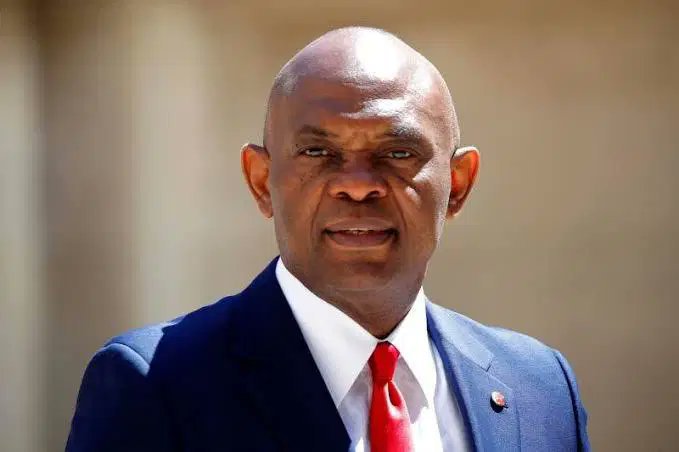
Nigerian businessman and philanthropist Tony Elumelu has urged African countries to embrace foreign investors and move beyond what he described as lingering colonial-era distrust that continues to shape economic attitudes across the continent.
Speaking in an interview with AFP, Elumelu said Africa’s future economic growth would depend heavily on its ability to attract local and international investment capable of driving industrialization, infrastructure development, job creation, and entrepreneurship.
The prominent entrepreneur argued that African nations must create environments that encourage investment from all parts of the world rather than approaching foreign capital with suspicion rooted in historical colonial experiences.
According to him, Africa possesses enormous economic potential, but unlocking that potential will require stronger collaboration between governments, local entrepreneurs, and international investors.
The remarks by Elumelu have generated widespread debate across business and political circles, particularly at a time when African economies are seeking new pathways to growth amid rising debt burdens, unemployment, and global economic uncertainty.
Africa’s Investment Challenge
For decades, African countries have struggled to attract sufficient levels of foreign direct investment compared to other emerging regions despite abundant natural resources and a rapidly growing population.
Although several African economies have experienced periods of economic growth, experts say the continent still faces major infrastructure deficits, limited industrial capacity, weak manufacturing output, and inadequate access to financing.
Foreign investment has often been viewed as a critical tool for addressing those challenges through capital inflows, technology transfer, infrastructure financing, and employment generation.
However, skepticism toward foreign investors remains strong in some parts of Africa due to historical experiences linked to colonial exploitation, resource extraction, unfair trade practices, and political interference by foreign powers.
Critics of foreign investment models argue that some multinational corporations have historically benefited disproportionately from Africa’s resources while local populations saw limited economic gains.
Concerns over environmental degradation, profit repatriation, poor labour conditions, and unequal economic relationships have also fueled anti-foreign investment sentiment in certain regions.
Despite these concerns, business leaders such as Tony Elumelu believe Africa cannot afford to isolate itself from global capital flows if it hopes to compete effectively in the modern global economy.
Elumelu Advocates Balanced Partnerships
Elumelu stressed that welcoming foreign investment does not mean African countries should surrender economic control or compromise national interests.
Instead, he argued that African governments must negotiate fair partnerships that protect local industries while encouraging sustainable investment capable of benefiting both investors and host communities.
According to him, the focus should be on building mutually beneficial economic relationships that create jobs, support local businesses, improve infrastructure, and stimulate long-term economic growth.
The businessman also emphasized the importance of African-led entrepreneurship and private sector development in driving the continent’s transformation.
He maintained that local entrepreneurs should work alongside international investors to create inclusive economic opportunities rather than viewing foreign participation as a threat.
Elumelu has long advocated what he calls “Africapitalism,” an economic philosophy that encourages the private sector to play a central role in Africa’s development through long-term investments that generate both economic returns and social impact.
Growing Competition for Global Investment
Africa’s push for foreign investment comes amid increasing global competition for capital, technology, and industrial partnerships.
Major world powers including China, the United States, the European Union, India, Turkey, Russia, and Gulf nations have all expanded their economic presence across Africa in recent years.
China in particular has become one of Africa’s largest trading partners and infrastructure financiers through projects involving railways, roads, ports, power plants, and telecommunications.
Western nations have also sought to strengthen economic ties with African countries through trade agreements, energy partnerships, and investment initiatives.
At the same time, competition over Africa’s vast reserves of critical minerals, oil, gas, agricultural land, and renewable energy potential has intensified global interest in the continent.
Analysts say African governments now face the challenge of balancing geopolitical interests while ensuring that investment deals deliver meaningful economic benefits to local populations.
Infrastructure and Youth Unemployment
One of the strongest arguments in favour of increased investment is Africa’s urgent need for infrastructure and job creation.
The continent continues to face major deficits in electricity supply, transportation networks, healthcare systems, water access, digital infrastructure, and manufacturing capacity.
According to development experts, addressing those infrastructure gaps requires hundreds of billions of dollars in financing over the coming decades.
At the same time, Africa has one of the world’s youngest populations, with millions of young people entering the labour market every year.
Economists warn that without rapid economic expansion and large-scale job creation, unemployment and poverty could worsen significantly across many African countries.
Supporters of increased foreign investment argue that external capital can help accelerate industrialization, support technology transfer, and create employment opportunities for young Africans.
Elumelu has repeatedly emphasized entrepreneurship and private enterprise as key solutions to Africa’s unemployment crisis.
Through the Tony Elumelu Foundation, he has supported thousands of entrepreneurs across the continent with training, mentorship, and startup funding aimed at promoting business growth and economic inclusion.
Colonial Legacy and Economic Debate
The issue of colonial legacy remains highly sensitive in African political and economic discussions.
Many African intellectuals and activists argue that colonialism disrupted indigenous economic systems, facilitated resource exploitation, and created structural inequalities that continue to affect the continent today.
Post-colonial economic arrangements have often been criticized for perpetuating dependency on foreign markets, aid, and external financing.
Some political leaders and civil society groups therefore advocate stronger economic nationalism, local ownership of resources, and reduced dependence on foreign corporations.
However, proponents of economic liberalization argue that isolationism could limit growth opportunities in an increasingly interconnected global economy.
Tony Elumelu appears to support a middle-ground approach that encourages openness to investment while ensuring African countries negotiate from positions of strength.
According to economic analysts, the debate is not necessarily about whether Africa should accept foreign investment, but rather about the terms under which such investments occur.
Nigeria’s Position in Africa’s Investment Landscape
Nigeria, Africa’s most populous nation, remains one of the continent’s largest economies and a major destination for investment in sectors such as oil and gas, telecommunications, banking, fintech, agriculture, and entertainment.
However, the country also faces significant economic challenges including inflation, currency instability, infrastructure deficits, insecurity, and policy uncertainty.
The administration of President Bola Tinubu has repeatedly stated that attracting foreign investment is a major component of its economic reform agenda.
Government officials have introduced policy changes aimed at improving investor confidence, stabilizing the foreign exchange market, and encouraging private sector participation in infrastructure and energy projects.
Despite those efforts, analysts say Nigeria must still address issues relating to power supply, security, bureaucratic bottlenecks, and regulatory consistency to remain competitive in attracting investment.
Business leaders argue that both local and foreign investors require stable policies, transparent regulations, and predictable economic conditions before committing large-scale capital.
The Role of African Entrepreneurs
While advocating greater openness to foreign investment, Elumelu also highlighted the importance of empowering African entrepreneurs and businesses.
Economic experts increasingly argue that sustainable development in Africa will require stronger domestic private sectors capable of competing globally.
Local entrepreneurs are seen as critical drivers of innovation, industrial growth, financial inclusion, and employment generation.
Across the continent, technology startups, fintech companies, agricultural enterprises, renewable energy firms, and manufacturing businesses have emerged as important contributors to economic diversification.
However, many African businesses continue to face limited access to financing, high operating costs, weak infrastructure, and regulatory challenges.
Analysts believe combining local entrepreneurship with international investment could create stronger economic ecosystems capable of accelerating development.
Africa’s Economic Future
The comments by Tony Elumelu come at a crucial moment for Africa’s economic future.
As global economies evolve, the continent is increasingly viewed as one of the world’s most important emerging markets due to its population growth, natural resources, expanding consumer base, and technological potential.
At the same time, rising global economic uncertainty, debt pressures, climate change challenges, and geopolitical competition are reshaping international investment patterns.
African leaders are therefore under growing pressure to create policies that attract investment while protecting national interests and ensuring inclusive growth.
The debate triggered by Elumelu’s remarks reflects broader questions about how Africa should position itself within the global economy in the decades ahead.
Whether through foreign investment, local entrepreneurship, or regional economic integration, many experts agree that Africa’s development trajectory will largely depend on its ability to create sustainable economic opportunities for its rapidly growing population.
For Elumelu, the solution appears to lie not in rejecting foreign capital because of historical grievances, but in building confident, strategic, and mutually beneficial economic partnerships capable of unlocking Africa’s vast potential.