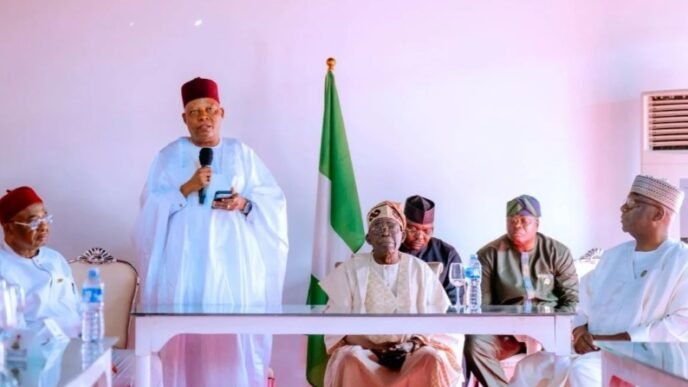
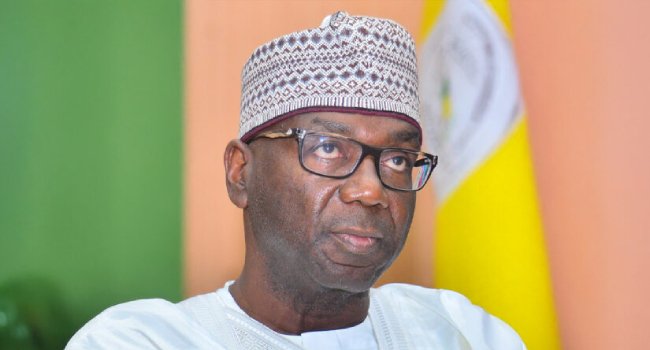
The Chairman of the Nigeria Governors’ Forum and Governor of Kwara State, AbdulRahman AbdulRazaq, has revealed that state governors are considering a new national minimum wage of N100,000 as economic hardship continues to bite harder across the country.
AbdulRazaq disclosed this in a Facebook post on Saturday, saying the proposal was part of ongoing discussions among state governments, the Federal Government, and organised labour aimed at improving workers’ welfare while maintaining fiscal sustainability.
The development comes amid mounting inflation, soaring food prices, transportation costs, and increased living expenses that have significantly reduced the purchasing power of Nigerian workers over the past year.
According to the governor, state governments acknowledge the urgent need to review workers’ salaries in line with prevailing economic realities affecting millions of Nigerians.
“State governments recognise the urgent need to improve workers’ welfare in response to the current economic realities facing Nigerians,” AbdulRazaq stated.
Economic Hardship Fuelling Demand for Wage Increase
The debate over a new minimum wage has intensified in recent months following worsening economic conditions triggered by inflation and major policy reforms implemented by the Federal Government.
Nigeria’s inflation rate has remained persistently high, with food inflation hitting record levels in several states. Prices of staple foods such as rice, beans, yam, garri, bread, and cooking gas have risen sharply, leaving many workers struggling to survive on existing salaries.
The removal of fuel subsidy and the floating of the naira also contributed to rising transportation fares, electricity costs, school fees, rent, and healthcare expenses.
Workers’ unions have repeatedly argued that the current minimum wage is no longer sustainable under prevailing economic conditions.
The existing national minimum wage of N70,000 was only recently approved after prolonged negotiations between labour unions, the Federal Government, and state governors. However, labour leaders insist that continued inflation has already eroded the value of the wage structure.
The latest proposal for N100,000 reflects growing pressure on authorities to cushion the effects of economic hardship on civil servants and low-income earners.
Governors Weigh Workers’ Welfare Against Fiscal Reality
While many workers have welcomed discussions around a higher minimum wage, state governors remain cautious about the financial implications of such an increase.
Several states continue to battle rising debt profiles, declining internally generated revenue, and heavy dependence on federal allocations from the Federation Account Allocation Committee.
AbdulRazaq explained that governors are attempting to strike a balance between improving workers’ welfare and ensuring states do not collapse financially under the burden of salary obligations.
According to him, consultations are ongoing to develop a wage structure that states can realistically sustain without affecting developmental projects and other government responsibilities.
Analysts say one of the major challenges facing state governments is the uneven financial strength across the federation.
While oil-producing and commercially active states may comfortably accommodate a higher wage structure, less economically viable states could struggle to meet payment obligations.
In previous minimum wage implementations, several states reportedly delayed payments or negotiated staggered arrangements due to revenue constraints.
This concern has continued to shape discussions around any fresh wage increase.
Organised Labour Pushes for Better Compensation
The Nigeria Labour Congress and the Trade Union Congress have consistently maintained that Nigerian workers deserve salaries that reflect current economic realities.
Labour leaders argue that workers are among the worst hit by inflation and rising living costs, particularly after the removal of petrol subsidy.
According to union officials, many civil servants now spend a substantial portion of their salaries on transportation alone, leaving little for feeding, rent, healthcare, and education.
The labour movement has also warned that failure to improve workers’ welfare could worsen poverty levels, reduce productivity, and trigger industrial unrest across sectors.
Economic experts believe the pressure for salary review is likely to persist as long as inflation remains high and the naira continues to struggle against foreign currencies.
Some labour analysts have described the proposed N100,000 minimum wage as more realistic compared to previous salary structures, considering current market prices and household expenses.
However, others caution that wage increases alone may not solve Nigeria’s economic challenges unless accompanied by policies aimed at reducing inflation and stabilising prices.
Economic Experts Warn About Inflationary Pressure
While workers and labour unions have largely welcomed discussions around a higher wage structure, some economists have warned that a sudden increase in salaries could trigger additional inflationary pressure if not properly managed.
According to financial analysts, increasing wages without corresponding improvements in productivity and economic output may further increase demand for goods and services, leading to additional price hikes.
They argue that the Federal Government and state governments must combine wage adjustments with broader economic reforms, including support for local production, agriculture, power supply, and small businesses.
Some experts also stressed the need for tax reforms and measures that would reduce the burden on workers rather than relying solely on salary increases.
Others have suggested targeted social interventions such as transport subsidies, affordable housing schemes, food support programmes, and improved public healthcare systems to complement wage reforms.
Despite these concerns, many Nigerians believe salary adjustments are inevitable considering the sharp rise in living costs across the country.
Nigerians React to Proposed N100,000 Wage
The proposal has generated widespread reactions among Nigerians, particularly on social media platforms where many citizens expressed mixed opinions.
Some workers described the proposed N100,000 wage as necessary but still insufficient given current prices of goods and services.
Others argued that implementation would be more important than announcements, citing previous instances where some states allegedly failed to fully comply with approved wage structures.
A number of Nigerians also questioned whether small businesses and private sector employers would be able to cope with a higher wage benchmark.
However, civil servants and labour advocates insisted that workers deserve improved compensation after enduring months of economic hardship.
Several commentators pointed out that transportation, electricity tariffs, telecommunications costs, and food prices have increased significantly over the last year, making survival increasingly difficult for average households.
The proposed wage review is also expected to dominate public discourse ahead of future negotiations between labour unions and government representatives.
Federal Government Yet to Make Official Position Known
As of the time of filing this report, the Federal Government had not officially announced its position regarding the proposed N100,000 minimum wage.
However, sources familiar with ongoing consultations indicated that discussions between governors, labour leaders, and federal authorities are expected to continue in the coming weeks.
The Nigeria Governors’ Forum is likely to play a critical role in determining whether states can collectively support the proposed wage structure.
Observers say the outcome of the negotiations may shape labour relations and economic policy discussions in the months ahead.
The issue also comes at a time when the Federal Government is facing pressure to address inflation, unemployment, insecurity, and declining purchasing power among citizens.
Many Nigerians are closely watching developments surrounding the wage negotiations, hoping that any eventual agreement will provide meaningful relief to workers struggling under the current economic climate.
Rising Expectations Among Workers
For millions of Nigerian workers, discussions around a possible N100,000 minimum wage have renewed expectations of improved living standards.
Civil servants across several states have repeatedly complained about the widening gap between salaries and actual living expenses.
In urban centres, many workers now face increased rent, transportation, school fees, and utility bills that consume large portions of their monthly income.
Economic hardship has also affected small business owners and informal sector workers, many of whom rely on daily earnings to survive.
Analysts believe that beyond salary adjustments, Nigerians are increasingly demanding broader economic stability, lower inflation, improved public services, and stronger social safety nets.
The coming weeks are expected to witness further negotiations and policy discussions as state governors, labour unions, and federal authorities seek common ground on a wage structure capable of addressing workers’ concerns without worsening fiscal pressures.
For now, the proposal for a N100,000 minimum wage remains under consideration, but it has already sparked a nationwide conversation about workers’ welfare, economic survival, and the future of labour relations in Nigeria.