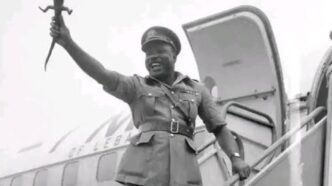
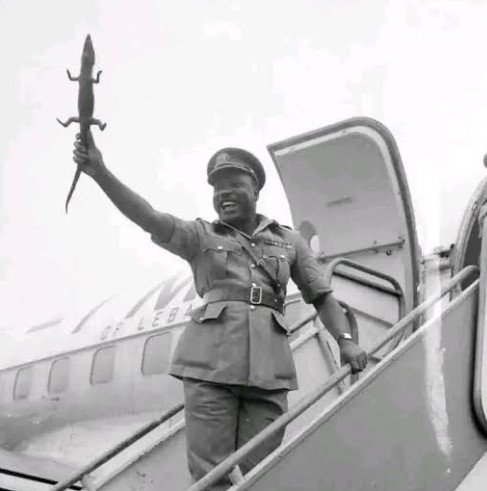
ABUJA — The family of Nigeria’s first military Head of State, Major General Johnson Thomas Umunnakwe Aguiyi-Ironsi, has called on the Federal Government to issue a formal apology, provide compensation, and pursue genuine national reconciliation over his assassination during the July 1966 counter-coup.
The demand was made by Imo Aguiyi-Ironsi, head of the Aguiyi-Ironsi family and a nephew of the late military leader, during an interview on Arise Television on Thursday. He argued that the family has never received justice or official recognition for what it described as the wrongful killing of the former Head of State nearly six decades ago.
Speaking during the interview, Imo Aguiyi-Ironsi said the family was seeking “a sincere apology, compensation and reconciliation” from the Federal Government, maintaining that the late military ruler did not participate in the January 1966 coup but assumed leadership as the most senior military officer after the collapse of the civilian government.
Family Says Aguiyi-Ironsi Was Wrongly Blamed
According to the family, Aguiyi-Ironsi’s emergence as Nigeria’s Head of State followed constitutional and military developments after the January 1966 coup, rather than any involvement in planning or executing the putsch.
Imo Aguiyi-Ironsi described his uncle as a patriotic and detribalised Nigerian who accepted the responsibility of leading the country during one of its most turbulent political periods.
He maintained that the late military leader had become a victim of historical misconceptions linking him to the January coup, despite the absence of evidence that he participated in its planning.
The family insists that his assassination during the July 1966 counter-coup denied him the opportunity to continue efforts aimed at stabilising the country.
Calls for National Reconciliation
Beyond financial compensation, the Aguiyi-Ironsi family said it wants the Federal Government to take concrete steps toward national reconciliation.
According to the family, a formal apology would represent official acknowledgement of what it considers a historical injustice while helping to promote healing among affected families and communities.
The family argued that reconciliation requires confronting difficult chapters of Nigeria’s history rather than ignoring them.
They maintained that recognising Aguiyi-Ironsi’s role in national service would contribute to a broader conversation about unity, justice and historical accountability.
Historical Background
Major General Johnson Aguiyi-Ironsi became Nigeria’s first military Head of State on 16 January 1966 after the country’s first military coup brought an end to the First Republic.
The January coup resulted in the deaths of Prime Minister Sir Abubakar Tafawa Balewa, Northern Premier Sir Ahmadu Bello, Western Premier Chief Samuel Akintola and several senior military officers.
Although some of the coup plotters were junior military officers, Aguiyi-Ironsi was not identified as one of them. As the General Officer Commanding the Nigerian Army and the most senior serving officer, he assumed leadership after the collapse of the civilian administration.
His administration lasted for about six months before it was overthrown during the 29 July 1966 counter-coup, when he was arrested and killed alongside the Military Governor of the Western Region, Lieutenant Colonel Adekunle Fajuyi.
Legacy Remains Contested
Aguiyi-Ironsi’s brief administration remains one of the most debated periods in Nigeria’s political history.
While supporters remember him as a leader who sought to preserve national unity during a period of political instability, critics have historically questioned some of the policies introduced by his government, particularly the Unification Decree, which replaced the federal structure with a unitary system and generated strong opposition in parts of the country.
Historians generally agree that the political tensions surrounding the January coup, the Unification Decree and the July counter-coup contributed significantly to the deepening national crisis that eventually culminated in the Nigerian Civil War.
Family Rejects Historical Narrative
The Aguiyi-Ironsi family maintains that the former Head of State has been unfairly portrayed in Nigeria’s historical narrative.
According to Imo Aguiyi-Ironsi, his uncle’s only “offence” was accepting the responsibility of leading the nation after being called upon as the country’s highest-ranking military officer.
He argued that history should distinguish between those who executed the January coup and the officer who subsequently assumed responsibility for restoring order.
The family believes correcting that narrative would represent an important step toward historical justice.
Demand Comes Decades After Assassination
The renewed demand comes almost six decades after the assassination of the former military ruler.
Successive governments have not issued any formal apology regarding the circumstances surrounding his death, nor has there been any official compensation specifically directed to his family.
While several administrations have promoted national unity through various reconciliation initiatives, the Aguiyi-Ironsi family believes its own grievances remain unresolved.
Historians Call for Balanced Reflection
Political historians have long argued that understanding the events of 1966 requires careful examination of the complex political, ethnic and military tensions that existed during Nigeria’s First Republic.
Many scholars caution against simplistic interpretations of either the January coup or the July counter-coup, noting that both events profoundly reshaped Nigeria’s political development.
The assassination of Aguiyi-Ironsi is widely regarded as one of the defining moments that accelerated political instability and deepened divisions within the country.
No Federal Government Response Yet
As of the time of reporting, the Federal Government had not publicly responded to the family’s latest demands for an apology, compensation and reconciliation.
Whether the renewed appeal will prompt an official response remains uncertain, but it has revived public discussion about one of the most consequential episodes in Nigeria’s post-independence history.
For many observers, the family’s request goes beyond financial compensation, touching broader questions of historical accountability, national memory and reconciliation in a country still reflecting on the legacy of the events that preceded the Nigerian Civil War.