ABUJA — The Federal Government has unveiled plans to commence the training of doctors, nurses and other specialised healthcare professionals exclusively for the Nigerian Armed Forces, with the first batch of military medical cadets expected to be admitted during the 2026 academic session.
The initiative is aimed at strengthening the capacity of the Nigerian Armed Forces by producing highly trained military medical personnel equipped to provide healthcare services during peacekeeping operations, combat missions and routine military medical care.
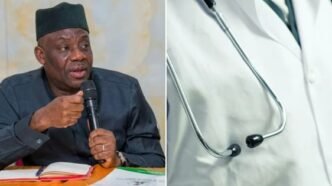
The announcement was made by the Minister of State for Defence, Dr. Bello Muhammad Matawalle, during the official launch of the Military Medical University in Kaduna. He described the project as a strategic investment in Nigeria’s defence and healthcare sectors, saying it would reduce dependence on civilian institutions for training military medical professionals.
First Military Medical Cadets to Resume in 2026
According to the Federal Government, preparations have reached an advanced stage for the admission of the pioneer set of military medical cadets in the 2026 academic session.
The cadets will undergo specialised education designed to combine professional medical training with military discipline, leadership development and operational readiness.
The university is expected to train personnel in medicine, nursing, pharmacy, dentistry, medical laboratory science, physiotherapy, radiography, public health and other allied health professions required within the Armed Forces.
Government officials said graduates of the institution will be deployed across military hospitals, operational theatres and other defence medical facilities nationwide.
Strengthening Military Healthcare Capacity
The establishment of the Military Medical University forms part of broader efforts by the Federal Government to improve healthcare delivery within the Armed Forces.
For years, the military has relied largely on civilian universities and teaching hospitals to produce doctors and other healthcare professionals before recruiting them into military service.
Officials believe that training healthcare professionals within a dedicated military institution will produce personnel who possess both medical expertise and military operational knowledge.
According to the Defence Ministry, this dual training model will improve the quality of healthcare available to serving personnel, veterans and their families while enhancing the Armed Forces’ capacity to respond to emergencies and national security challenges.
Addressing Personnel Shortages
The initiative is also expected to help address shortages of medical professionals within Nigeria’s military healthcare system.
Military hospitals across the country provide medical services not only to soldiers but also to eligible military families and, in some cases, civilians during emergencies.
Officials said increasing the number of trained military doctors and nurses would strengthen healthcare delivery across these facilities while improving readiness during military operations.
The government added that the programme would ensure a steady pipeline of qualified personnel capable of serving in various branches of the Armed Forces.
World-Class Military Medical Education
The Federal Government said the Military Medical University has been designed to meet national and international standards for medical education.
The institution is expected to feature modern laboratories, simulation centres, research facilities and teaching hospitals to provide students with practical clinical experience.
Authorities also indicated that partnerships with local and international institutions would be explored to promote research, innovation and continuous professional development.
The curriculum is expected to integrate conventional medical education with military ethics, disaster medicine, trauma care, battlefield medicine and emergency response.
Boosting National Security
Government officials described healthcare as a critical component of national security, noting that a healthy and medically supported military is essential to operational effectiveness.
They said military healthcare professionals play a vital role during combat operations, humanitarian missions, disaster response, peacekeeping deployments and public health emergencies.
The establishment of the university is therefore seen as part of broader defence sector reforms aimed at strengthening Nigeria’s overall security architecture.
Officials believe the institution will improve the Armed Forces’ ability to provide timely medical care during both domestic and international operations.
Opportunities for Young Nigerians
The Military Medical University is expected to provide opportunities for qualified young Nigerians seeking careers that combine medicine with military service.
Prospective students will be required to meet both academic admission requirements and military recruitment standards before being admitted into the programme.
Successful candidates are expected to receive military training alongside their professional medical education before being commissioned into the Armed Forces upon graduation, subject to applicable regulations.
The government said further details regarding admission procedures, eligibility requirements and programme structure will be released before the commencement of admissions.
Advancing Medical Research
Beyond training healthcare professionals, the university is expected to contribute to medical research focusing on military medicine and public health.
Research areas may include trauma care, infectious diseases, rehabilitation medicine, emergency medicine, tropical diseases, preventive healthcare and operational medicine.
Officials said findings from such research could strengthen Nigeria’s healthcare system while supporting evidence-based military medical practice.
The institution is also expected to collaborate with other universities, teaching hospitals and research organisations in advancing medical science.
Investment in Defence and Human Capital
The Federal Government described the project as an investment in both national security and human capital development.
According to the Defence Ministry, developing indigenous capacity to train military healthcare professionals will reduce reliance on external institutions while ensuring that graduates are equipped to meet the unique medical needs of military personnel.
Officials added that the initiative aligns with broader efforts to modernise the Armed Forces through improved education, training and institutional development.
Looking Ahead
With the first intake of military medical cadets scheduled for the 2026 academic session, the Military Medical University is expected to become a key institution in Nigeria’s defence and healthcare sectors.
The Federal Government expressed confidence that the initiative will strengthen military medical services, improve healthcare delivery for personnel, enhance operational readiness and contribute to national security.
As preparations continue for the inaugural admission exercise, defence authorities say the university represents a major milestone in building a self-sustaining military healthcare system capable of meeting both present and future challenges.