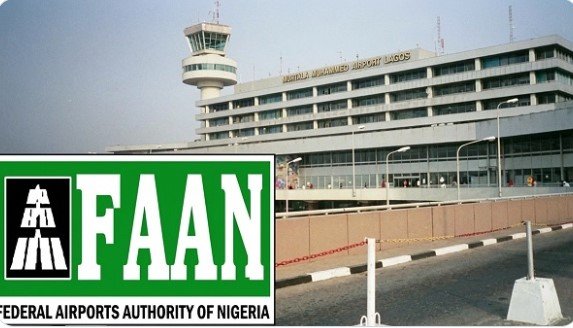
The Federal Airports Authority of Nigeria (FAAN) has clarified that the controversial ₦30,000 taxi fare quoted for trips from Murtala Muhammed International Airport (MMIA), Lagos, was not a new rate imposed by the authority or introduced through its Airport Car Hire Rank Management System (ACHRAMS).
FAAN made the clarification on Thursday, August 27, 2026, amid growing public criticism over the cost of transportation from the Lagos airport.
According to the authority, airport taxi fares existed before the introduction of ACHRAMS and were not created by the digital system. FAAN said the system was designed primarily to improve the management, visibility, identification and oversight of authorised airport car-hire operations.
The controversy followed reports that passengers were being quoted as much as ₦30,000 for relatively short journeys from the airport to Ikeja.
A viral video involving travel content creator Chris Joondeph, popularly known as “Authentic Traveling”, drew widespread attention after he said he was quoted ₦30,000 for a trip to the Radisson Blu Hotel in Ikeja. He compared the fare with the lower prices he had previously paid on e-hailing platforms.
FAAN, however, said the fare should not be interpreted as a newly introduced official tariff.
The authority explained that ACHRAMS did not determine or introduce airport taxi prices, but rather made existing airport-car-hire rates more visible to passengers.
“Airport taxi fares have existed independently of the application,” FAAN said in its clarification, adding that the rates were not substantially different from those previously applicable.
Why the ₦30,000 Fare Sparked Outrage
The fare controversy emerged at a particularly sensitive time for airport passengers following disruptions involving e-hailing services at FAAN-managed airports.
Travellers had raised concerns that restrictions affecting platforms such as Uber and Bolt were reducing their transportation options and leaving them more dependent on airport car-hire operators.
Reports of the ₦30,000 fare therefore generated comparisons with prices passengers were accustomed to paying through e-hailing platforms.
FAAN acknowledged that the comparison with cheaper e-hailing fares had understandably heightened public concern.
The authority said its objective with ACHRAMS was not to create a monopoly or determine what passengers should pay, but to bring greater structure and accountability to commercial vehicle operations within airport environments.
FAAN Explains ACHRAMS
ACHRAMS, which stands for Airport Car Hire Rank Management System, is FAAN’s digital system for managing commercial car-hire pick-ups at airports under its control.
FAAN’s official explanation states that ACHRAMS is an airport-specific digital system covering ranking, dispatch, identification and operational oversight of car-hire services. It is not intended to function as a general e-hailing application.
The authority said the system was introduced to improve orderliness, transparency and accountability in airport transportation.
This means that while passengers may see fares through the system, FAAN maintains that the displayed prices are not tariffs newly created by the authority.
Bolt Cleared to Resume Airport Operations
The clarification also came as FAAN announced that it had reached an operational agreement with Bolt, allowing the e-hailing company to resume services at FAAN-managed airports.
FAAN said the agreement followed constructive engagements between both parties and that Bolt had been cleared to commence operations immediately.
The authority added that discussions with other e-hailing operators were ongoing and expressed confidence that outstanding issues would be resolved in the coming days.
FAAN also apologised to passengers for the difficulties and inconvenience experienced during the disruption of e-hailing services.
It maintained that its actions were driven by regulatory, safety and security considerations rather than economic interests.
The authority said the resolution with Bolt demonstrated that airport security and operational control could be maintained while preserving passengers’ access to convenient transportation options.
Passengers Can Choose Available Transport Options
FAAN reiterated that passengers remain free to select from available transportation options, provided the services operate within an authorised, safe and orderly airport environment.
The development is expected to provide passengers with more alternatives following complaints about high airport transportation costs.
The ₦30,000 controversy nevertheless highlights the significant difference that can exist between airport car-hire prices and fares offered by conventional e-hailing services.
FAAN’s latest clarification therefore seeks to separate the existence of airport taxi rates from the introduction of ACHRAMS, stressing that the digital system did not create the disputed ₦30,000 fare.
For passengers, the immediate focus is likely to remain on the availability of affordable transportation options at Nigerian airports, particularly at MMIA, one of the country’s busiest international gateways.
With Bolt now cleared to resume airport operations and FAAN continuing discussions with other e-hailing companies, passengers may have greater choice in accessing transportation from the airport.
The authority’s clarification also places the responsibility for understanding the ₦30,000 fare in a different context: FAAN says it was an existing airport taxi rate made more visible through ACHRAMS, rather than a new fare imposed by the authority.