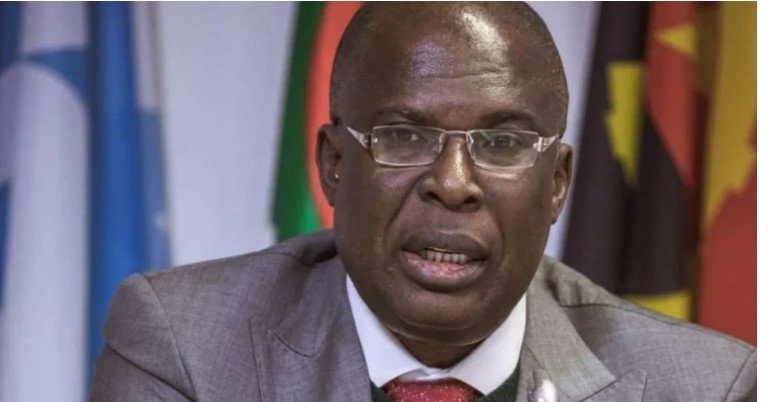
Former Bayelsa State Governor and ex-Minister of State for Petroleum Resources, Chief Timipre Sylva, has resigned from the All Progressives Congress (APC), accusing the ruling party of abandoning the ideals upon which it was founded.
Sylva announced his resignation in a letter dated August 31, 2026, addressed to the APC chairman of Ward 4 in Brass Local Government Area of Bayelsa State.
The former governor said his decision followed consultations with his family, associates, colleagues and sympathisers, adding that his resignation took immediate effect.
The development comes as the country begins to move closer to the 2027 general elections and is likely to generate fresh political reactions, particularly in Bayelsa State and within the APC.
Sylva: APC has abandoned its founding ideals
Sylva, who described himself as a founding member of the APC, said he was saddened by what he described as the party’s departure from the principles that brought its members together.
According to him, he had contributed his resources alongside other Nigerians to building the party but could no longer remain in an organisation whose leadership, in his assessment, had abandoned its original ideals.
He accused some party leaders of embracing the belief that “all is fair in politics”, arguing that such an approach was inconsistent with basic standards of decency and morality.
Sylva said the direction of the APC had made it impossible for him to continue his membership of the party.
“Having consulted widely with my family, associates, colleagues and sympathisers, I wish to formally tender my resignation from the All Progressives Congress (APC), with immediate effect,” he stated in the letter.
Former governor attacks Tinubu administration
Beyond his resignation from the APC, Sylva launched a strong criticism of the administration of President Bola Tinubu.
The former minister said the government formed under the APC had disappointed the majority of Nigerians.
He also expressed doubts about the possibility of the administration successfully reversing its current direction, arguing that he could not see what he described as a credible attempt to revamp the government.
Sylva’s criticism represents a significant political break from the ruling party, particularly because of his previous position as a senior APC figure and former member of the Federal Executive Council.
He said his decision to leave the party was comparable to abandoning what he described as a “floundering ship”, arguing that its condition had become difficult to reverse.
Sylva predicts change in 2027
The former Bayelsa governor also turned his attention to the 2027 general elections, expressing confidence that Nigerian voters would reject the current political order.
Sylva said he believed Nigerians would vote for what he described as the interest of the country in the next election.
He expressed confidence that the electorate would use the 2027 polls to bring about political change and “free the Country” from what he described as a stranglehold.
His comments come at a time when political parties and major political figures are increasingly positioning themselves ahead of the 2027 elections.
With Sylva’s departure from the APC, attention is expected to shift to his next political move and whether he will align with an opposition party or participate in efforts to form a broader political platform ahead of the elections.
Sylva copies EFCC on resignation letter
In another notable aspect of the resignation letter, Sylva reportedly copied the Economic and Financial Crimes Commission (EFCC).
He accused the anti-graft agency of increasingly conducting itself like an organ of the APC rather than an independent institution of the Nigerian state.
Sylva said he was aware that his decision to leave the ruling party could expose him and his associates to what he described as increased pressure or investigation.
However, he said he was prepared to accept the consequences of his decision.
Resignation comes amid legal controversy
Sylva’s resignation also comes amid ongoing legal and security controversies involving allegations made against him by Nigerian authorities.
The former governor has been linked by the Federal Government to an alleged plot against the administration of President Tinubu. Reports indicate that he has denied the allegations and maintained his innocence.
His resignation from the APC therefore comes at a particularly sensitive political moment, with the former governor simultaneously distancing himself from the ruling party while facing legal issues connected to allegations by government authorities.
It is important to note that allegations made against Sylva remain allegations unless established by a competent court.
Who is Timipre Sylva?
Timipre Sylva served as Governor of Bayelsa State from 2007 to 2012.
He later joined the Federal Government and served as Minister of State for Petroleum Resources.
As a prominent political figure from the Niger Delta, Sylva has remained active in national and Bayelsa politics and was regarded as one of the influential figures within the APC structure in the state.
His resignation is consequently significant because of his history with the party and his description of himself as one of its founding members.
What Sylva’s exit means for APC
The resignation could have implications for the APC’s political structure in Bayelsa State as the party prepares for the 2027 elections.
Sylva has maintained a significant political network in the state, while some of his former allies have also reportedly moved away from the APC ahead of the next general elections.
His departure could therefore intensify discussions about the strength of the ruling party in the state and the possibility of new political alliances.
However, the immediate political destination of Sylva remains unclear.
For now, his resignation marks a clear break with the APC and represents one of the more significant political developments ahead of the 2027 general elections.
The former governor has made his position clear: he believes the APC has abandoned its founding ideals, says the Tinubu administration has disappointed the majority of Nigerians, and expects voters to deliver political change at the 2027 polls.