
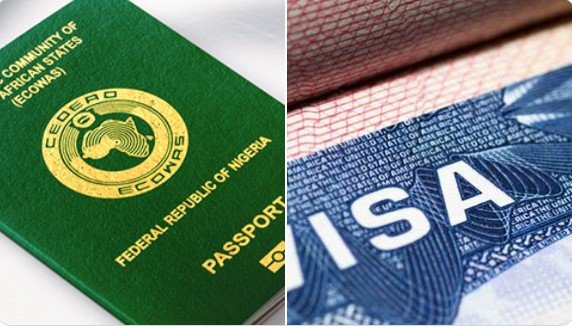
Nigeria’s passport has fallen to 181st position out of 196 countries in the latest IziVisa Passport Ranking Index, with holders able to visit 24 destinations visa-free, 16 through visas on arrival and 43 using electronic visas.
Nigeria’s international travel access has come under renewed scrutiny following the release of the latest passport ranking by IziVisa, which places the country among the lowest-ranked passports in its global assessment.
According to data published by IziVisa, Nigerian passport holders can currently travel to 24 countries without obtaining a visa in advance, secure visas on arrival in 16 countries and access another 43 destinations through electronic visa arrangements.
The assessment places Nigeria in 181st position out of 196 countries, highlighting the restrictions Nigerian citizens face when travelling internationally compared with holders of passports that provide broader access to foreign destinations.
The latest figures also differ significantly from the July 2026 ranking, when Nigeria was placed 90th globally and was reported to have visa-free access to 44 destinations.
However, the two rankings must be interpreted carefully because the July position was reported under the Henley Passport Index, while the latest assessment comes from IziVisa, which uses a different methodology and coverage.
The difference between the reported figures has nevertheless drawn attention to the limited international mobility available to Nigerian travellers and the importance of distinguishing between visa-free entry, visas on arrival and electronic visas.
Nigeria’s Passport Ranking Drops to 181st Position
The latest IziVisa assessment places Nigeria 181st among 196 countries evaluated, underscoring the limited number of destinations Nigerian passport holders can access under different visa arrangements.
The ranking assesses the travel privileges associated with individual passports, including entry without a visa, permission to obtain a visa upon arrival and access through electronic visa systems.
According to the published figures, Nigeria has 24 visa-free destinations, 16 destinations offering visas on arrival and 43 destinations accessible through electronic visas.
These categories provide different levels of travel convenience and should not be treated as equivalent.
Visa-free access allows eligible travellers to enter a destination without applying for a visa before departure, although other entry conditions may still apply.
A visa on arrival allows travellers to obtain the required visa at an authorised entry point, subject to the destination country’s regulations and eligibility requirements.
An electronic visa, commonly known as an eVisa, generally requires an application through an online system before travel. Applicants may need to provide supporting documents, pay a fee and wait for approval before departing.
Consequently, the 43 destinations offering electronic visas do not necessarily provide the same level of convenience as the 24 destinations where Nigerian passport holders can travel without obtaining a visa in advance.
The ranking highlights the distinction between the number of countries a passport holder can potentially visit and the number that can be accessed without prior visa approval.
Why the July 2026 Ranking Was Different
Nigeria was reported to have occupied the 90th position in July 2026 under the Henley Passport Index, with access to 44 destinations without a prior visa.
The latest IziVisa ranking places the country at 181st, with 24 visa-free destinations.
At first glance, the figures suggest a dramatic deterioration in Nigeria’s passport standing within a few months. However, the comparison requires an important qualification.
The July ranking and the latest ranking come from different passport assessment systems. Henley & Partners and IziVisa apply different methodologies and assess travel access using different datasets and coverage.
The two positions therefore cannot be interpreted as a direct measurement of Nigeria falling from 90th to 181st in one continuous ranking.
Similarly, the difference between 44 and 24 visa-free destinations should not automatically be interpreted as proof that 20 countries formally withdrew visa-free privileges from Nigerian citizens during the period.
Changes in classification, data coverage, methodology and individual countries’ entry requirements can affect the figures reported by different ranking platforms.
Nevertheless, both assessments draw attention to the challenges Nigerian passport holders face when travelling internationally and the importance of monitoring changes in visa policies.
For a clearer picture of changes over time, comparisons should ideally use successive editions of the same index and examine the underlying country-by-country entry requirements.
UAE Leads the Latest IziVisa Ranking
The latest global assessment also places the United Arab Emirates at the top of the IziVisa ranking.
According to reports on the October 2026 assessment, the UAE passport provides access to 185 of 198 destinations through a combination of visa-free entry, visas on arrival and electronic visas.
Switzerland also features prominently in the ranking, with broad international travel access available to its passport holders.
The difference between the highest-ranked passports and Nigeria’s position illustrates the varying levels of international mobility available to citizens of different countries.
Passport strength is commonly assessed by examining how many destinations citizens can access without securing a traditional visa before travelling.
Countries whose citizens enjoy extensive visa exemptions generally offer greater convenience for international business, tourism, education and family visits.
However, passport rankings do not independently establish the reasons behind a country’s visa restrictions. Decisions about entry requirements are made by individual governments and may reflect diplomatic agreements, immigration policies, security considerations and other factors.
The ranking should therefore be understood primarily as a measure of travel access rather than a comprehensive assessment of a country’s diplomatic relationships or economic performance.
Visa-Free Travel, Visa on Arrival and eVisa: What Nigerians Should Know
The latest figures highlight three important categories of international travel access available to Nigerian passport holders.
Visa-free travel
Visa-free travel means eligible passport holders can enter a destination without obtaining a visa before departure.
However, visa-free entry does not necessarily mean unrestricted entry. Travellers may still need to satisfy immigration officials, demonstrate sufficient funds, provide accommodation details, present a return or onward ticket, or comply with restrictions on the length and purpose of their visit.
Some destinations also require electronic travel authorisations even when a traditional visa is not necessary.
Visa on arrival
A visa on arrival allows an eligible traveller to obtain a visa after reaching an authorised airport, seaport or land border.
The arrangement can reduce the need to apply through an embassy before departure, but it does not guarantee admission. Travellers may be required to provide documents, pay fees and satisfy the destination’s immigration conditions.
It is important to confirm that the arrangement applies specifically to Nigerian passport holders before booking a trip.
Electronic visas
Electronic visas allow eligible applicants to submit visa applications through online platforms.
Depending on the destination, applicants may need to upload their passports, photographs, travel itineraries and other supporting documents.
An application may be rejected, and approval may be required before boarding a flight. Travellers should therefore distinguish between a destination that offers an eVisa and one that permits entry without a visa.
These distinctions are important because the number of visa-free destinations is often used as a headline measure of passport strength, while broader mobility assessments may also count other categories of travel access.
Implications for Nigerian Travellers
Limited visa-free access can create additional administrative and financial burdens for Nigerians planning international trips.
Travellers seeking to visit countries that require advance visas may need to pay application fees, arrange appointments, prepare supporting documents and wait for decisions before finalising their travel plans.
Some visa applications also require evidence of employment, financial capacity, accommodation, travel insurance or a clear intention to return home.
These requirements can increase the cost and complexity of international travel, particularly for people attending conferences, pursuing educational opportunities, visiting relatives or exploring business opportunities abroad.
For Nigerian entrepreneurs and professionals, visa restrictions may also affect the ease of attending international meetings, trade exhibitions and industry events at short notice.
Students seeking admission to foreign institutions can face separate immigration requirements, while families travelling for tourism or personal reasons must comply with the rules applicable to their destinations.
Nevertheless, passport rankings alone do not determine whether a Nigerian citizen can travel to a particular country. Access depends on the destination, the purpose of travel, the traveller’s circumstances and the applicable immigration rules.
Nigerians may still obtain visas to countries that do not offer visa-free entry, provided they meet the relevant requirements.
Passport Strength and International Mobility
Passport rankings have become a widely used way to compare the international mobility available to citizens of different countries.
They can help travellers understand the extent to which their nationality allows them to enter foreign destinations without completing a traditional visa application beforehand.
However, rankings vary according to the destinations included, the treatment of electronic visas and travel authorisations, and the methodology used to calculate scores.
IziVisa’s October 2026 assessment examines short-stay tourist entry arrangements across 198 destinations, drawing on its database of visa requirements and checking information against official sources where necessary.
Its approach differs from the Henley Passport Index, which assesses passports against a separate set of destinations using data associated with the International Air Transport Association.
This difference is important when interpreting the reported change in Nigeria’s ranking.
A country may occupy different positions across passport indices without experiencing an equivalent change in its actual immigration privileges.
For that reason, the strongest assessment of a passport’s changing travel access combines ranking data with official information about visa exemptions and entry requirements.
What the Ranking Means for Nigeria
Nigeria’s reported 181st position in the latest IziVisa Passport Ranking Index places renewed focus on the country’s international travel access.
The reported figures show that Nigerian passport holders can visit 24 destinations without a visa in advance, obtain visas on arrival in 16 countries and apply for electronic visas for another 43 destinations.
Although the July and October rankings come from different indices and cannot be compared as though they were successive editions of the same assessment, the latest figures underline the restrictions faced by many Nigerian travellers.
The development also reinforces the importance of checking the precise entry requirements for each destination rather than relying exclusively on a passport’s global ranking.
For Nigerians planning international travel, confirming visa requirements before purchasing tickets can help prevent unexpected expenses, denied boarding and other travel disruptions.
Ultimately, passport rankings provide a useful snapshot of international mobility, but their figures must be interpreted in the context of the methodology used and the rules applied by individual destination countries.
As international visa policies continue to change, Nigerian travellers will need reliable, up-to-date information to determine where they can travel visa-free, where visas are available on arrival and where advance electronic or traditional visa approval remains necessary.