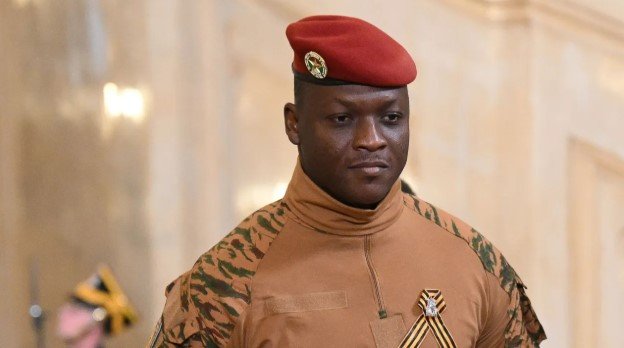
Burkina Faso has reinstated the death penalty eight years after abolishing capital punishment, following a unanimous vote by the country’s unelected legislature, in a major legal change under military leader Captain Ibrahim Traoré.
The West African country’s military-led government reintroduced capital punishment through a revised penal code adopted on Tuesday, October 20, 2026, according to the Justice Ministry and reports from the country’s state news agency, AIB.
The legislation provides for the death penalty for several offences, including terrorism, espionage, treason, patricide and the importation of expired or prohibited products that cause death.
The decision marks a significant reversal of the country’s 2018 abolition of capital punishment and comes as Burkina Faso continues to battle armed insurgencies and security challenges across its territory.
The Justice Ministry said the revised penal code was intended to strengthen public order, consolidate the country’s fundamental values and guarantee the security of people and property.
The new legislation was approved unanimously by all 71 members of the Assemblée législative du peuple, known in English as the People’s Legislative Assembly, an unelected body serving as the country’s legislature under military rule.
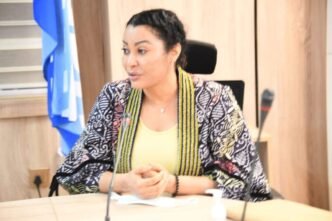
Justice Minister Edasso Rodrigue Bayala presented the proposed reforms before the assembly on Tuesday.
The development fulfils a plan previously announced by Traoré, who indicated in 2025 that his administration intended to restore the death penalty as part of broader changes to the country’s criminal justice system.
The decision is expected to intensify discussions about security, criminal justice and human rights in Burkina Faso, particularly as the government pursues a military campaign against armed groups operating in the Sahel region.
Five categories of offences face the death penalty
Under the revised penal code, five categories of offences have been identified as punishable by death, according to reports from the Burkina Faso state news agency and local media.
They include acts of terrorism, espionage, treason, patricide and the importation of expired or prohibited products that result in death.
The inclusion of terrorism-related offences reflects the government’s determination to strengthen its legal response to the armed insurgency that has affected large parts of Burkina Faso for years.
The country has experienced persistent attacks by jihadist groups affiliated with al-Qaeda and the Islamic State, particularly in rural communities where security forces have struggled to maintain control.
These attacks have resulted in civilian deaths, displacement and significant pressure on the country’s military and security institutions.
By restoring capital punishment for terrorism and related offences, the government is seeking to establish more severe legal consequences for individuals convicted of crimes it considers threats to national security.
Espionage and treason have also been included among the offences attracting the maximum penalty.
The legislation’s provisions concerning the importation of expired or prohibited products that cause death extend the death penalty to certain offences involving dangerous goods.
Such provisions could affect cases involving the illegal importation of products that pose serious risks to public safety, although the precise application of the law will depend on the legislation’s detailed provisions and the circumstances of individual cases.
Patricide, which involves the killing of one’s father, is another offence covered by the revised code.
Reports on the new legislation also describe the broader category of parricide, which generally refers to the killing of a close relative, particularly a parent.
The precise legal definitions and conditions under which these offences attract capital punishment are contained in the revised penal code.
Why Burkina Faso has restored capital punishment
The restoration of the death penalty comes against the background of Burkina Faso’s prolonged security crisis and the military government’s efforts to overhaul the country’s institutions.
The administration has argued that stronger penalties are necessary to protect citizens, defend national sovereignty and improve public security.
According to the Justice Ministry, the revised penal code aims to strengthen public order, reinforce the nation’s fundamental values and guarantee the security of people and property.
The government has also presented the changes as part of a wider reform of the justice system intended to respond to the country’s security and criminal justice challenges.
In December 2025, Burkina Faso’s Council of Ministers approved a draft penal code that proposed reinstating capital punishment for offences including terrorism, espionage and high treason.
At the time, Justice Minister Bayala said the proposed changes were part of efforts to reform the country’s criminal justice system and respond to public expectations.
The proposal subsequently proceeded through the legislative process, culminating in the unanimous approval announced on October 20, 2026.
The decision also reflects the administration’s increasingly hard-line approach to security and governance since the military took power.
However, whether the return of capital punishment will deter terrorism, reduce violent crime or improve public safety remains a matter that cannot be established simply by the passage of the law.
The practical effect of the legislation will depend on its implementation, the functioning of the courts and the broader security situation in the country.
Burkina Faso abolished the death penalty in 2018
Burkina Faso abolished the death penalty in 2018 under the government of former President Roch Marc Christian Kaboré.
The abolition was part of a revision of the country’s penal code and represented a major change in its approach to criminal punishment.
The country had not carried out an execution since 1988, according to Amnesty International.
Consequently, although the death penalty existed in the country’s legal framework before its abolition, executions had already been absent for decades.
The restoration of capital punishment therefore represents both a reversal of the 2018 legal reform and a departure from the country’s long period without recorded executions.
Amnesty International had urged Burkina Faso not to reinstate the death penalty, warning against reversing progress towards the abolition of capital punishment.
Human rights organisations generally oppose the death penalty on grounds including the risk of executing innocent people, the irreversible nature of the punishment and concerns about whether capital punishment provides an effective deterrent.
The restoration of the death penalty is also likely to draw scrutiny over safeguards for defendants, access to fair trials and the independence of judicial institutions.
These questions are particularly significant in countries experiencing conflict, where security concerns can place pressure on legal institutions and civil liberties.
The adoption of the revised code establishes the legal change, but it does not by itself demonstrate that executions will immediately resume.
Further developments in the implementation of the law will determine how the new provisions are applied in practice.
Burkina Faso’s military government under Ibrahim Traoré
Burkina Faso has been under military rule since September 2022, when Captain Ibrahim Traoré seized power in a coup.
Traoré took over from Lieutenant Colonel Paul-Henri Sandaogo Damiba, who had himself led a military takeover earlier that year.
The successive coups occurred amid widespread frustration over the government’s handling of insecurity and the expansion of armed extremist groups.
Traoré subsequently became the country’s transitional leader and has pursued policies centred on military mobilisation, national sovereignty and a restructuring of Burkina Faso’s political and security institutions.
His government has presented its approach as an effort to restore territorial control and reduce the influence of foreign powers in the country’s affairs.
However, the military authorities have also faced criticism from international organisations over restrictions on civil liberties and reports of abuses during the security campaign.
The military government has delayed the return to elected civilian rule, while the country’s political institutions have undergone substantial changes.
The People’s Legislative Assembly, which approved the revised penal code, operates within this transitional political framework rather than being a legislature elected through a conventional national parliamentary election.
The unanimous vote therefore reflects the decision of the current unelected legislative body, not a direct national referendum on capital punishment.
The distinction is important in assessing the political context of the reform and the extent to which the decision reflects the views of the wider population.
Security crisis continues to shape government policy
Burkina Faso is part of the Sahel, a region stretching across Africa south of the Sahara that has experienced years of armed conflict, insurgencies and political instability.
The country has faced attacks from jihadist groups linked to al-Qaeda and the Islamic State, with violence affecting communities, military positions and vital transport routes.
The conflict has contributed to large-scale displacement and complicated efforts to provide essential services in affected areas.
Successive governments have struggled to contain the violence, making security one of the most pressing issues in national politics.
Traoré’s administration has placed considerable emphasis on military operations and the mobilisation of personnel to fight armed groups.
The reinstatement of the death penalty forms part of this broader security-focused policy direction, particularly because terrorism and espionage are among the offences covered by the new code.
Nevertheless, the relationship between severe criminal penalties and the reduction of insurgent violence remains complex.
Armed conflicts are influenced by numerous factors, including territorial control, recruitment, access to weapons, local grievances, governance and the ability of security forces to protect communities.
The death penalty is a punishment imposed through the criminal justice system, while counterinsurgency operations involve a broader range of military, political and security measures.
The effectiveness of Burkina Faso’s revised penal code will therefore depend on how it operates alongside the government’s wider efforts to address insecurity.
Human rights concerns emerge over the decision
The return of capital punishment is likely to renew concerns among human rights advocates about the protection of fundamental rights under military rule.
Opponents of the death penalty argue that no criminal justice system can entirely eliminate the possibility of wrongful convictions.
They also maintain that capital punishment is irreversible, meaning that an execution cannot be corrected if new evidence subsequently establishes that a person was innocent.
Other concerns involve the treatment of suspects, access to legal representation, the independence of courts and the transparency of criminal proceedings.
These issues can become particularly important when governments expand the range of offences punishable by death, especially when national security is involved.
The inclusion of terrorism, espionage and treason raises questions about how authorities will distinguish between proven criminal conduct and other activities that may be viewed as politically sensitive.
The legislation’s actual impact on human rights will depend on the definitions of the offences, the procedures used in prosecutions and the safeguards available to defendants.
It is also important to distinguish between the adoption of a death-penalty law and the actual carrying out of executions. The latter requires individual cases to proceed through the applicable legal processes.
The last recorded execution in Burkina Faso occurred in 1988, according to Amnesty International. Whether the new legislation will lead to executions after such a lengthy period remains to be seen.
What happens next?
The unanimous adoption of the revised penal code represents a major development in Burkina Faso’s criminal justice system.
The law restores the death penalty for specified offences after its abolition in 2018 and gives the government a legal framework for seeking capital punishment in qualifying cases.
Attention will now turn to the implementation of the legislation, including how prosecutors apply its provisions, how courts interpret the offences and what safeguards govern capital cases.
The government’s stated objective is to strengthen public order and protect citizens, while critics are likely to focus on the risks associated with capital punishment and the wider human rights environment.
For now, the most immediate significance of the decision is the formal reversal of Burkina Faso’s eight-year-old abolition of the death penalty.
The move places the country among jurisdictions that retain capital punishment in law and signals a tougher approach to certain serious crimes under Traoré’s military administration.
Whether the policy will deliver the improvements in security and public safety promised by the government remains uncertain.
What is clear is that the decision marks a significant shift in Burkina Faso’s criminal justice policy at a time when the country continues to confront an entrenched security crisis and debate over the future of military rule.
As the revised penal code is implemented, its impact on criminal prosecutions, national security and human rights is likely to remain under close scrutiny both within Burkina Faso and internationally.