The Federal Government has unveiled the North-West Climate Fund, targeting about ₦20 billion over four years to address flooding, drought, desertification and other environmental challenges affecting the region’s seven states.
The Presidency has unveiled the North-West Climate Fund as part of efforts to mobilise financing for climate adaptation, environmental protection and sustainable development across the region.
The initiative was announced on Tuesday, October 20, 2026, at the North-West Climate Summit held at the State House Conference Centre in Abuja.
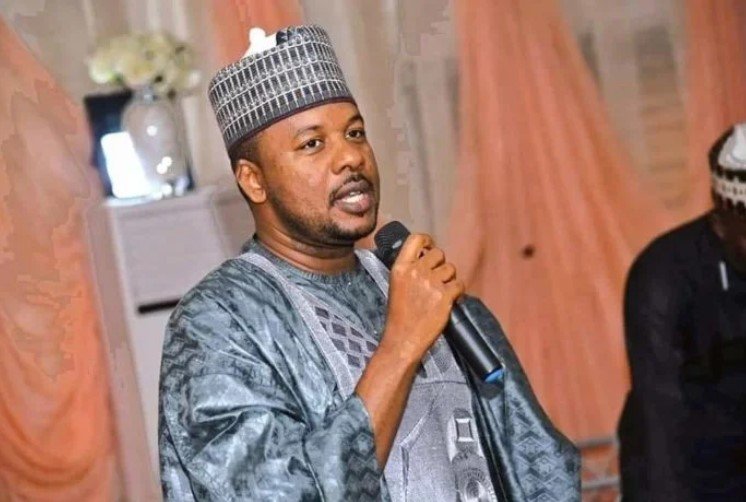
The Senior Special Assistant to President Bola Tinubu on Community Engagement (North-West), Abdullahi Tanko Yakasai, disclosed that the fund is targeting approximately ₦20 billion over the next four years.
Yakasai spoke with State House correspondents on the sidelines of the summit, which brought together stakeholders to discuss strategies for addressing climate-related challenges and attracting investment into the region.
The summit was themed “Accelerating Global Climate Solutions: Unlocking Land, Water & Energy Systems.”
Alongside the climate fund, the Presidency unveiled a Climate Academy and a Climate Investment Marketplace, three initiatives designed to strengthen climate resilience, develop skills and connect viable environmental projects with potential investors.
The proposed fund is expected to support interventions addressing flooding, drought, desertification, water shortages, land degradation and other climate pressures affecting communities across the North-West.
However, the ₦20 billion figure represents the amount organisers are targeting to mobilise over four years, rather than confirmation that the entire sum has already been raised or disbursed.
Presidency Targets ₦20bn in Four Years
Speaking at the summit, Yakasai said the North-West Climate Fund would provide a financing framework for projects aimed at reducing the effects of climate change and improving the region’s capacity to respond to environmental challenges.
He explained that the initiative was designed to move climate action beyond discussions and policy announcements towards practical interventions capable of attracting funding and delivering measurable results.
According to the presidential aide, the organisers are working towards mobilising approximately ₦20 billion over the next four years to support climate-related projects across the region.
The proposed financing is expected to provide support for interventions that address environmental pressures while creating opportunities for sustainable economic activities.
The initiative also seeks to encourage collaboration between governments, development partners, financial institutions, private investors and communities.
By creating a regional financing mechanism, the Presidency hopes to improve the ability of states and local governments to attract investment for projects that may otherwise struggle to secure adequate funding.
The fund is intended to support climate-related priorities across the seven states of Kaduna, Kano, Katsina, Kebbi, Jigawa, Sokoto and Zamfara.
These states face varying environmental pressures, including drought, desertification, flooding, water scarcity and declining agricultural productivity.
The extent of these challenges differs across communities, making coordinated planning and locally appropriate interventions important to the region’s long-term development.
The fund’s effectiveness will ultimately depend on how the targeted resources are mobilised, the projects selected for financing and the systems established to monitor implementation and results.
Flooding, Drought and Desertification Among Major Concerns
Climate-related challenges have become important concerns for communities across northern Nigeria, particularly where livelihoods depend heavily on agriculture, livestock production and access to reliable water supplies.
In parts of the North-West, desertification and land degradation threaten the productivity of farmland and grazing areas. Drought and irregular rainfall can also affect agricultural output, livestock health and household incomes.
Flooding presents a different but equally serious challenge, with heavy rainfall and inadequate drainage potentially damaging homes, roads, farms and other infrastructure.
When environmental pressures disrupt agricultural production, households can face additional financial difficulties, while communities may experience food shortages and increased competition for available resources.
Water scarcity can further complicate these challenges, affecting domestic consumption, farming and livestock production.
The North-West Climate Fund is being introduced against this background, with the stated objective of directing financing towards projects that can help communities adapt to climate pressures.
Potential areas of intervention include climate-resilient agriculture, improved water management, renewable energy, ecosystem restoration and infrastructure designed to withstand environmental risks.
The projects supported by the fund will need to reflect the specific challenges faced by individual states and communities.
For example, communities experiencing recurring floods may require improved drainage, flood-risk management and resilient infrastructure, while drought-prone areas may benefit from better water storage, irrigation and sustainable land management.
Such interventions can help reduce vulnerability, but their impact will depend on sound project design, adequate financing and effective implementation.
Climate Academy to Support Skills Development
The Presidency also unveiled a Climate Academy as part of the broader regional climate initiative.
The academy is intended to strengthen knowledge and capacity in climate action, resilience and related fields, with young people among its principal target groups.
According to details provided by Yakasai, the initiative is expected to train 10,000 young people across the North-West in climate resilience and related areas.
The training programme is intended to develop skills that can support environmental protection, climate adaptation and emerging opportunities in the green economy.
Areas relevant to the initiative include renewable energy, climate-smart agriculture, sustainable infrastructure and other activities that can help communities respond to environmental challenges.
Skills development is particularly important as governments and private organisations seek to expand investment in climate-related projects.
Young people trained in relevant fields may be better positioned to participate in environmental programmes, establish green businesses or contribute to the implementation of climate-resilient projects.
However, the scale of the programme’s impact will depend on its implementation, the quality of training provided and the opportunities available to participants after completing their courses.
The academy forms part of the Presidency’s wider effort to link climate action with employment, enterprise development and sustainable economic growth.
Climate Investment Marketplace to Connect Projects With Investors
Another component unveiled at the summit is the North-West Climate Investment Marketplace, a platform designed to connect climate-related projects with potential financiers and development partners.
The marketplace is intended to allow state and local governments to present projects for consideration by domestic and international investors.
According to the initiative’s stated objectives, the platform will help make viable climate projects more visible to financial institutions, development agencies and private-sector organisations interested in supporting environmental solutions.
Projects could cover areas such as renewable energy, water infrastructure, climate-resilient agriculture, land restoration and other interventions aimed at reducing climate risks.
The platform is also expected to support the development of investment-ready proposals, helping bridge the gap between government priorities and the requirements of potential financiers.
Many public development projects require more than policy approval before they can attract investment. They may also need detailed feasibility studies, clear financing arrangements, implementation plans and mechanisms for measuring expected outcomes.
A marketplace that brings project developers and financiers together could help improve access to funding where proposals meet the relevant requirements.
Nevertheless, the establishment of the platform does not automatically guarantee that every submitted project will receive financing. Investment decisions will depend on factors including project viability, financial arrangements, expected results and investor requirements.
The marketplace is therefore intended to serve as a channel for developing partnerships and mobilising resources rather than a guarantee of funding for all proposed projects.
Seven North-West States to Benefit
The initiative covers Kaduna, Kano, Katsina, Kebbi, Jigawa, Sokoto and Zamfara states.
These states share several regional development concerns but also face different combinations of environmental and economic pressures.
Some communities are particularly vulnerable to drought and desertification, while others face flooding, water shortages and the degradation of agricultural land.
A regional approach could help governments coordinate their responses, identify shared priorities and develop projects that address environmental challenges across state boundaries.
It could also create opportunities for states to learn from one another and attract investors interested in supporting programmes with broader regional benefits.
The involvement of local governments will be important because many climate-related challenges directly affect communities at the grassroots level.
Local authorities and community organisations can help identify vulnerable areas, establish priorities and provide information about the practical needs of residents.
Effective implementation will also require coordination between relevant ministries, environmental agencies, development institutions and private-sector partners.
The seven-state coverage means that project selection and funding arrangements will be important in determining how benefits are distributed across the region.
Transparent criteria, measurable targets and regular reporting could help ensure that resources are directed towards projects with clear environmental and social benefits.
Climate Funding and Accountability
The ₦20 billion target raises important questions about how the fund will be financed, managed and monitored over its proposed four-year period.
Mobilising the targeted amount will require a clear financing strategy and cooperation among the institutions and partners expected to contribute resources.
Potential sources of climate finance can include public-sector contributions, grants, private investment, development finance and structured partnerships, depending on the fund’s final arrangements.
Each financing option comes with different requirements, and the terms under which resources are provided can affect the types of projects that qualify for support.
For the initiative to achieve its stated objectives, the fund will also need appropriate governance arrangements and procedures for selecting projects.
Accountability will be particularly important because the fund is intended to support interventions across seven states with different environmental priorities.
Monitoring systems can help establish whether financed projects are completed as planned, whether money is used for its intended purpose and whether the interventions deliver measurable benefits.
Regular public reporting on funds mobilised, projects approved, expenditure and outcomes would also help stakeholders assess progress towards the ₦20 billion target.
At the time of the announcement, the reported target did not establish how much funding had already been secured or how much would be allocated to individual states.
Further details on the fund’s financing structure, disbursement arrangements and project selection will therefore be important in assessing its implementation.
Nigeria’s Climate Response and Regional Development
The North-West Climate Fund forms part of broader efforts to connect climate policy with practical development projects.
Climate adaptation involves measures that help communities and infrastructure cope with the effects of environmental changes, while mitigation focuses on reducing greenhouse gas emissions or increasing their removal from the atmosphere.
For the North-West, adaptation priorities may include improved water management, climate-resilient farming, flood preparedness, land restoration and measures to reduce vulnerability to drought.
Renewable energy projects can also contribute to the region’s development by expanding access to electricity while supporting a transition towards cleaner energy sources.
When properly designed, climate-related investments can provide environmental benefits alongside opportunities for job creation, improved agricultural productivity and stronger community resilience.
However, the results will depend on whether financing reaches projects that address clearly identified needs and whether those projects are maintained after implementation.
The Climate Academy and Investment Marketplace are intended to complement the fund by developing skills and improving access to potential investors.
Together, the three initiatives provide a framework for linking financing, capacity-building and project development.
What Happens Next?
Following the unveiling of the North-West Climate Fund, attention will turn to the process of mobilising resources and identifying projects for support.
The Presidency’s stated target is to mobilise about ₦20 billion over four years, while the Climate Academy is expected to train 10,000 young people in climate resilience and related fields.
The investment marketplace is intended to connect climate projects across the region’s seven states with potential investors and development partners.
The next stages of implementation will be important in determining how quickly these plans translate into practical interventions for communities affected by flooding, drought, desertification and water scarcity.
The level of funding secured, the transparency of project selection and the quality of implementation will be key measures of the initiative’s progress.
For residents of the North-West, the central question will be whether the proposed programmes lead to tangible improvements in environmental protection, agricultural resilience, water security and local economic opportunities.
The Presidency has set out its financing ambition, but the long-term impact of the initiative will depend on the resources mobilised and the results achieved over the four-year period.